

Rocksteady developers say live-service pressure pushed them to quit after launch
Former Rocksteady staff describe how Warner Bros. pushed replayability and engagement with live-service demands.
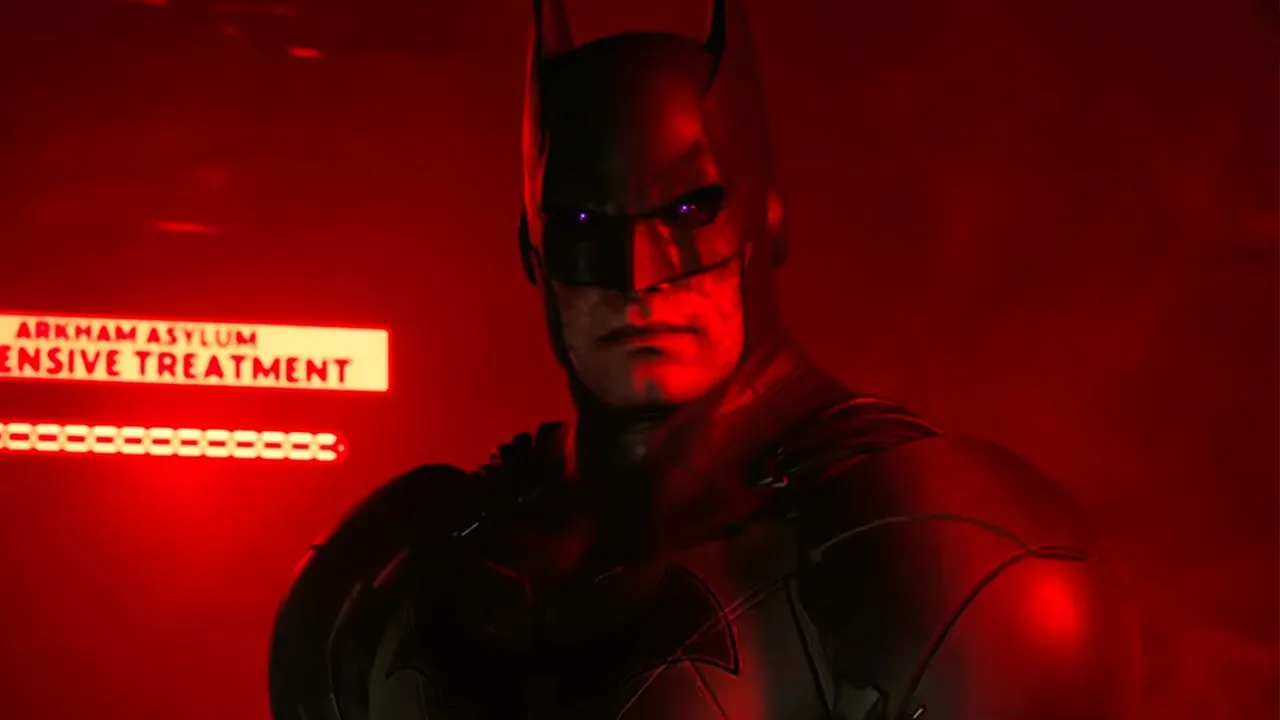
Designer Johnny Armstrong and director Axel Rydby, both former Rocksteady Studio employees, spoke in a Bloomberg interview about their experience developing Suicide Squad: Kill the Justice League. They say the live-service push from Warner Bros. and the long development timeline drained their creative drive and contributed to them leaving the studio.
Two former Rocksteady Studio developers, designer Johnny Armstrong and director Axel Rydby, say Warner Bros. pressure to build a live-service game is what ultimately broke their creative energy during Suicide Squad: Kill the Justice League. In a new interview with Bloomberg, they describe a shift from excitement to exhaustion, with Rydby saying, “That’s when I started feeling like I wasn’t making games anymore,” and Armstrong saying, “I felt everything drained from me.”
Their core complaint is simple and brutal: a studio known for crafting the Arkham experience was asked to run a live-service playbook, and the longer the project ran, the more it felt like the work was being managed through spreadsheets instead of design instinct. Rydby, who became director in 2022, tied the pressure directly to the live-service side of the project, noting that the prolonged development increased how strongly the team was pressured to maximize replayability and player engagement. He also pointed to seven years of production, explaining Warner Bros. was looking to recoup its investment by driving those outcomes.
To understand why this matters beyond one troubled release, it helps to look at what Arkham represented inside the industry. Rocksteady was coming off three back-to-back Arkham games, and Armstrong said the team was excited to move on from Batman after that run. The excitement, however, collided with a fundamental mismatch: Warner Bros. wanted a live-service game, and Rydby described that as “unlike anything the studio had ever done before.” That kind of strategic pivot is a board-level decision because it changes how teams plan, staff, and measure success. In a traditional premium release cycle, the scoreboard is usually narrower. In live-service, the scoreboard expands into engagement loops, retention targets, and ongoing content cadence, which typically pulls more stakeholders into day-to-day decisions.
Rydby’s description lands on that exact point. He said he started feeling like he was following “a spreadsheet, some elusive marketing-analysis spreadsheet that no one could present clearly.” That quote is important because it highlights a common second-order failure mode in big publishers and high-budget projects: when the metrics exist but the meaning is unclear, teams can feel managed rather than empowered. For decision-makers, the operational risk is not just that the game might underperform. The risk is that the team loses alignment on what “good” looks like, and that loss of alignment can cascade into crunch, rework, and ultimately departures.
Armstrong echoed the emotional fallout. He said he became disillusioned by the industry after working on Suicide Squad: Kill the Justice League, and he described leaving as personal survival. “I said, ‘I can’t do this again. I don’t know if I’m done with the industry, but I’m done.’ I could feel myself coming apart at the seams.” Those lines are the human side of a corporate incentive problem. When publishers push live-service replayability and engagement goals hard enough, the team can start to experience design as a means to an end rather than the end itself. Armstrong and Rydby left Rocksteady after that experience and have moved on to a new project intended to “bring back their creative spark.”
That new project is telling in its own way. The developers recently launched a Kickstarter for their new RPG deckbuilder, Secret of Circadia, aiming to pull in $11,000 from backers. On one level, it is an obvious proof-of-concept for creative autonomy. On another level, it shows an alternative funding and accountability model. Backers and creators can be more direct about what they want, and the success criteria can be clearer when the project is smaller and the scope is more defined. The contrast with a seven-year, publisher-backed live-service push is stark.
What happened to Suicide Squad: Kill the Justice League also sits inside a broader narrative. The game was described as a “pretty big fall from grace” for Rocksteady after its beloved Arkham games. But the story does not just point backward. It also points forward at Warner Bros. and the kinds of games it should be making, because strategic intent shapes production behavior. The source notes it is not clear what Rocksteady is working on right now, but rumors suggest it is returning to Batman with its next project. It also notes that many of the key creatives who brought the Arkham series to life have left the studio, meaning the next game will almost certainly be different compared to something like Arkham Knight. For executives and investors, that last part is the quiet but serious stake: leadership and creative talent are part of the product. If the incentive structure drives key people out, the pipeline for future hits changes.
This is where boards, publishers, and studio heads need to sharpen their questions. If your strategy depends on maximizing replayability and engagement through a live-service framework, what happens to the creative core when the team believes it is being asked to chase metrics rather than build fun? Rydby and Armstrong’s testimony is not a detailed postmortem of specific design choices. It is a vivid account of incentives, measurement, and pressure. The second-order implication is that even when a company has the money to attempt a new model, the culture may not be able to survive the transition without burning out the people who know how to make compelling games in the first place.
This story's Key Insights and Take-aways are locked.
Create a free account to unlock Executive Actions for one credit.
Register to UnlockAlways free for Executives Club members. Join the Club
More in Entertainment

Russell Brand's accuser 'bewildered and confused' as he denies 7 sex charges
The criminal case against the comedian is a live test of how media companies manage talent risk when serious allegations go public.

'It's a Magic Trick': Ballet Experts Say Rosalía's SNL Pose Is Impossible
Three ballet experts tell Rolling Stone Rosalía's gravity-defying SNL stillness shouldn't be possible - and why the debate is now part of the show.

Activision CMO: GTA 6 Will Boost Call of Duty, Not Bury It
Activision's top marketer says Rockstar's blockbuster will drive players back to consoles and into Modern Warfare 4, even as the company admits its recent strategy failed.