

Rogue Trader goes from janky launch to “Infinite Museion” buildcraft bliss
Owlcat’s 40K RPG still isn’t perfect, but after Infinite Museion, the character-building payoff finally lands.
Owlcat’s Warhammer 40K: Rogue Trader, reviewed at 59% at launch in December 2023, improves after the Infinite Museion DLC, with PC Gamer’s author returning to rethink builds. For decision-makers watching long-tail retention and post-launch investment, it’s a case study in how RPG systems can become “all-timer” material when they mature.
Warhammer 40K: Rogue Trader launched with a 59% review score in December 2023, and PC Gamer’s reviewer basically hated it at first. The reason wasn’t just technical polish. It was the RPG foundation itself: a complicated, new system without the built-in D&D muscle memory that keeps a lot of cRPGs feeling navigable. If you were a 40K newcomer, the “fun unfamiliarity” got outmatched by “frustrating unfamiliarity.” That tension is the story of the game’s early days.
Then Owlcat shipped Infinite Museion, and PC Gamer decided to come back. The payoff is real and immediate: the reviewer describes the second playthrough as so build-obsessed that they redid the first guy after 20 hours, then beat Act One again in half the time. That is not “I tolerated it and finished.” That is “the systems finally click, and I want to keep iterating.” The author even cites build guides from cRPG Bro and Revan619 on YouTube as part of getting traction, which matters because it signals how the game’s complexity is now actively supported by the community ecosystem.
To understand why this matters beyond one RPG, look at what Owlcat is actually selling when it sells Rogue Trader: intricate character building in a turn-based combat shell. The game is “as intricate as Pathfinder” (PC Gamer’s comparison), but without the D&D-derived muscle memory that helps players quickly translate mechanics into intuition. Early on, the reviewer felt personally annoyed by the terminology itself. “Hit points” are called “wounds,” and that silly-sounding rename became a real friction point because it added another layer you had to translate before you could play. That is an important product lesson: in systems-heavy games, naming choices are not “just flavor.” They can slow comprehension, which slows delight.
So what changed? PC Gamer’s author frames Rogue Trader as having grown into an “all-timer” RPG over time, and Infinite Museion is the trigger for their return. The big shift is that, with more hours and more experimentation, the reviewer now has enough knowledge to make tweaks “at my discretion,” rather than feeling trapped inside a quagmire of effects, stats, and nouns. The level-up screen is still complex, but the author is no longer overwhelmed by it. That’s the difference between a first impression and an earned mastery curve.
The clearest proof is the buildcraft itself. On a playthrough above normal difficulty, “Daring,” the reviewer follows builds for their main character and every companion. They start with a build they say is widely agreed to be among the most powerful single builds: “Death World Pyromancer Psyker Blade Dancer Executioner.” It leans into abilities that make you more powerful as you collect injury debuffs, plus powers that let you spend hit points and kill enemies for extra actions per turn. The author calls it powerful, and also admits it can get janky and stale after a while. That’s not a dismissal. It’s a signal that once the player understands the system, they can chase the “feels right” fantasy instead of just the “max damage” fantasy.
And then they pivot to Abellard, whose build is described as basically identical to “the most fun for new players,” per buildsmith Revan. Abellard’s setup is the “Navy Officer Warrior Arch Militant” style: dual wield a sword and a gun. With sword criticals or parries, you automatically trigger a free gun attack. Over time, gun attacks make the sword more powerful, and the sword feeds back into gun attacks. PC Gamer describes it as a “badass” ultimate lightning tank mode, with parries controlling the tempo and a one-two punch that instagibs beefy targets while shredding enemies. When a reviewer says “this is where I had more fun,” that’s a retention lever. Fun beats optimization when the game is complex.
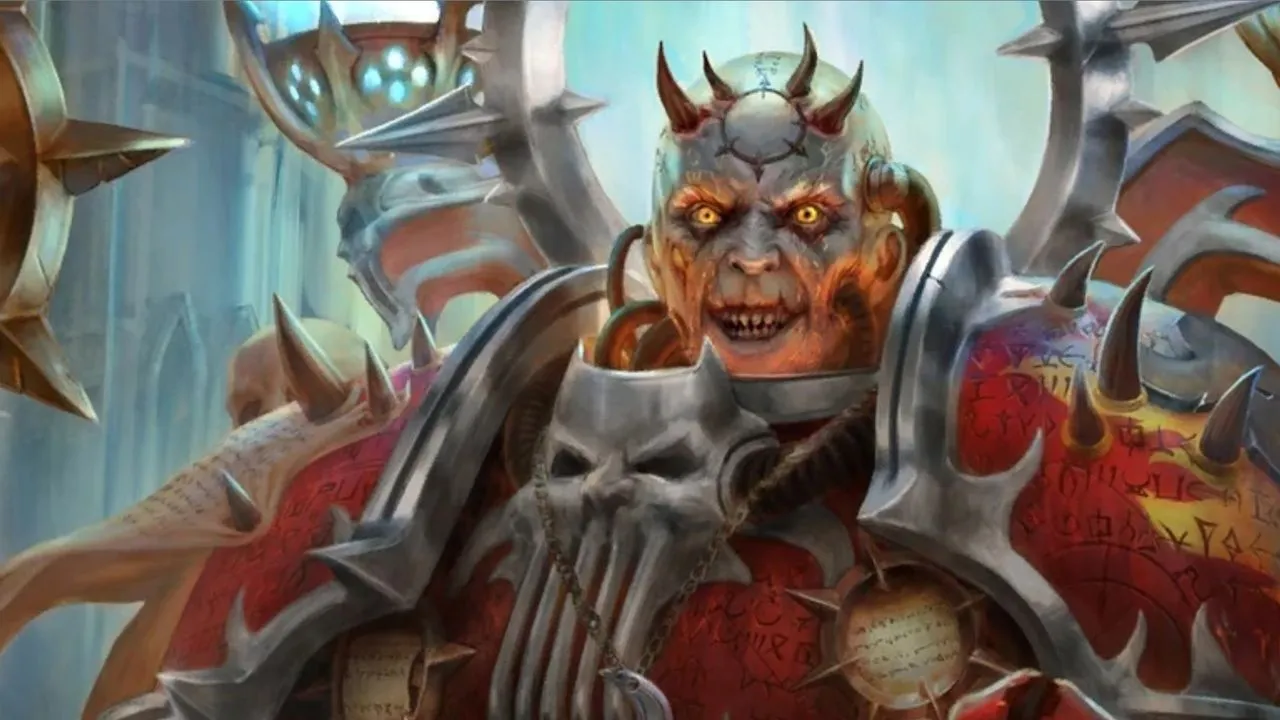
The most vivid moment in the piece happens in Act One’s end. The reviewer says they beat the final boss of Rogue Trader’s first act with Abellard and keeps replaying the scenario in their head. The confrontation is a Chaos Space Marine ambush character with “twice as much health wounds” as the next-strongest guy in Act One. The threat has a procedural logic: the “bad hombre” will blow up the last remaining shuttles offworld one-by-one while machine-gunning the party with a bolter. So the team response is tactical. The reviewer had the whole party turn and focus on the Space Marine, only using Abellard to tank the annoying support mooks. They knocked out the boss’s first 200 “hit points wounds” with three bolter salvos from Argenta. The sequence includes an extra turn courtesy of fish princess Cassia, ending with a finisher from the Rogue Trader: a critical charge and “revolver shotgun to the face,” wiping the boss’s last hundo-ish health wounds. They also mention an achievement shared by only 12.4% of players for taking him down without losing any shuttles. This is the “second-order” implication for executives and studio strategists: when the systems finally produce readable, controllable combat outcomes, players generate stories that become their own marketing.
There’s still a big picture here. Rogue Trader also contains more than turn-based combat and buildcrafting, including companions, romance, skills, planetary management, and “Trading.” But PC Gamer’s author calls turn-based combat and buildcrafting the “perfectly-charred neapolitan crust of this pizza.” That framing matters because it suggests the core differentiator is not narrative alone or world flavor alone. It is mechanical engagement. For peers evaluating long-tail strategy, the lesson is blunt: a hard launch may not be fatal if the game can mature in a way that makes the systems usable and satisfying. For Owlcat, the Infinite Museion DLC appears to have been the bridge between confusing complexity and addicted mastery. And the article ends with a clear watch-item for the market: Owlcat’s upcoming Dark Heresy. PC Gamer says it “sounds like it will” bang out of the gate, which is a hope, not a claim. Still, after Rogue Trader’s improvement arc, the industry’s attention will be on whether the studio can translate “eventual all-timer” into “smooth at launch” for its next swing.
This story's Key Insights and Take-aways are locked.
Create a free account to unlock Executive Actions for one credit.
Register to UnlockAlways free for Executives Club members. Join the Club
More in Entertainment

'It's a Magic Trick': Ballet Experts Say Rosalía's SNL Pose Is Impossible
Three ballet experts tell Rolling Stone Rosalía's gravity-defying SNL stillness shouldn't be possible - and why the debate is now part of the show.

Activision CMO: GTA 6 Will Boost Call of Duty, Not Bury It
Activision's top marketer says Rockstar's blockbuster will drive players back to consoles and into Modern Warfare 4, even as the company admits its recent strategy failed.

Justice to Score GTA 6, Share New Song with Tame Impala, SZA, King Gizzard
Rockstar taps the French duo for the GTA VI score, and the first taste is a genre-melting collab with Tame Impala, SZA, and King Gizzard & The Lizard Wizard.