
Roman will spot ~100 stellar-shredding tidal events per year out to 11 billion years
NASA’s Nancy Grace Roman Telescope can detect ancient TDEs, letting astronomers test how supermassive black holes formed.
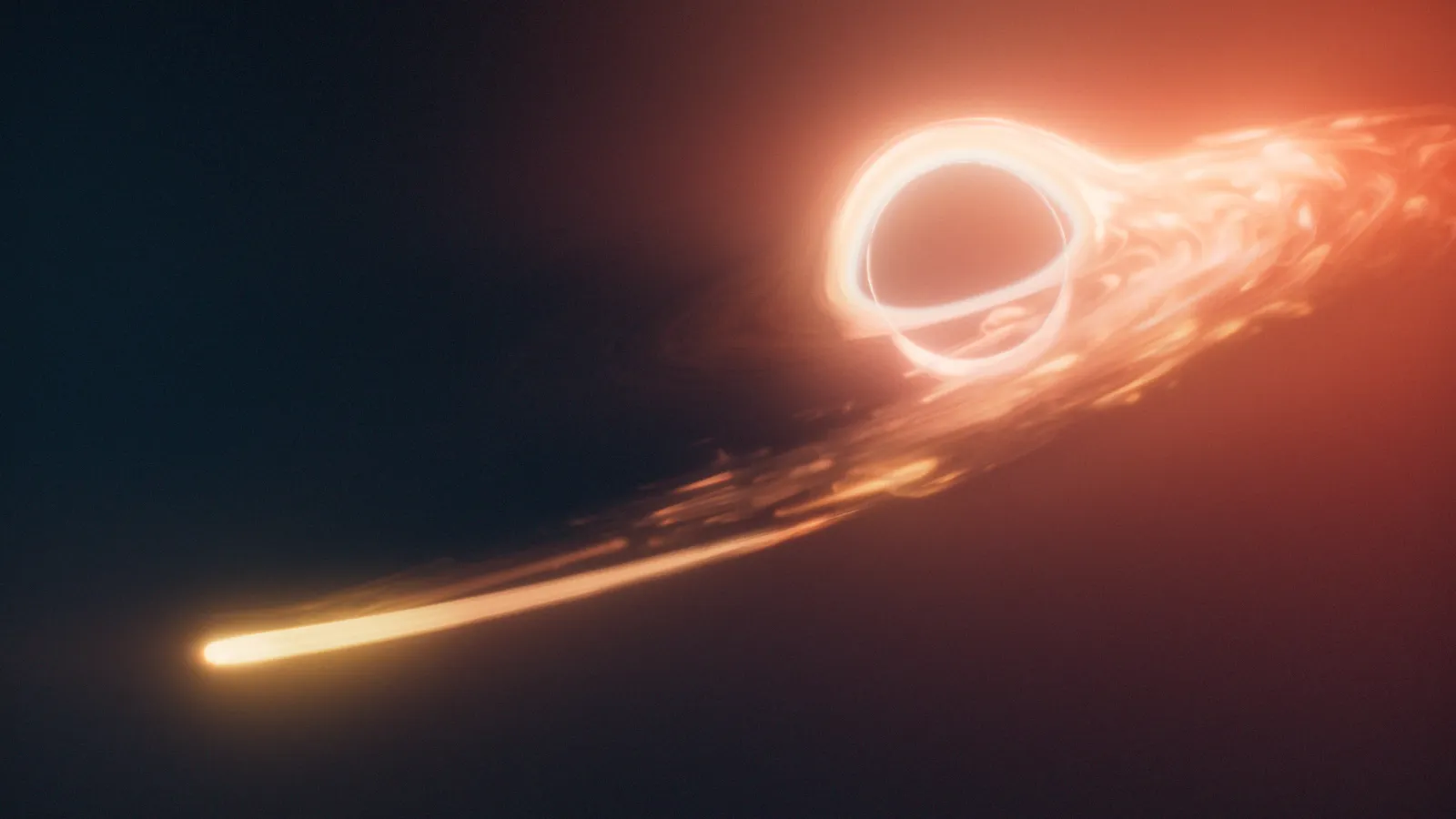
NASA says research in The Astrophysical Journal forecasts NASA’s Nancy Grace Roman Space Telescope will detect about 100 tidal disruption events per year. For decision-makers, it means a new, time-anchored data stream for discriminating competing supermassive black hole origin models before Roman and partner observatories fully begin.
NASA’s Nancy Grace Roman Space Telescope is expected to record about 100 tidal disruption events in a year, and it will do it for the ancient universe. The work predicts Roman will detect TDEs whose light traveled roughly 8 billion to 11 billion years to reach us, effectively giving astronomers a way to “count” supermassive black holes across cosmic time.
That matters because the events are not subtle. During a tidal disruption event, a supermassive black hole shreds a star, and the region around the black hole brightens. In the model, those signals become visible across great distances, letting scientists study black hole growth when the universe was much younger. Roman is on track to launch Aug. 30, 2026, and once it is operating, counting how the TDE rate changes with distance and time becomes a direct observational constraint on what these monsters really started as.
Here’s the core business-risk analogy for this space: the “origin story” of supermassive black holes is still being negotiated in the literature, but with real stakes. Astronomers know there were truly gargantuan black holes very early in the universe. The problem is that the timeline is hard to explain if black holes grew slowly. Instead, theories argue that the seeds were different at the beginning, and Roman’s job is to observe the resulting population signatures by catching TDEs.
The paper’s modeling makes a key point about who Roman can see. Black holes are best studied by looking for the light emitted from their accretion disk, the matter that swirls around them before being consumed. Lighter supermassive black holes are challenging because they can be less luminous due to less accretion. But occasionally they do something dramatic: they shred and consume an entire star. That bright flare can outshine its host galaxy, creating a beacon that lasts weeks and then gradually fades away. TDEs are thus a category that is uniquely suited to lighter supermassive black holes.
Not all black holes play the same game. Heftier black holes, weighing more than 1 billion Suns, tend to swallow incoming stars whole. Lighter black holes of about 100,000 to 100 million Suns can shred a star before consuming it, which is why Roman’s sensitivity opens a window. The research also tackles why simply extrapolating older assumptions might mislead you. Previous work predicted that the rate of TDEs would decrease with increasing distance because young black holes would be too light to generate a TDE. The new research takes into account multiple evolving factors that affect the TDE rate over time, including how often galaxy mergers (and thus black hole mergers) occur, how many stars exist in the core of each galaxy, and how densely those stars are packed.
According to the forecasts, TDE rates increase as Roman probes greater distances and earlier times until “cosmic noon,” about 11 to 12 billion years ago when star formation peaked throughout the universe, then the rate decreases again. This is not just cosmic trivia. In practical observational terms, it provides an expected shape of the TDE rate curve that other observatories can test against. The team modeled how many TDEs Roman could observe and compared that with other facilities, including the ground-based National Science Foundation-Department of Energy Vera C. Rubin Observatory and NASA’s James Webb Space Telescope.
The split is straightforward and important. Roman will observe near-infrared wavelengths. Light from distant TDEs is stretched to longer wavelengths by cosmic expansion, known as cosmological redshift. That means Roman is optimized to detect TDEs whose light traveled anywhere from 8 billion to 11 billion years to reach us. Rubin, by contrast, observes visible light, which limits it to closer TDEs than Roman. The research finds Rubin will detect thousands to tens of thousands of TDEs per year, while Roman is expected to find up to 100 TDEs per year. Fewer events for Roman, yes, but crucially at greater distances, in the realm of early cosmic history most important for distinguishing among black hole origin scenarios.
Those origin scenarios are the real intellectual fight here. One theory, “light seeds,” proposes black holes created from the deaths of massive stars, with masses up to a few hundred times our Sun, that then merge and grow over time while consuming gas at high rates. In that scenario, every young galaxy would be expected to have a massive black hole at its center. A second theory, “heavy seeds,” suggests a black hole could be born with a much higher mass, up to a million times our Sun, through processes such as the direct collapse of a gas cloud. That route should be less common, resulting in supermassive black holes that are rarer in early galaxies.
Lead author Mitchell Karmen of the Johns Hopkins University, a graduate student and National Science Foundation Graduate Research Fellow, described the scientific motivation as “transformative for transient science,” arguing that Roman’s high sensitivity enables finding multiple TDEs at greater distances and earlier cosmic times than ever before. Co-author Suvi Gezari, an associate professor of astronomy at the University of Maryland, adds the methodological angle: by counting the number of TDEs as a function of redshift, astronomers can put meaningful constraints on the population of million-solar-mass black holes. In other words, Roman is positioned to turn a messy astrophysical question into something closer to a measurable demographic.
For executives and boards watching ambitious science programs, the second-order implication is how coordinated observational coverage can de-risk uncertainty. Roman’s near-infrared reach complements Rubin’s broader visible-light survey. After Roman and Rubin begin regular science operations, the team looks forward to comparing forecasts to actual detections, and then comparing results across instruments. NASA also manages the Nancy Grace Roman Space Telescope at Goddard Space Flight Center in Greenbelt, Maryland, with participation by NASA’s Jet Propulsion Laboratory in Southern California; Caltech/IPAC in Pasadena, California; and the Space Telescope Science Institute in Baltimore. The primary industrial partners are BAE Systems, Inc. in Boulder, Colorado; L3Harris Technologies in Melbourne, Florida; and Teledyne Scientific & Imaging in Thousand Oaks, California. This is the kind of ecosystem where performance translates into new constraints, and new constraints rewrite which theories get capital allocated next, in the form of follow-up studies and future missions.
Just like Webb transformed understanding of distant, high-redshift galaxies, Gezari said Roman is poised to transform understanding of high-redshift transients. The strategic point for the ambitious reader is simple: Roman’s TDE tally will not just add observations. It will tighten the origin story, year by year, by turning early cosmic flares into a population-level dataset that can distinguish light-seed from heavy-seed pathways.
This story's Key Insights and Take-aways are locked.
Create a free account to unlock Executive Actions for one credit.
Register to UnlockAlways free for Executives Club members. Join the Club
More in Science

Alaska's 1,580-foot tsunami had warning signs. Scientists just found them.
Rapid glacier retreat, heavy rainfall, and thousands of tiny tremors preceded Alaska's 1,580-foot tsunami, a warning for every coastal community in a warming world.

The rare mutation that lets high-risk brains dodge Alzheimer's
Scientists found a natural defense against protein buildup, opening a new path to preventive treatments.

3,000 steps a day may halve Alzheimer's decline, study finds
New research links a modest daily walk to less tau buildup and nearly half the cognitive and functional decline, even for those with early signs.