
RTX 5090 production halt rumors: the RTX 4090 was the last great GPU
Four years after the $1,499 RTX 4090 launched, Nvidia's consumer flagship is reportedly being shelved for data-center chips, and GPU pricing has never been more brutal.
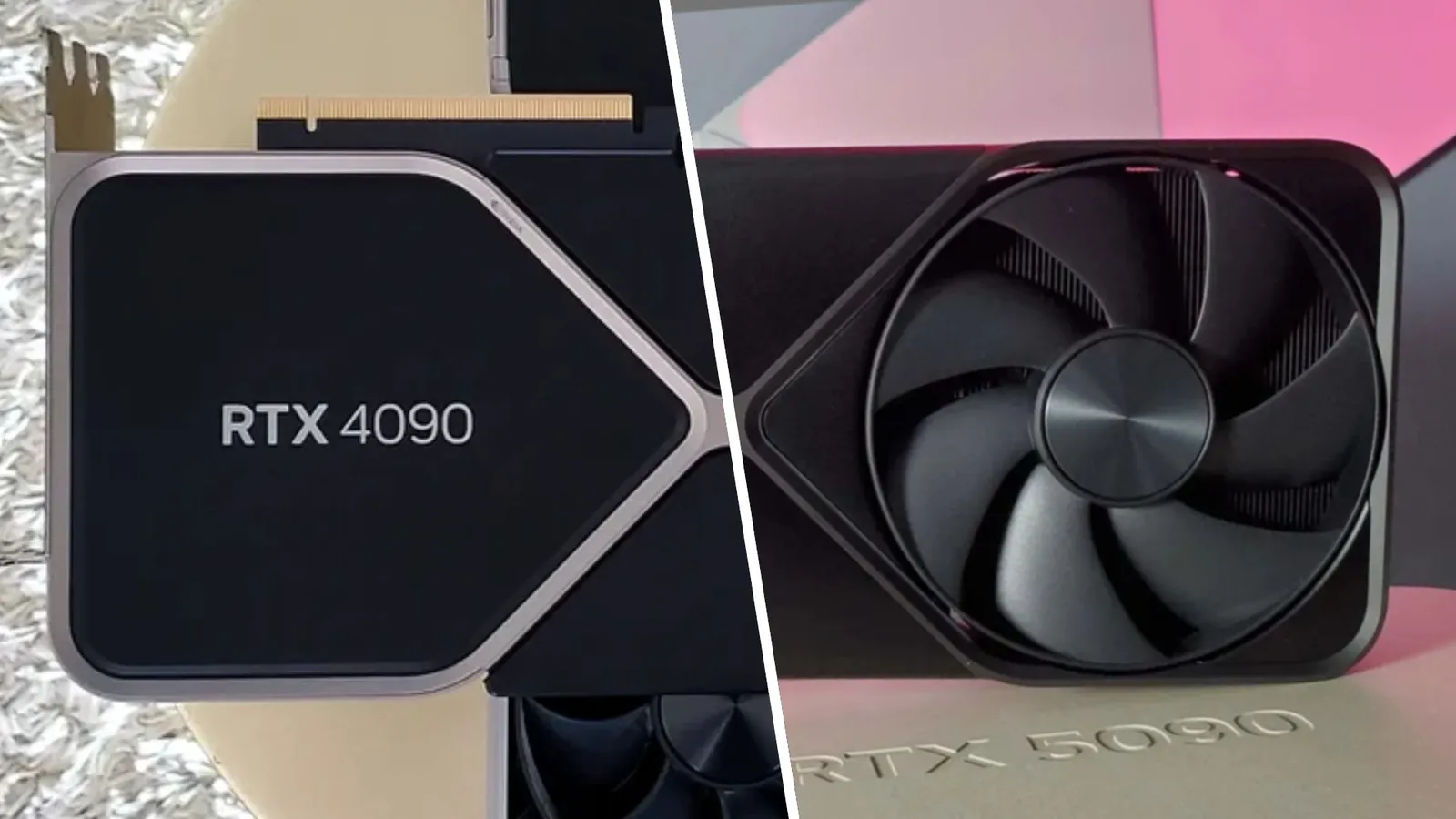
Nvidia's RTX 5090, the $1,999 successor to the RTX 4090, is reportedly facing halted production for consumer markets as GB202 silicon shifts to data center and professional GPUs. For executives, this signals a permanent repricing of high-end consumer GPUs and a strategic pivot toward AI infrastructure that will squeeze gamers and PC builders.
Four years ago today, Nvidia launched the RTX 4090 at $1,499, a price that seemed eye-watering then. Now, as the card turns four, the GPU market has flipped: the cheapest RTX 5080 on the market is $1,640, and the RTX 4090's direct successor, the RTX 5090, has reportedly hit near-unobtanium status, with rumors that Nvidia may have halted production of its consumer-market chips entirely, redirecting GB202 silicon to data center and professional GPUs.
That rumor, if true, would make the RTX 4090 the last halo GPU that made sense for a regular consumer to buy, a point PC Gamer's editors make with a heavy dose of nostalgia. The card's specs still impress in 2026: 24GB of GDDR6X, 76.3 billion transistors, 16,384 CUDA cores (a 56% increase over the RTX 3090), 128 shader modules, 128 ray tracing cores, and 512 Tensor cores. It also introduced DLSS Frame Generation in its early 2x form, a feature that has since become a battleground for gamers. PC Gamer's review sample, described as an absolute cinderblock of a GPU, still looks outrageous today, and the publication notes that many gamers who bit the bullet on the then-exorbitant price have been enjoying its monstrous power ever since.
The RTX 5090, by contrast, launched with a $1,999 MSRP and soared well above that in retailer listings almost immediately. It remains the poster boy for Multi Frame Generation, a technology that boosts frame counts considerably but has split gamer opinion over fake frames. For those who already owned an RTX 4090, the upgrade case was always weak: why pay more for a card that, while considerably faster, still faces the same fundamental question of price versus performance? PC Gamer's Dave called out the prohibitive pricing in his RTX 4090 Founders Edition review but could not help being impressed by its gaming chops.
The broader pricing trend is the real story. When the second-from-top Nvidia card costs more than the previous generation's flagship, the market has structurally shifted. PC Gamer has stopped tracking the RTX 5090 on its price watch page because the only listings are from third-party sellers at ludicrous prices. This is not a temporary shortage; it reflects Nvidia's strategic pivot toward AI and data center silicon, where margins are fatter and demand is insatiable. The article describes graphics card pricing as turbo-screwed for the foreseeable future.
Nvidia's roadmap reinforces that pivot. The article notes that neural rendering is the future, with more hardware dedicated to frame generation and less focus on raw performance uplift. The RTX 60-series is likely a way out, but the pattern is clear: future halo cards will be ludicrously priced and stuffed with Tensor cores for Multi Frame Generation, now with DLSS 5 on top. For consumers, the era of a $1,499 flagship that remains a monster for years is over. PC Gamer's editors pine for the days when GPUs were more straightforward affairs, raw graphics-crunching monsters available for sums that were at least somewhat within reach for those with more modest salaries, a wild thing to say about a $1,499, four-year-old GPU, but the state of pricing in 2026 has thrown all previous metrics for a loop.
For executives and decision-makers, the implications extend beyond gaming. The GPU market is now a tale of two worlds: consumer cards are being repriced upward as AI infrastructure absorbs the best silicon, and the futureproofing that made the RTX 4090 a smart buy is becoming a dirty word. Companies that rely on high-end consumer GPUs for workstations, rendering, or machine learning at the edge need to budget for higher costs and longer replacement cycles. The RTX 4090's longevity, it still kicks like the proverbial mule, means those who bought it are not upgrading, which further depresses the consumer market's volume.
The strategic takeaway is that Nvidia is no longer selling to gamers first. The GB202 silicon going to data centers is a signal that the consumer segment is a residual market, not the priority. For competitors and buyers alike, the RTX 4090's fourth birthday is a reminder that the window for a reasonably priced, over-specced halo card has closed, and it may not reopen. As PC Gamer puts it, raise a glass to the RTX 4090 because we won't see its like again.
This story's Key Insights and Take-aways are locked.
Create a free account to unlock Executive Actions for one credit.
Register to UnlockAlways free for Executives Club members. Join the Club
More in Business

Elon Musk unveils a flying car, and SpaceX helped build it
The Tesla CEO's showcase at a SpaceX facility signals a future where road and rocket engineering converge.

Apple's $2,000 iPhone Duo opens preorders, taking on Samsung and Google
Apple's first foldable hits the market at a premium price, reshaping a category Samsung and Google have led.

Pope Leo XIV, first American pope, diagnosed with lung cancer
The 71-year-old Chicago-born pontiff underwent successful surgery on his right lung, and his diagnosis raises new questions about his AI-focused papacy and the Vatican's future.