
Rubin Observatory launches the southern sky survey with the largest camera ever built
The Vera C. Rubin Observatory is starting a planet-to-galaxy mapping effort, reshaping what astronomers can measure and when.
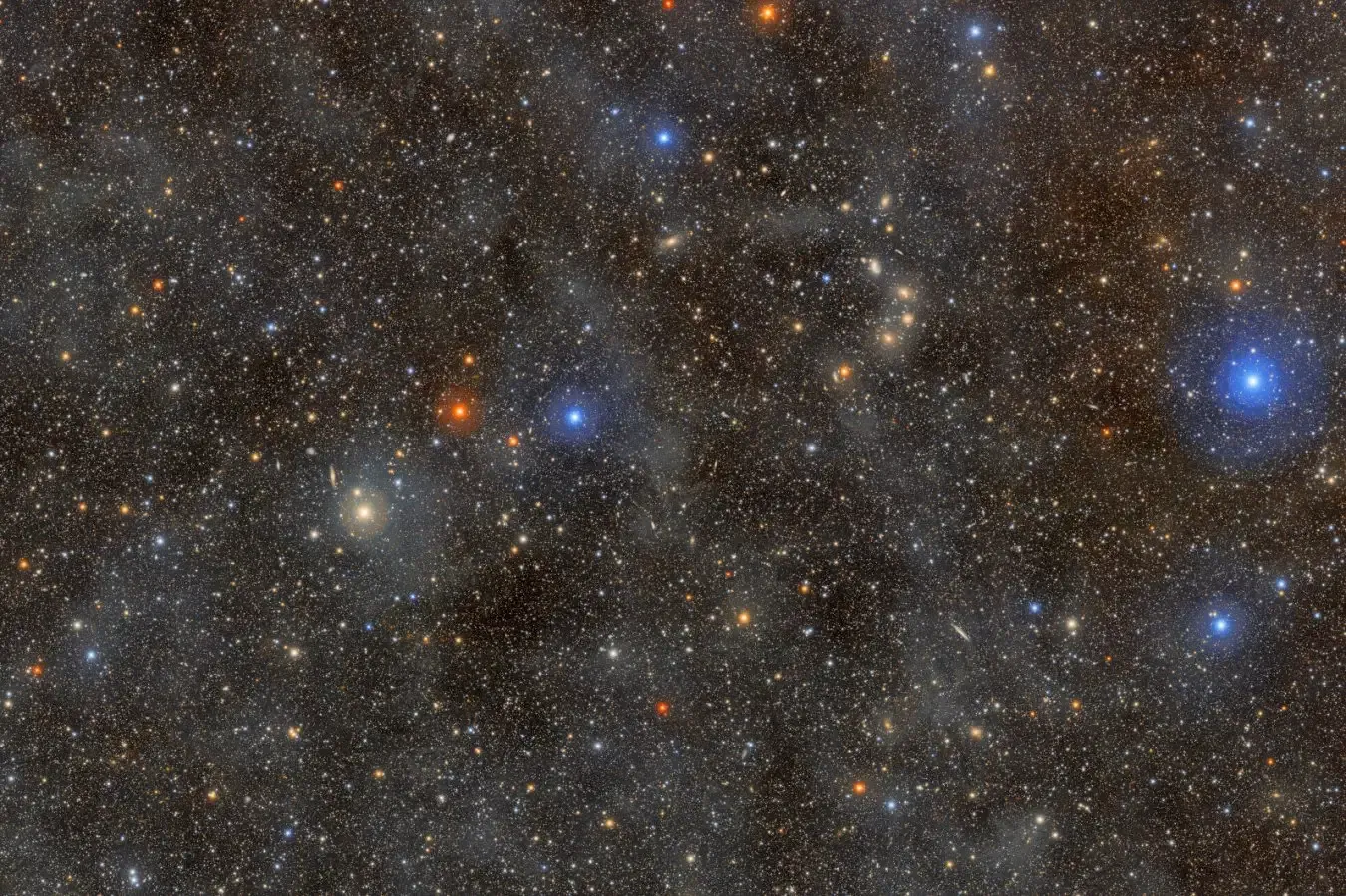
The Vera C. Rubin Observatory in Chile is beginning its extraordinary southern sky survey. It will use the largest camera ever built to map the solar system, the galaxy, and beyond.
The Vera C. Rubin Observatory in Chile is beginning its extraordinary survey of the southern sky, and it is doing it with the largest camera ever built. That matters because the camera is not a cool accessory for a press release. It is the instrument that turns raw night sky into a measurable, trackable dataset across the solar system, the galaxy, and beyond.
In plain English, the observatory is starting a project designed to capture an unusually detailed, wide-ranging view. The survey is focused on the southern sky, which is the chunk of the heavens visible from southern latitudes, and it is positioned as a starting gun for a new baseline of observations. If you are an operator, a data buyer, or even a policymaker thinking about how infrastructure gets built for science, the headline is the product. The largest camera ever built is the procurement-grade commitment behind the idea that the “most detailed survey of the universe ever conducted” is not a slogan, it is a capability upgrade.
To understand why this is a big deal beyond astronomy fandom, consider how surveys work in the first place. Observatories do not just take pictures, they generate catalogs. Those catalogs become the inputs that drive follow-up observations, refine models, and guide where scientists point next. A survey that is more detailed and more complete changes the odds of finding rare objects, measuring changes over time, and spotting patterns that were previously buried in incomplete coverage. In other words, a bigger camera and a systematic scan can turn “maybe” into “we can test this.”
This particular survey is explicitly geared to map multiple scales: the solar system, the galaxy, and beyond. That is a critical detail. The solar system component is about tracking moving objects against a relatively fixed background. The galaxy piece is about understanding structure, composition, and distribution within our cosmic neighborhood. “Beyond” then widens the lens to phenomena outside the Milky Way, where distance, brightness, and observational bias become even more central. When you run one survey that can contribute across these categories, it reduces fragmentation. Researchers can compare and connect results in ways that would be harder if every question lived in a separate, incompatible dataset.
There is also a second-order implication for anyone thinking in terms of institutions and funding. Large observatories sit at the intersection of science budgets, national and international collaboration, and long timelines that span political cycles. When something like Rubin begins a southern sky survey now, it is not only a scientific milestone, it is the consequence of years of planning, construction, and operational readiness. That means the “start” is also a transition from building to running. For decision-makers, the operational phase is where risks shift: from engineering and commissioning concerns to data throughput, calibration discipline, and how results get used.
Regulatory background is less about government approving stargazing and more about governance around infrastructure, land use, and the broader public interest that comes with big science facilities. The key point for an executive audience is that these projects often depend on stable operating permission and community alignment long after the hardware is installed. As surveys produce more data, questions about data access, usage norms, and transparency naturally follow. Even when there is no formal “regulation of astronomy,” there is a real governance layer around how publicly funded instruments communicate their results and how communities coordinate follow-up work.
So what should peers in science-adjacent industries or leadership roles take from this? First, Rubin Observatory is not launching a one-off campaign. It is starting a structured, sky-spanning survey with an ultra-capable camera. That is exactly the kind of infrastructure step that can reorder what the field treats as “known” versus “unknown.” Second, the survey’s scope across the solar system, the galaxy, and beyond is a reminder that capability upgrades have compounding returns. A better instrument is not just better images, it is better measurement, faster iteration, and more confidence in statistical findings.
Finally, the strategic stake is time. When the observatory begins capturing the southern sky in a systematic way, the dataset will become a reference point. That can advantage teams that can analyze and cross-match data quickly, and it can shift research agendas toward questions that were previously too hard to tackle comprehensively. In the short term, scientists will be calibrating and validating. In the longer term, the survey will shape the next generation of targets, models, and debates. If you care about how major institutions build momentum, the opening of Rubin Observatory's southern sky survey is the moment where the work moves from “promised” to “producing.”
This story's Key Insights and Take-aways are locked.
Create a free account to unlock Executive Actions for one credit.
Register to UnlockAlways free for Executives Club members. Join the Club
More in Science

Alaska's 1,580-foot tsunami had warning signs. Scientists just found them.
Rapid glacier retreat, heavy rainfall, and thousands of tiny tremors preceded Alaska's 1,580-foot tsunami, a warning for every coastal community in a warming world.

The rare mutation that lets high-risk brains dodge Alzheimer's
Scientists found a natural defense against protein buildup, opening a new path to preventive treatments.

3,000 steps a day may halve Alzheimer's decline, study finds
New research links a modest daily walk to less tau buildup and nearly half the cognitive and functional decline, even for those with early signs.