

Russia targets Black Sea trade routes and deepwater ports to squeeze Ukraine
A shift in Moscow's pressure points aims to drain Ukraine's wartime economy by attacking where goods can move.
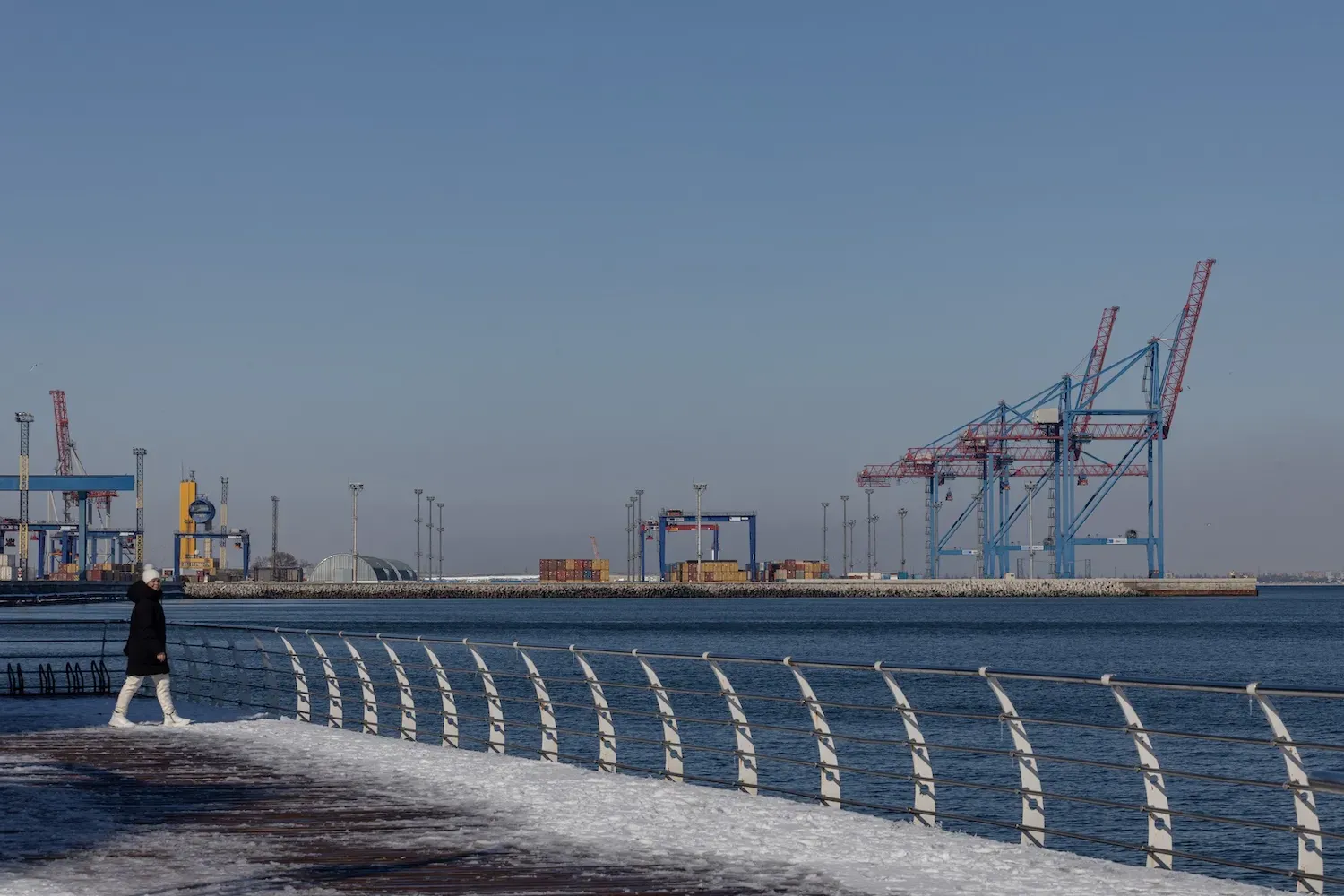
Russia is targeting trade routes and deepwater ports in the Black Sea to strain Ukraine's wartime economy. For decision-makers, this signals a deliberate pressure strategy aimed at logistics, not just battlefield effects.
Russia is shifting its focus to the Black Sea, targeting trade routes and deepwater ports in an effort to strain Ukraine's wartime economy. The basic idea is simple: if fewer goods can move in and out reliably, the cost of keeping an economy running during war rises fast. That means ripple effects for everything that depends on supply chains, shipping capacity, fuel, spare parts, and the broader commercial activity that wartime states still need even as they prioritize military spending.
For executives tracking risk, this is not just a regional headline. It is a signal that Moscow is trying to apply economic leverage through geography. Trade routes and deepwater ports are the chokepoints where disruption turns into lasting damage, because you do not just lose one shipment. You lose schedules. You lose routing options. You lose the ability to plan inventory and production. Over time, that raises operating costs, introduces delays, and can force companies and governments to reroute, pay premiums, or redesign procurement. In a wartime economy, those costs compound, making it harder for Ukraine to finance and sustain its operations.
To understand why the Black Sea matters so much, it helps to zoom out on how wartime logistics differs from peacetime. During conflict, the baseline assumptions that businesses rely on become fragile: consistent departure times, predictable insurance pricing, and stable access to ports. Deepwater ports add an extra layer. They can handle larger vessels and more complex cargo operations, which means they are often tied to the highest-throughput segments of trade. When those nodes are pressured, the knock-on effect is not evenly distributed. Some flows can be diverted to smaller facilities or alternate corridors, but diversions come with bottlenecks, increased handling, and added costs. The result is a squeeze: less cargo capacity, more friction, and a slower economy.
Russia's targeting approach, as described in Foreign Policy, also suggests a strategy oriented toward system stress. Trade routes are not a single switch you flip. They are networks that rely on safe navigation, effective maritime coordination, and the willingness of shippers and insurers to keep moving cargo. Ports are where the network materializes into contracts, schedules, and measurable throughput. By aiming at both routes and deepwater ports, Moscow is aiming for interference across multiple layers of the logistics stack. That is how you move from disruption to economic pressure.
Regulatory and financial framing matter here too, even if the immediate story is about shipping. Wartime pressure tends to feed into compliance realities: sanctions risk, licensing requirements, and export or shipping documentation scrutiny can increase when conflict escalates or when routes become less predictable. Even firms that have the operational capability to move cargo may face constraints that slow decisions. For decision-makers, this is where operational risk becomes balance-sheet risk. If you cannot move goods at the expected cadence, you may need buffer inventory, higher working capital, or substitute inputs that are more expensive or less available. Those adjustments can be manageable in the short run and painful in the long run.
Second-order implications extend beyond Ukraine. When trade routes near the Black Sea are targeted, the broader region's shipping economics can tighten. Vessels that might otherwise serve one set of corridors are rerouted, which can change availability and pricing globally. That can affect European buyers, regional distributors, and multinational supply chains that are already operating under war-adjacent uncertainty. Boards and investors often think of geopolitical risk as a volatility factor. But logistics disruptions create a more direct mechanism: they affect timelines, contract performance, and costs in ways that are measurable quarter to quarter.
There is also a strategic signaling component. Foreign Policy frames the move as a focus shift, targeting trade routes and deepwater ports to strain Ukraine's wartime economy. In practice, that means Moscow is attempting to influence the war's economics by attacking where capital and capacity flow. If Ukraine can sustain movement through alternative channels, the pressure may be less severe. But if disruptions persist or expand, the pressure becomes harder to absorb. For peers in leadership roles, the lesson is that economic warfare often targets infrastructure and routing, not just markets or money directly. The battlefield may drive headlines, but ports and shipping lanes decide how quickly an economy can function.
In short, this is an economic squeeze campaign aimed at the Black Sea nodes that enable trade. It puts Ukraine's wartime economy under stress by raising the friction in how goods and inputs can move. And it forces executives across the region and beyond to treat logistics resilience as a core risk domain, not a background assumption.
This story's Key Insights and Take-aways are locked.
Create a free account to unlock Executive Actions for one credit.
Register to UnlockAlways free for Executives Club members. Join the Club
More in Politics

LA County: DOJ's 20,000 'noncitizen' voter list is 'unreliable,' includes U.S.-born
Preliminary review by Los Angeles County election officials finds errors in the federal list, raising the stakes for voter roll integrity ahead of November.

Trump's $1.5B Pentagon chip investment lands in North Carolina
A $1.5 billion defense infusion for North Carolina chipmaking signals a new era of Pentagon-backed reshoring - here's what it means for the industry.

Nigeria confirms first Ebola case in Abuja, a woman just off a Uganda flight
Health Minister Muhammad Ali Pate says the patient flew in from Uganda, putting Africa's latest outbreak on Nigeria's doorstep.