

Ryan Coogler announces David Jonsson as T'Challa’s grown son for Dec 15, 2028
The “Black Panther 3” release date is locked, and the casting signals a clear generational pivot.

Director Ryan Coogler announced at San Diego Comic-Con that Black Panther 3 will hit theaters on December 15, 2028, with David Jonsson playing T'Challa's grown son introduced at the end of Wakanda Forever. For decision-makers across entertainment, the move matters because it locks in audience expectations years ahead and frames where brand and box-office risk will sit.
At San Diego Comic-Con, director Ryan Coogler used the main stage to do two things at once: confirm Black Panther 3’s release date and make a casting promise that tells you exactly which era the studio is trying to move into. The movie will hit theaters on December 15, 2028, and David Jonsson will play T’Challa’s grown son, a character introduced at the end of Wakanda Forever.
That combination is the headline. The date anchors planning across distribution, marketing calendars, and competitive positioning, while the casting choice answers a deeper question that fans and executives both care about: who is now the center of the franchise story when the torch passes. Coogler’s announcement effectively ties the franchise’s long-term narrative arc to a specific actor and a specific role, rather than leaving that generational pivot as vague “next chapter” branding.
The end of Wakanda Forever set up this transition point by introducing T’Challa’s grown son. Jonsson’s casting is what turns that setup into an actual film timeline, and timelines are where studios get held accountable. A release in December 2028 is not just a calendar marker. It means years of pipeline work, talent scheduling, and multi-layered marketing strategy that has to start before any performance data exists for the eventual box office. In that sense, the announcement functions like an early operational lock: the project’s identity is no longer just concept and character introductions, it has now been tied to a named performance.
There is also an industry reality behind why these announcements feel louder than they look. Marvel-scale franchises operate like ecosystems, where one sequel is never only about storytelling. It sets expectations for related projects, merchandising cycles, talent relationships, and audience retention. When a character was “introduced at the end” of a prior film, audiences often treat that post-credits style moment as a promise. If Black Panther 3 delivers on that promise, it stabilizes confidence in the broader Marvel universe plan. If it does not, it creates a narrative credibility gap that marketing teams cannot wish away.
From an executive perspective, casting can be treated as more than creative. It becomes a signal to internal stakeholders, partners, and investors about continuity and risk management. The franchise’s central figure, T’Challa, comes of age in the new movie according to the announcement framing. That matters because “coming of age” plots are often used to reset stakes and expand audience reach. But they can also change the franchise’s emotional core. By choosing an actor for T’Challa’s grown son now, Coogler is steering the emotional math early, so downstream teams can build marketing narratives around a new focal point.
There is another second-order effect worth noting: long-lead schedule credibility. December 15, 2028 is far enough out that many variables can shift, yet the studio is still committing publicly. That commitment is meaningful for partners like theater circuits, advertisers, and streaming strategy teams who plan revenue windows around release calendars. It also affects how competitors calibrate their own release slates. Even without revealing production details, a firm date helps create a “gravity well” that the industry orients around years in advance.
On the fan side, the stakes are immediate and personal. T’Challa is a legacy character, and any successor storyline will be judged against memory. The announcement does not ask audiences to wait to find out what the post-Wakanda Forever transition actually means. It tells them who will play the grown son, and it ties that character to a concrete release date. That reduces uncertainty, which is the real currency in modern franchise marketing, because uncertainty is what drives disengagement.
For executives, boards, and investors tracking tentpole franchises, the lesson is simple: generational pivots need operational specificity. Coogler’s stage announcement paired date certainty with casting certainty, and that dual lock is how studios reduce ambiguity while still sustaining hype. If you are responsible for major IP programming, this is a reminder that the best long-term strategy often looks like a short-term deliverable. In this case, it is a December 15, 2028 theater date and David Jonsson stepping into the role of T’Challa’s grown son.
This story's Key Insights and Take-aways are locked.
Create a free account to unlock Executive Actions for one credit.
Register to UnlockAlways free for Executives Club members. Join the Club
More in Entertainment

'It's a Magic Trick': Ballet Experts Say Rosalía's SNL Pose Is Impossible
Three ballet experts tell Rolling Stone Rosalía's gravity-defying SNL stillness shouldn't be possible - and why the debate is now part of the show.

Activision CMO: GTA 6 Will Boost Call of Duty, Not Bury It
Activision's top marketer says Rockstar's blockbuster will drive players back to consoles and into Modern Warfare 4, even as the company admits its recent strategy failed.
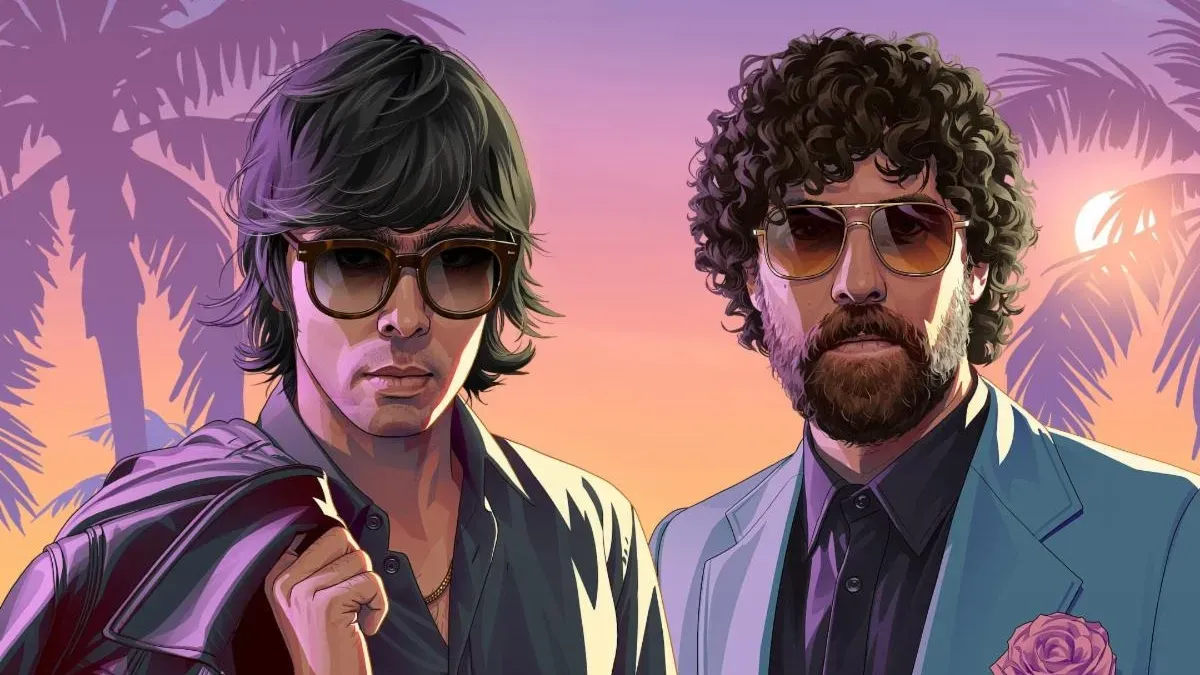
Justice to Score GTA 6, Share New Song with Tame Impala, SZA, King Gizzard
Rockstar taps the French duo for the GTA VI score, and the first taste is a genre-melting collab with Tame Impala, SZA, and King Gizzard & The Lizard Wizard.