

Saber CCO Tim Willits: One-game studios 'are going to struggle'
Saber Interactive's chief creative officer argues that spreading resources across multiple projects-not betting everything on a single mega-game-is the key to weathering industry turbulence.

Tim Willits, chief creative officer at Saber Interactive, says the industry's layoffs stem from overspecialization-studios putting hundreds of employees on a single title-and advocates for a diversified portfolio approach. For executives, this signals that flexible resource allocation and smaller passion projects can be both a financial hedge and a morale booster, even as mega-productions like GTA 6 dominate headlines.
Tim Willits, chief creative officer at Saber Interactive, has a blunt warning for studios that bet everything on one massive title: "Studios that have a couple hundred employees that work on one game are going to struggle. They're going to really struggle to survive." The comment, made in an interview with PC Gamer, lands amid a wave of industry layoffs and studio closures that have reshaped the gaming landscape over the past two years. Willits directly ties those woes to a structural flaw: overspecialization, where entire teams are locked into a single project with no ability to pivot or share talent.
Willits argues that Saber's success comes from the opposite approach. "We develop games that are across the scope spectrum," he said, pointing to a portfolio that includes large-scale productions like Space Marine 2 and the upcoming Jurassic Park: Survival, alongside smaller, experimental titles. The key is a culture that allows people to move between projects. "We have a culture where people can work on any game, and we can move resources around. So we avoid the 'silo problem' that you find with big studios," he explained. That flexibility means Saber can shift developers to where they're needed most, rather than keeping hundreds idle or laying them off when a project wraps.
The payoff of this strategy is visible in SnowRunner, a game that started as "an experiment by one guy" and became a "mega franchise" with over 46,000 user reviews on Steam. Willits sees such small bets as both a financial hedge and a creative release valve. "If we have the resources and we can reliably make money from that project, why not do it?" he said. The approach also boosts morale: employees aren't stuck on the same title for five or six years, which he says keeps the work "fun."
When asked if he'd ever want Saber to become a Rockstar-sized hitmaker-the kind of studio that spends years and hundreds of developers on a single blockbuster like GTA 6-Willits demurred. "I have the best job in the world now," he said, emphasizing that variety and agility beat sheer scale. He also pushed back on the narrative that the industry is in crisis, calling the current moment "actually, honestly, a good time" for the medium. On the topic of AI, he noted that "of course" id Software-where he served as studio director from 1995 to 2019-would have embraced the technology back in the day, suggesting that resistance to new tools is a luxury the industry can't afford.
For executives across gaming and adjacent creative sectors, Willits' philosophy offers a counter-narrative to the mega-production arms race. Diversifying across project sizes-from tiny experiments to AAA titles-can reduce the risk of catastrophic failure and keep talent engaged. But it requires discipline: resisting the sunk-cost fallacy of doubling down on a single bet, and building a culture where resource reallocation is routine, not a crisis response. As layoffs continue to ripple through the industry, the Saber model suggests that the most resilient studios may be those that treat their workforce as a flexible pool of skills rather than a fixed cost tied to one product.
The strategic stakes are clear. Boards and CEOs watching their own pipelines should ask whether they're over-indexing on a single 'tentpole' title, and whether their organizational structure allows for the kind of cross-pollination Willits describes. The answer may determine not just profitability, but survival in an industry where the next downturn is always just around the corner.
This story's Key Insights and Take-aways are locked.
Create a free account to unlock Executive Actions for one credit.
Register to UnlockAlways free for Executives Club members. Join the Club
More in Business

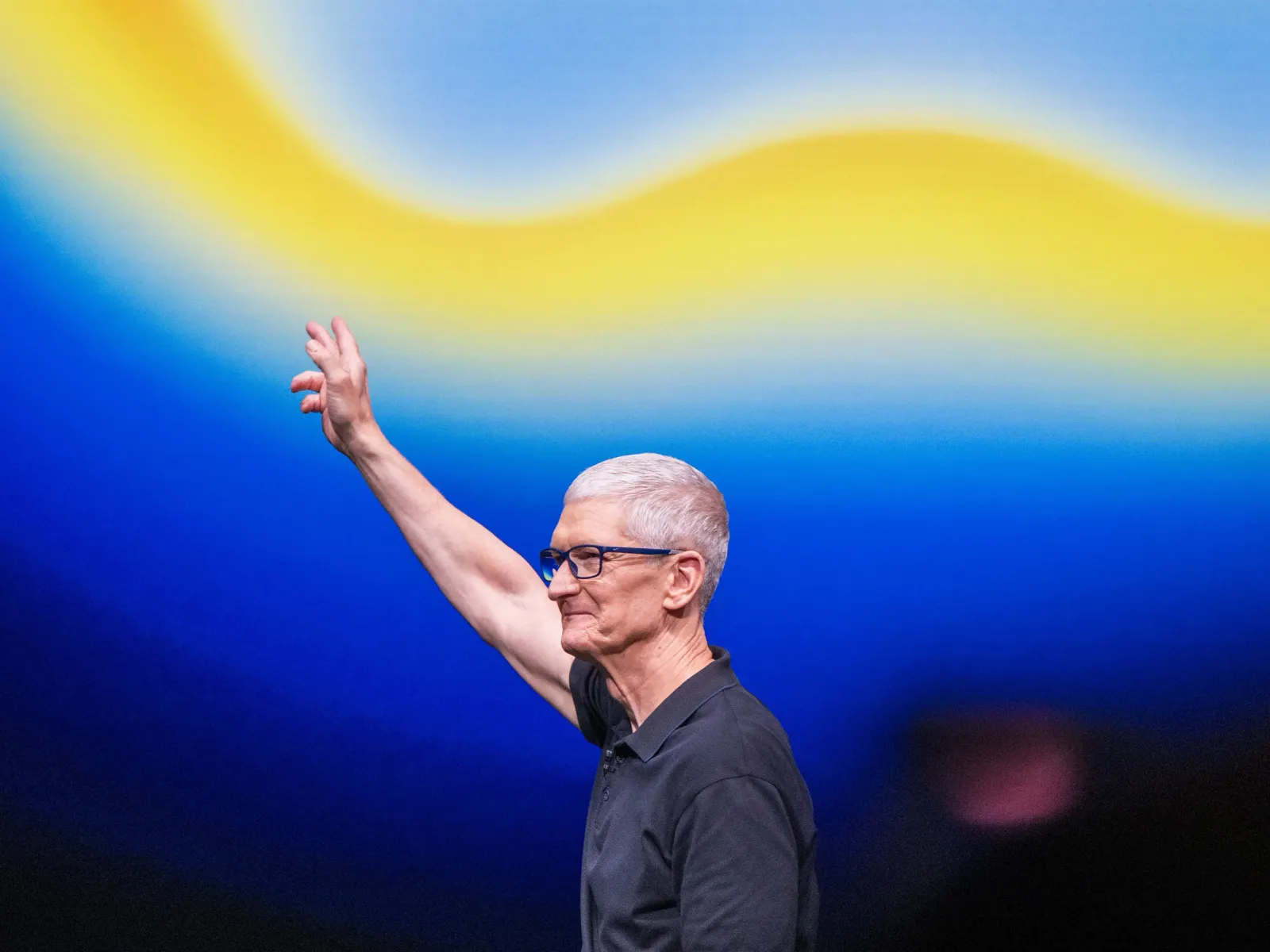
Tim Cook steps down as Apple CEO, stays on as chair with $45M equity
The 'Trump whisperer' keeps his White House and Beijing access as Apple navigates tariffs and a $4.6 trillion market cap.

Snowflake shares surge as AI data demand crushes estimates, lifting full-year forecast
Stocks jumped on stronger-than-expected guidance, signaling enterprise AI workloads are accelerating faster than Wall Street priced in.
Tim Cook's 15-year Apple CEO run ends: 3 lessons for any successor
After 15 years, Tim Cook hands Apple to John Ternus - here's how he turned a $350B company into a $4.6T juggernaut.