
SAG-AFTRA ratifies contract with 91.42% approval
The union locked in AI guardrails, a pension-plan merger path, and better streaming residuals, giving Hollywood a clearer template for the next labor fight.
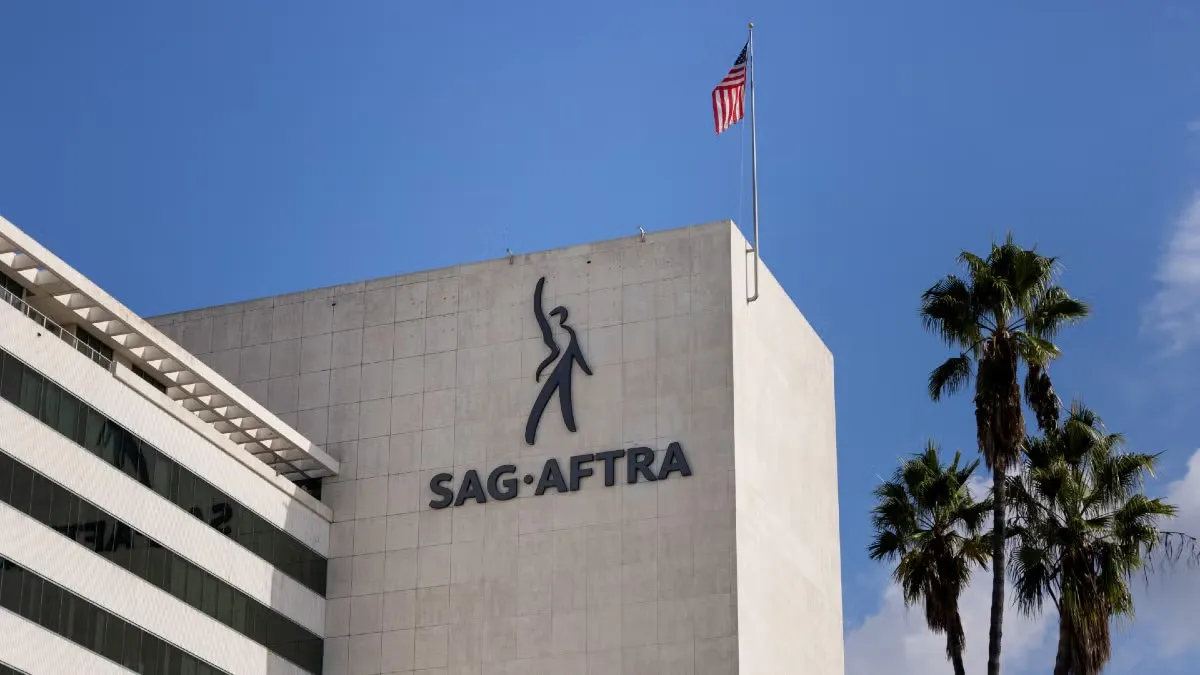
SAG-AFTRA members ratified their new bargaining agreement with the Alliance of Motion Picture and Television Producers with 91.42% approval after a three-week vote. The deal matters beyond Hollywood because it tightens AI rules, moves two benefit plans toward a 2028 merger, and resets compensation terms that other guilds will now use as leverage.
SAG-AFTRA members just delivered a very loud yes: 91.42% of voting members backed the union's new bargaining agreement with the Alliance of Motion Picture and Television Producers. The vote closed after a three-week period that began on May 14, and the union announced the results Thursday. In plain English, this was not a squeaker, a split house, or a message vote. It was a ratification with enough margin to say the membership is aligned behind the deal, even with 8.58% voting against it and a 19.25% turnout.
That matters because this contract is not just about one labor agreement. It sets the operating rules for how actors get paid, how their benefits are protected, and how Hollywood can use artificial intelligence without treating performers like raw material. Sean Astin, SAG-AFTRA's president, said the deal "delivers meaningful gains in compensation, strengthens protections around artificial intelligence and digital identity, reinforces the long-term security of members' benefit plans and recognizes the realities of how performers work today." Duncan Crabtree-Ireland, the union's national executive director and chief negotiator, said it "addresses critical issues," including a long-desired path to merging benefit plans, stricter rules on synthetics, and higher residuals and other compensation.
The benefit-plan piece is one of the more concrete long-term changes. As part of the agreement, the SAG-Producers Pension Plan and AFTRA Retirement Fund will be combined into a single merged plan, with an additional 1% added to the studio contribution rate. The expected completion date is January 1, 2028, which is nearly 16 years after SAG and AFTRA merged in 2012. For workers, that sounds technical. For studios, it means a cleaner and potentially more durable benefits structure. For other labor negotiations, it is a reminder that pension and health arrangements are not side quests. They are core terms, and they can sit at the center of bargaining for years.
The AI section is where the contract starts looking like a preview of the industry every other creative business is about to face. The new rules address synthetic performers, meaning AI-generated actors that are not direct replicas of real-life actors. The topic became especially hot in Hollywood last year after the rise of the AI-generated Tilly Norwood. Under the new agreement, AMPTP member studios have agreed to "overwhelmingly" use union actors, while SAG-AFTRA reserved the right to negotiate with any union production over planned use of synthetic performers. Producers will have to show that synthetics bring "significant additional value" to a production. The contract does not define exactly what that means, but it says the synthetic must deliver significant value not only compared with a union performer, but also with a digital replica of a union performer.
That distinction matters because the contract draws a line between two different forms of AI use that can sound similar from far away but are not the same in practice. As Crabtree-Ireland told TheWrap last month, "With a digital replica, that AI performance is based on the voice and likeness of a union performer that is owed compensation and has consent protections. And that is the primary difference between a replica and a synthetic. There's very little distinction between the two in terms of capabilities, so I think that narrows the use of synthetics in a very significant way." In other words, the union is trying to keep AI from becoming the default substitute for human performers by making studios prove an actual upside before they can rely on it. If SAG-AFTRA and producers cannot agree on synthetic performer use, the union can take the issue to an arbitrator and seek damages "in an amount that will not necessarily be limited to the compensation that would have been paid to a natural performer for rendering the performance for which the Synthetic was used," according to the agreement summary.
The money behind the rest of the deal is also worth paying attention to, especially for anyone tracking how streaming economics keep getting rewritten in labor talks. SAG-AFTRA also negotiated bigger payouts from studios to its streaming compensation fund. Under the new terms, films and TV shows that are viewed by 20% of a streaming service's subscriber base in the first 90 days of release trigger a payment to the union fund equal to 35% of the residuals owed to actors, up from 25% in the prior contract. Insiders told TheWrap that this increase was a compromise, because SAG-AFTRA wanted a lower viewership threshold to trigger the fund contributions. That is a useful reminder that in streaming, the fight is often not just about the headline rate, but about the trigger. Move the trigger, and you change how much money actually flows.
For the industry, the immediate headline is that the biggest acting union and the studios have now locked in a deal after talks that started in February, paused in March so the AMPTP could negotiate with the Writers Guild of America, resumed in late April, and produced a tentative agreement on May 2. AMPTP, for its part, congratulated SAG-AFTRA on ratifying the contract and said the agreement delivers "meaningful improvements in wages, pension and health benefits, streaming residuals, and performer protections." The group added that "these deals demonstrate what is possible when the industry works toward practical solutions that support its long-term stability." That is studio-speak for: the labor calendar is moving, and the terms are being set under real pressure.
Now the focus shifts to the Directors Guild of America, which has been in talks with AMPTP since May 11. The DGA is expected to make health plan updates and AI protections key issues as negotiations continue toward the June 30 contract expiration date. That makes SAG-AFTRA's ratification more than a ceremonial finish line. It becomes a precedent. In Hollywood, one guild's win is another guild's starting point. And for executives outside entertainment, the larger lesson is obvious: if your business depends on creative labor, digital identity, or platform economics, the terms around AI, benefits, and recurring revenue are no longer abstract policy debates. They are now negotiated operating expenses.
This story's Key Insights and Take-aways are locked.
Create a free account to unlock Executive Actions for one credit.
Register to UnlockAlways free for Executives Club members. Join the Club
More in Business

Anthropic’s Levant Alpöge cracks the Jacobian conjecture after 87 years
A Harvard valedictorian used Claude to hit a 1939 breakthrough, but the missing “why” is the real problem.

Uber buys Delivery Hero for nearly $15B, vaulting to top food delivery outside China
The deal doubles Uber's dual-services footprint and pushes a ride-and-eats bundling play into 50 more markets.

Epic and Google drop settlement bid, forcing rival Android app stores by July 22
Google told the court it is ready to carry third-party app stores starting Wednesday, July 22.