
Salahodeen Abdul-Kafi quits tech, books ~$2.3M in year one selling halal BBQ
Kafi BBQ in Irving, Texas proves a pork-free menu can still run high-margin barbecue.
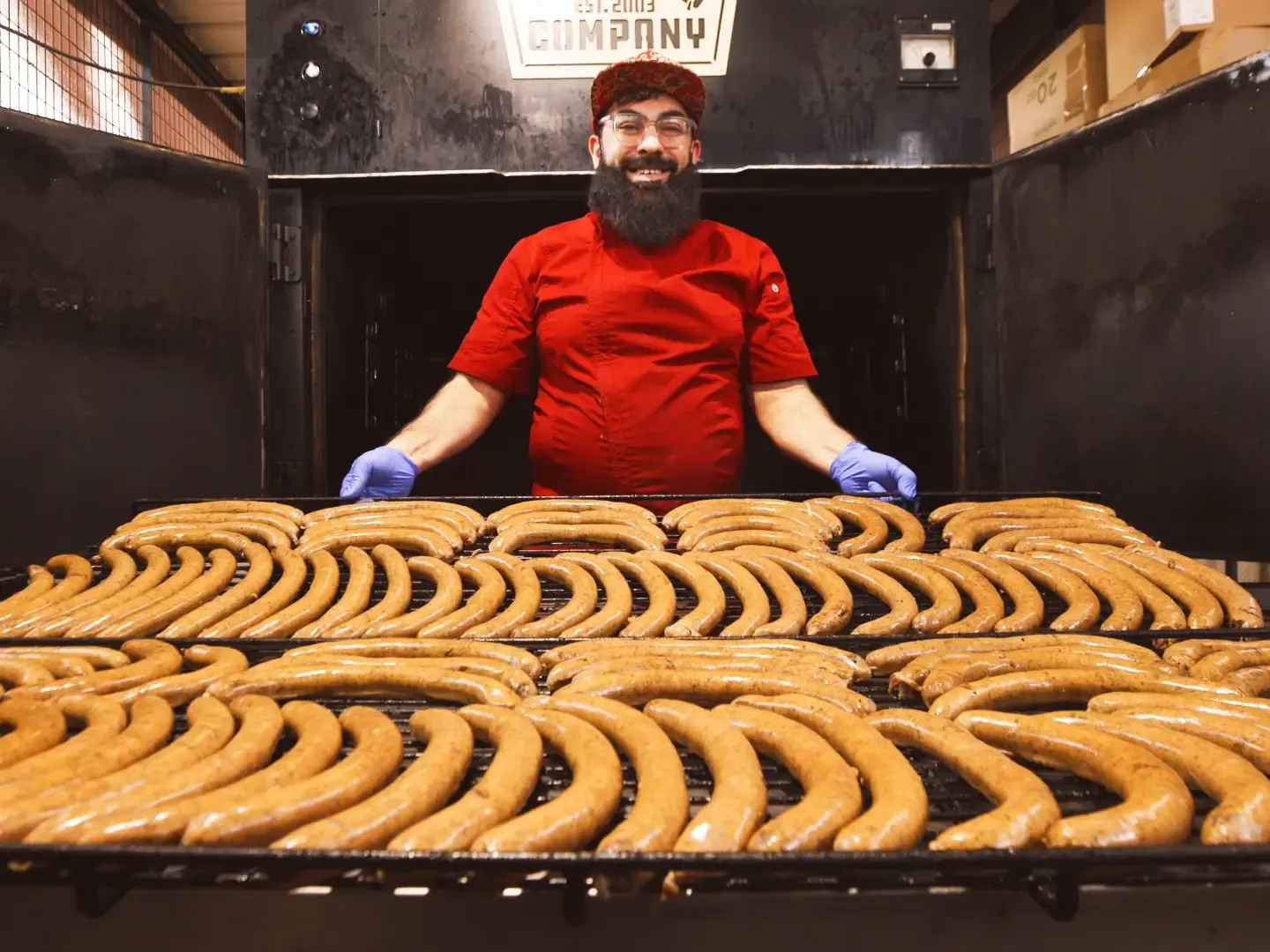
Salahodeen Abdul-Kafi left a 14-year tech career to open Kafi BBQ, a halal Texas barbecue restaurant in Irving, Texas. In its first year, Kafi made about $2.3 million in revenue without serving pork, while building the operation around scratch cooking and specialty cuts.
Salahodeen Abdul-Kafi walked away from a 14-year tech career to open Kafi BBQ, a halal Texas barbecue restaurant in Irving, Texas. Then the numbers landed: in its first year, Kafi made about $2.3 million in revenue without serving pork, a key detail because pork is one of the highest-margin items in traditional Texas barbecue.
That combination matters. Halal barbecue means fewer “default” menu assumptions, but Kafi still pulled roughly $2.3 million in revenue in year one. The playbook is not “swap one ingredient and hope.” It is a full operational re-build around halal requirements, ingredient sourcing, and a menu that is designed to hit the same cravings customers expect from Texas barbecue, minus the pork.
So what actually enables that kind of revenue early on? Kafi BBQ does what a lot of restaurants claim to do and fewer fully execute: it makes everything from scratch. The menu includes halal wagyu brisket, Iraqi-inspired sausage, beef-bacon Texas twinkies, fresh bread, and pistachio desserts. Each item points to the same underlying strategy. If you cannot use certain ingredients that are common in traditional barbecue, you have to raise the “why would I choose you” factor with flavor, quality, and distinctiveness. Kafi is building that distinctiveness in-house, not outsourcing it to commodity shortcuts.
But scratch cooking is not free. Running a halal barbecue spot comes with major challenges, and the source is explicit about what those are: high meat costs, custom equipment, delicate lamb casings, and a menu built around expensive ingredients. This is where decision-makers, operators, and even investors should pay attention, because the business tension is real. The traditional Texas barbecue economics often lean on high-margin items like pork. Kafi has to replace both the margin profile and the “menu gravity” with alternatives that are still premium enough to support revenue.
There is also the reality of compliance and execution, which often gets under-discussed when a success story goes viral. Halal rules do not just affect what you serve. They affect how you source, how you prepare, and how you protect consistency. The source does not list specific certification steps, but it does underscore that the menu is built around halal constraints and delicate ingredients like lamb casings. That is operational risk, not a marketing line.
Then there is the capital and know-how side of the story. Kafi BBQ is a restaurant, but it is also a specialized manufacturing pipeline: custom equipment, scratch bread, complex sausage work, and specialty proteins like halal wagyu brisket. That kind of setup can squeeze cash flows early because it ties up spending upfront while the market tests demand. Yet Kafi still reached about $2.3 million in first-year revenue, which suggests demand did show up, and that the team managed the trade-offs quickly.
For boards, CFOs, and founders watching adjacent categories, the second-order lesson is that you can re-architect a “known” business model without surrendering unit-level upside. Traditional Texas barbecue has its own go-to ingredients, but Kafi shows a pork-free approach can still generate strong top-line results when you commit to premium ingredients, scratch production, and a menu concept that customers recognize as legit. In other words, halal is not automatically synonymous with “smaller” or “less profitable.” In this case, it is a different route to similar, or potentially better, margin logic, depending on what customers will pay for wagyu brisket, Iraqi-inspired sausage, and its broader premium lineup.
Finally, the story ends with a forward-looking aspiration that signals how Kafi is thinking beyond year one. Salahodeen believes that one day, his joint could earn a Michelin star. For operators and investors, that ambition is not just branding. It is a cue about the quality bar and iteration pace required to move from “popular” to “award-caliber.” Michelin stars are not awarded for sticking to what works. They are awarded for craft, consistency, and a dining experience that feels inevitable. Kafi’s first-year revenue, built without pork and powered by scratch production and premium ingredients, is the starting proof that the “hard mode” version of Texas barbecue can still win.
This story's Key Insights and Take-aways are locked.
Create a free account to unlock Executive Actions for one credit.
Register to UnlockAlways free for Executives Club members. Join the Club
More in Business

Bungie cuts most Destiny 2 staff as Sony says Marathon still matters
Herman Hulst confirms layoffs affecting most Destiny and some Marathon teams after Bungie admits Destiny fell short.

SK Hynix jumps 11% after seeking up to $29.4B in Nasdaq listing
The chip giant filed for a Nasdaq listing plan that could raise $29.4 billion, instantly reshaping investor expectations.
Micron revenue hits nearly $42B as AI memory lifts gross margins above 81%
Fiscal Q3 results crush estimates, prove AI memory is rewriting Micron's margins, and change the momentum math for the whole chip stack.