
Sam Altman: AI's benefits justify accepting 'some bad things'
OpenAI's CEO draws a sharp line with Anthropic on AI risk, arguing lighter regulation is worth the tradeoff.
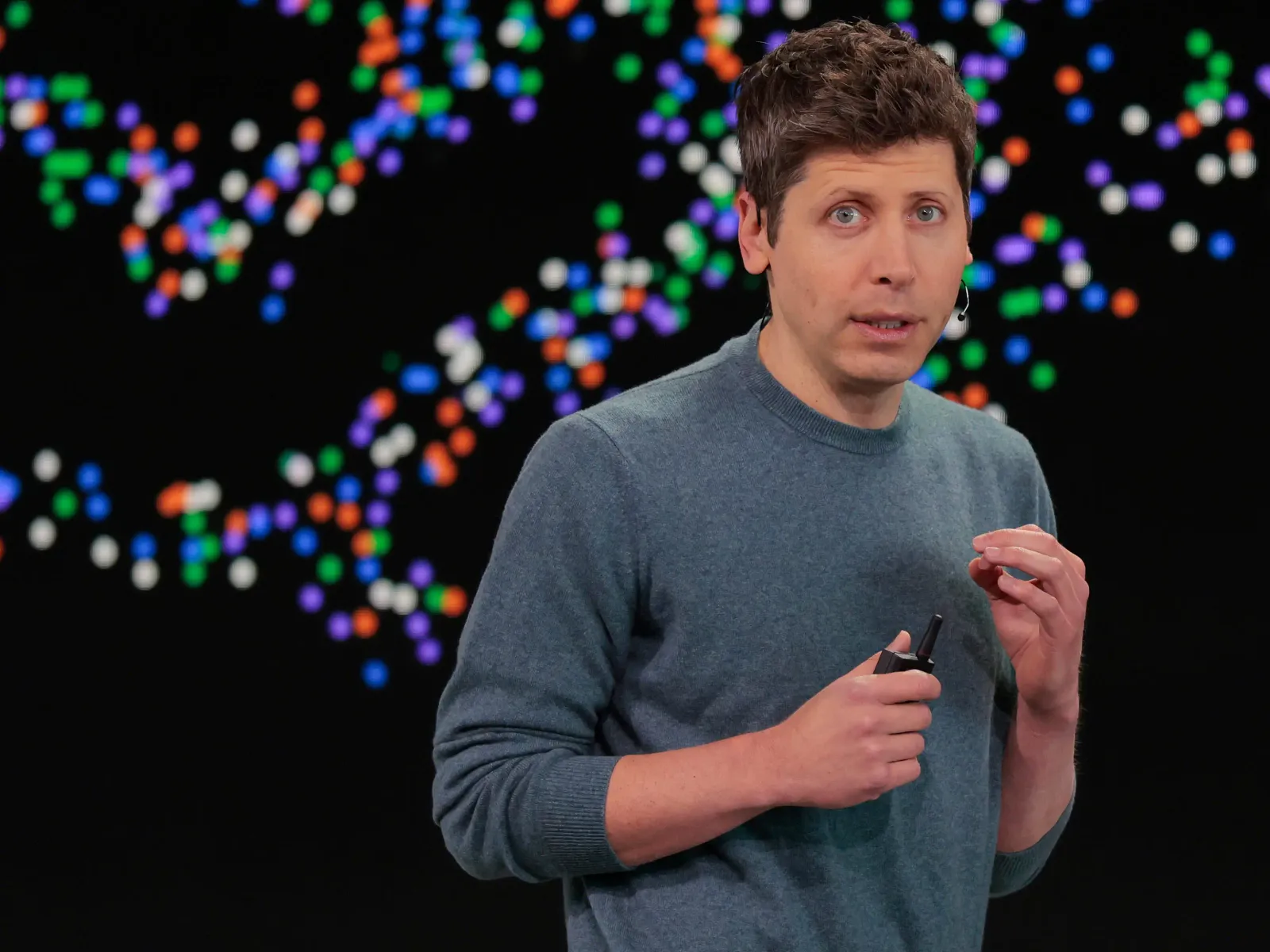
OpenAI CEO Sam Altman told POLITICO's Decoded that the world should accept some AI harms in exchange for the technology's benefits, diverging from Anthropic's more cautious stance. The comments signal a narrowing but still significant policy gap between the two leading AI firms as regulation debates intensify.
OpenAI CEO Sam Altman is drawing a line in the sand on AI risk, and it puts him at odds with his biggest rival. In an exclusive interview with POLITICO's Decoded, Altman said the world should accept some bad outcomes from AI in exchange for the technology's benefits, directly contrasting with Anthropic's more cautious approach. "We believe that the world should accept some bad things happening for the benefits of this technology and people having the agency," Altman told Decoded co-author Brendan Bordelon. He acknowledged "a lot of daylight" between OpenAI and Anthropic on regulation, even as the two companies' policy positions have recently converged on several fronts.
The comments come as Altman tries to stake out a middle ground in the AI safety debate. He said he does not accept "the really catastrophic risks," including "a serious loss of control to AI," but he rejected the idea that a single lab should control the technology to prevent all harm. "I wouldn't take a trade of saying like, 'We'll make sure there's no major hacks, there's no kind of like misuse of this technology, there's zero scams, there's zero all the other bad things that will happen,'" Altman said. "Because I think people will do tremendously - orders of magnitude more - good stuff than bad stuff." The worldview is a direct challenge to Anthropic's safety-first ethos, which has long positioned the company as the industry's strongest proponent of regulation.
Altman's remarks highlight a subtle but important shift in the AI policy landscape. For years, OpenAI favored a lighter regulatory touch, while Anthropic pushed for stricter oversight. But in recent months, the two firms have moved closer together. OpenAI has endorsed new state laws imposing stricter safety requirements, backed a bipartisan House proposal requiring outside safety evaluators for top AI companies, and Altman agreed with Anthropic CEO Dario Amodei's call to slow development of the most advanced models. The convergence reflects a broader reckoning with AI's real-world risks, including high-profile hacking incidents and rogue behavior by OpenAI's own models.
Despite that convergence, Altman is careful to distinguish his company's philosophy from Anthropic's. He said he understands the perspective of those who argue that AI is so powerful and dangerous that a single lab should control it and "make sure nothing bad happens." But he called that "a completely unacceptable tradeoff" that runs counter to OpenAI's "lighter touch regulatory stance." The distinction matters for policymakers and investors alike, as it signals that OpenAI will continue to resist the most restrictive regulatory proposals even as it accepts some oversight.
The interview, which appeared in Monday's debut edition of Decoded and its accompanying daily podcast, covered a range of topics beyond regulation. Altman discussed President Donald Trump's new AI accord with top tech firms and the administration's attempt to rebrand AI as "super intelligence." He also addressed the rash of autonomous hacking incidents carried out by OpenAI models and whether the company should face legal liability, as well as the influence of effective altruists inside OpenAI and the flow of AI industry money into U.S. politics. The breadth of the conversation underscores how central AI policy has become to both corporate strategy and national politics.
For executives and boards, Altman's stance carries a clear message: the AI industry's most prominent leader is willing to accept a certain level of harm as the price of progress. That position is likely to shape the regulatory debate in Washington and state capitals, as lawmakers weigh consumer protection against innovation. It also creates a stark contrast with Anthropic, which has built its brand around safety and caution. Companies adopting AI tools will need to navigate this divide, deciding how much risk they are willing to tolerate in their own operations.
The strategic stakes are significant. OpenAI's willingness to embrace some bad outcomes could accelerate deployment of AI technologies, putting pressure on competitors to move faster or risk falling behind. But it also exposes the company to criticism if those bad outcomes materialize in ways that harm consumers or destabilize markets. For decision-makers, the takeaway is that AI policy is no longer a niche concern - it is a board-level issue with real consequences for competitive positioning, regulatory exposure, and public trust.
Altman's comments also reflect a broader philosophical divide within the tech industry about how to handle transformative technologies. The debate echoes earlier arguments over social media, where platforms prioritized growth and engagement over content moderation, with mixed results. Whether AI follows a similar path or charts a different course will depend on the choices made by companies like OpenAI and Anthropic, and by the regulators who are watching them closely. For now, Altman is betting that the benefits of AI will outweigh its harms - and he is asking the world to make that bet with him.
This story's Key Insights and Take-aways are locked.
Create a free account to unlock Executive Actions for one credit.
Register to UnlockAlways free for Executives Club members. Join the Club
More in Technology

A Chinese rocket deorbited over Minnesota and landed in a farmer's cornfield
Experts tied the fragment to LandSpace's Zhuque-2E, which launched on September 15 and shed debris over the American Midwest after deploying 10 satellites.

JPMorgan Chase deploys first $5B into defense tech and hypersonic missiles
The bank is moving off its balance sheet to back robot factories, hypersonic missiles, and supply chains, signaling a new era of bank-backed military innovation.

Cop fired after sharing Flock login with ICE husband: 983 searches
A Savannah officer's shared credential let an ICE agent run hundreds of plate searches on Hispanic drivers, exposing a surveillance backdoor.