

Sam Altman calls Anthropic satire, claims silent tool downgrades after Guardrails on Fable 5
Altman’s public jab hits Anthropic’s “Inviting hard questions” campaign and opens a new front in the Altman-Amodei feud.
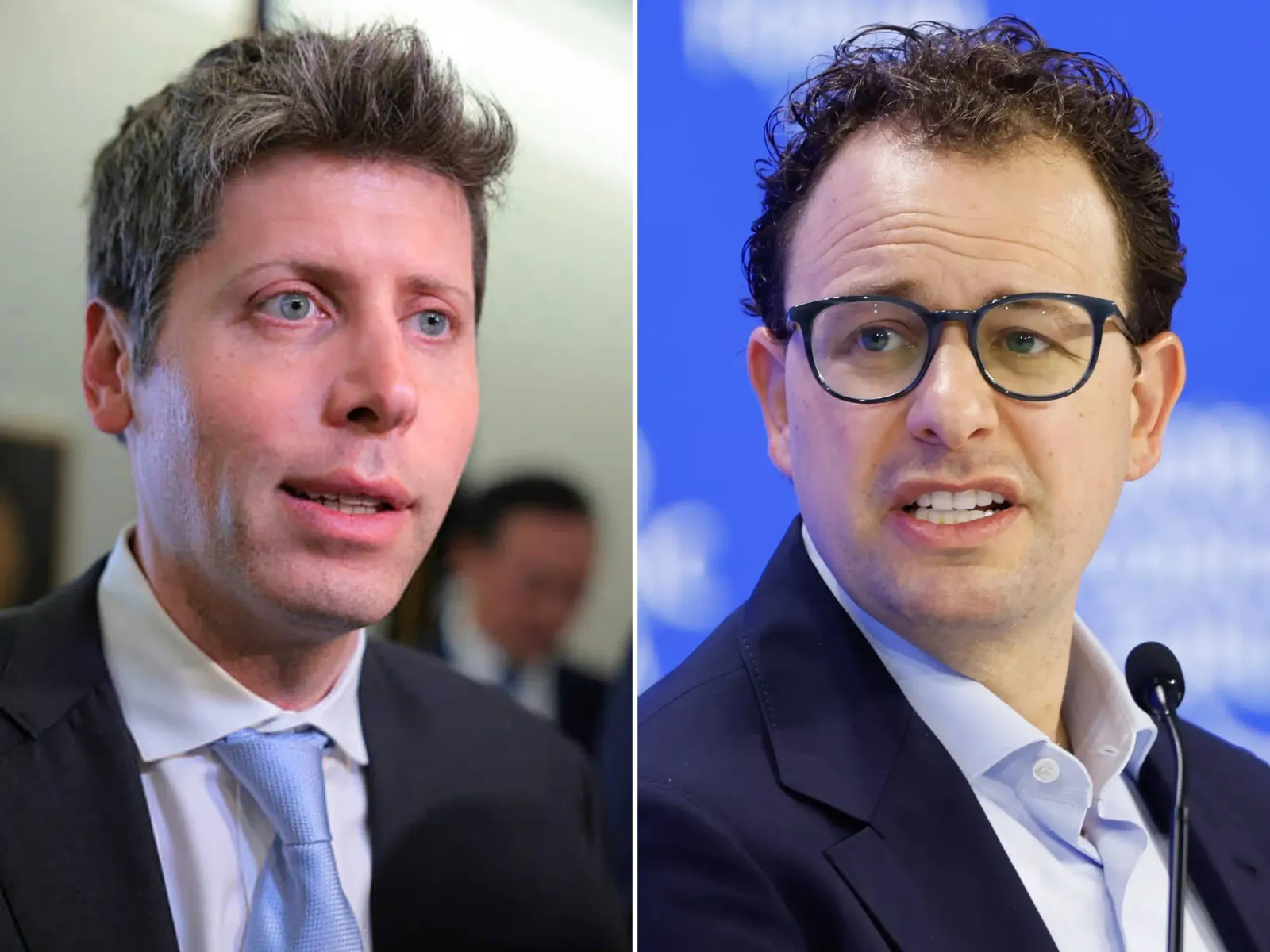
OpenAI CEO Sam Altman criticized Anthropic’s “Inviting hard questions” social initiative, saying it was satire and accusing Anthropic of silently restricting access to its AI tools. The dispute lands amid Altman’s legal fight with Apple and a separate public clash with Elon Musk.
Sam Altman, OpenAI’s CEO, has picked a public fight with Anthropic over one of its newest social initiatives. On Thursday, Anthropic posted a video on Claude’s X account, billed as “Inviting hard questions” and captioned “There is hope in hard questions,” with voiceovers posing existential prompts like “Can AI be trusted?” and “If it ends up taking like almost all the jobs, then what does it mean to work?” Altman reposted it and wrote: “I thought this was satire, kept looking for the handle to be spelled c1audeai or something.” He then escalated the point, adding that “Hard questions are great but only if we deem you worthy enough to not silently downgrade you, or even get access at all.”
Altman’s claim is not just about vibes. It points directly at how Anthropic’s guardrails can change what users experience when they try to push the boundaries of the model, specifically referencing its recent frontier model, Fable 5. At release, Anthropic placed guardrails on the model so that questions about cybersecurity, biology, and chemistry would be routed to its weaker models. Those guardrails also included a protection mechanism for research misuse: when Fable 5 detected people using it for AI development, the model’s performance would be downgraded to prevent distillation attacks, a technique that can train weaker models based on outputs from frontier AI models. In other words, the product behavior could shift based on what it believes you are trying to do.
That is where Altman says Anthropic crossed from safety into something narrower and more consequential: “silently” restricting access. The source lays out why this matters. Initially, affected users were not told that their requests would not be fulfilled. Anthropic reversed course on June 10, began notifying the users after AI researchers criticized the company for limiting research. So when Altman frames Anthropic’s message as satire, he is effectively arguing that the “hard questions” theme does not match what happens behind the scenes when the questions touch restricted territory or when Anthropic detects certain development goals.
To understand why this feud is resonating, you have to look at how the industry treats access. Frontier AI models sit at a strategic choke point: the “best” model gets used to generate both value and capability, and the ability to iterate is what accelerates the ecosystem. When a provider routes certain prompts to weaker models or downgrades performance under specific detection criteria, it is not just moderation. It changes who can experiment with the latest system, how quickly new work gets done, and who can translate model access into downstream advantage. That is also why communication choices, like whether users are notified, turn into a reputational and governance issue. In this case, Anthropic is trying to turn public anxieties about AI into transparency through its “Inviting hard questions” initiative, promising to “report the specific actions we're taking to address those questions,” and to be clear about where it “might fall short,” per its press release. Altman is challenging whether the lived experience matches the promise.
What makes this moment higher-stakes is that Altman is not operating from calm territory. The feud comes while he is “reeling from an Apple lawsuit” and “in the midst of a fight with Elon Musk.” Apple sued OpenAI on Friday, accusing it of poaching former Apple employees and accessing confidential documents. Meanwhile, Altman and Elon Musk have been trading blows on X over the weekend. Musk called him “Scam Altman,” and Altman replied that Musk was scamming people with his plan to build data centers in space. In that environment, a public escalation with Anthropic is not happening in a vacuum. It is another signal to customers, regulators, and the broader AI labor market that the leadership of top labs is locked in ongoing disputes over how models should be controlled, accessed, and governed.
The Altman-Amodei rivalry also has history, and it is not subtle. Ever since Anthropic CEO Dario Amodei left OpenAI in 2020, the two startups and their leaders have been publicly at odds. The source points to moments like an awkward photo opportunity in February during the India AI Summit, when they refused to hold hands, and to the fact that they announced plans to take their companies public around the same time. That kind of repeated public friction matters because these companies are not just competing on model quality. They are competing on legitimacy, meaning the moral story behind their technical decisions. Safety guardrails and access policies are part of that legitimacy battle, and Altman’s post is a direct attempt to frame Anthropic’s outreach as a mismatch between marketing and enforcement.
For decision-makers watching from the sidelines, the second-order implications are clear. If major labs keep turning policy design into public warfare, access rules and notification practices become strategic battlegrounds, not internal implementation details. Boards overseeing these companies should treat guardrails and user communication as core governance, because they can quickly become reputational liabilities or fundraising and partnership accelerants. And for peers trying to build AI products, the lesson is uncomfortable but useful: a campaign about asking “hard questions” is only as credible as how the system behaves when someone asks the hard question that triggers guardrails. In the current environment, that credibility fight is happening at the same time as lawsuits, platform feuds, and the next wave of regulatory scrutiny over frontier model access.
This story's Key Insights and Take-aways are locked.
Create a free account to unlock Executive Actions for one credit.
Register to UnlockAlways free for Executives Club members. Join the Club
More in Technology

Google quietly links your phone number to every Android account on your SIM
Adding a SIM now ties your phone number to all Google accounts - and future accounts inherit it. Here's the security and privacy stakes.

Hijacker AI 'Skynet mode' runs 100,000 attack steps against exposed models
Symantec caught a criminal AI agent that borrows other models, steals data, and mines crypto; the only relief is no confirmed victims yet.

Nvidia's AI-financier shift faces its first big test as neoclouds stumble
A rout in neocloud stocks is forcing investors to weigh Nvidia's hidden exposure as both supplier and lender to the AI buildout.