

Sam Altman’s “cool” ChatGPT parenting use case sparks backlash over human connection
Altman suggested an AI-made “kid day” podcast for school drives, and the internet said: try talking to them.
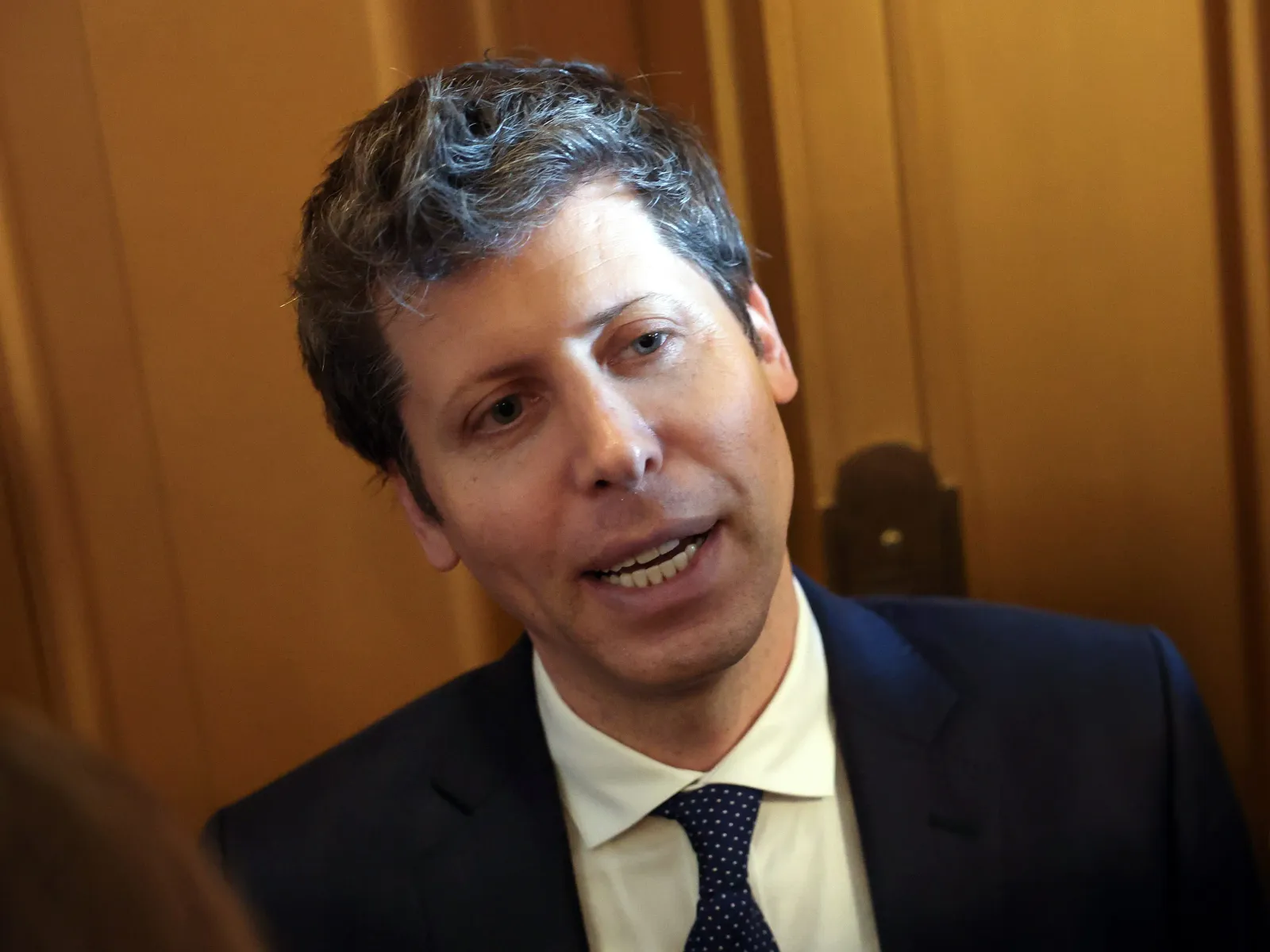
OpenAI CEO Sam Altman shared a “cool use case” for ChatGPT on X: syncing family calendars and having it generate a podcast for the morning drive to school. The reaction was swift and hostile, sharpening a real board-level question for AI leaders: can you save time without replacing relationships?
OpenAI CEO Sam Altman used X this week to pitch a “cool use case” for ChatGPT: “connect your family calendars and explain your kids' interests,” then “every morning for the drive to school, have it make a podcast that talks about one kid's soccer game that afternoon, one kid's upcoming birthday, some news, etc.” His idea landed less like innovation and more like a cold splash of “wait, what?” across a parenting audience.
Altman’s framing matters because it is not a generic productivity hack. He is positioning AI as something that moves inside daily family routines, including the time parents spend with their children. And when he does, critics do not argue about features. They argue about what the feature implies. Animator Alex Hirsch, who created the Disney kids show “Gravity Falls,” replied with “What if you just talked to your children,” a comment that drew 10 times the number of likes of Altman’s original post. Other X users piled on, including one who said “using AI in place of real human connection is the worst possible use case for it.”
This backlash is part of a larger, already-visible trend: using AI to reduce the cognitive load and logistics burden of parenting. Altman has been promoting that direction for close to a year now, including via claims about how ChatGPT helped him personally in early fatherhood. The source notes that Altman welcomed a son with his husband, Oliver Mulherin, in 2025. It also says Altman has said ChatGPT was indispensable during his first months as a father, including using it for questions about developmental milestones and everyday childcare.
But the internet did not revolt against “asking questions.” It revolted against the substitution implied by a system that generates an always-on, personalized stream for the drive to school. There is a difference between “help me understand my kid today” and “let AI run the morning.” That is why Hirsch’s counterpoint hit. In one line, it challenges the core assumption that time-saving necessarily equals better parenting. And if you are an AI executive, that is the boardroom issue hiding under the meme: customers can accept AI guidance, but they may resist AI orchestration when it feels like a replacement for relationship-building.
Notably, the conversation also extends beyond consumers to the leadership dynamics around AI product direction. The source says OpenAI President Greg Brockman posted on Saturday that his employees do not like it when ChatGPT asks them for things. He wrote that even if they would be “perfectly happy doing the same work” if a coworker asked, the behavior “reinforces how much people care about human relationships and helping each other, and want AI to give time back - or enhance time together - rather than become a layer separating people.” Even without taking sides on the tone, this is a revealing sentiment from inside the ecosystem. It suggests there is an internal tension between automation that extracts tasks and automation that preserves human interaction.
For operators and founders, the stakes are not just social. They touch product adoption, retention, and brand trust. If users see AI in family spaces as “a layer separating people,” usage can swing from helpful to creepy fast. And because parenting is emotionally high-stakes, negative reactions can become loud and durable. That matters commercially because family and household use cases often sit at the intersection of subscription decisions, word-of-mouth, and repeat engagement.
The Business Insider reporting also includes a real-world counterweight: for some parents, AI is already a time-management tool with concrete value. Hally Peck, a mother of two, told Business Insider that she uses an AI agent to manage work calendars, school schedules, activities, birthdays, and childcare logistics. Her explanation is straightforward: “I have two kids, and my husband also works full-time.” She adds that both parents are in “very demanding jobs,” making time their most critical resource. That is the “why” behind the parenting-AI market. AI can act like glue across schedules and commitments, reducing missed appointments and mental overhead. In that frame, the product promise is not replacement. It is relief.
The strategic tension, then, is how Altman-style features are positioned and experienced. A podcast that summarizes a kid’s afternoon soccer game and upcoming birthday is arguably informational. But bundled with calendar access and “interests,” it can feel like ambient mediation: AI shaping the day in a way that replaces a parent’s role in conversation and presence. In the same vein, other AI executives are making even stronger claims about the future. The source says Alexandr Wang, a 29-year-old Meta AI executive and Scale AI founder, has shared an “even more extreme vision of AI parenting.” Wang has said he may wait to have children until brain-computer interfaces such as Neuralink become sufficiently advanced, arguing that children’s neuroplasticity will allow them to adapt early and eventually think alongside superintelligent systems.
Even if Wang’s timeline and technology assumptions are a separate question, the linkage is clear: these leaders are trying to define how AI integrates into human development. Altman’s “cool use case” is therefore more than a single post. It is a signal about what kind of AI future is being sold, and to whom. For decision-makers building or scaling AI products, the lesson is immediate: adoption will depend not only on capability, but on whether the experience preserves the human moments users believe are irreplaceable, especially in family life. If your roadmap can save time but also triggers the fear of emotional substitution, your growth curve can flatten in public before it ever reaches a measurable KPI.
This story's Key Insights and Take-aways are locked.
Create a free account to unlock Executive Actions for one credit.
Register to UnlockAlways free for Executives Club members. Join the Club
More in Business

Leopold Aschenbrenner’s $45B AI hedge fund plunged, losing most value in days
Former OpenAI researcher Leopold Aschenbrenner watched Situational Awareness unravel quickly, forcing AI fund managers to ask what risk they missed.

Anthropic’s Levant Alpöge cracks the Jacobian conjecture after 87 years
A Harvard valedictorian used Claude to hit a 1939 breakthrough, but the missing “why” is the real problem.

Uber buys Delivery Hero for nearly $15B, vaulting to top food delivery outside China
The deal doubles Uber's dual-services footprint and pushes a ride-and-eats bundling play into 50 more markets.