
Samsung Heavy Industries plans first floating data centre by 2028
Offshore compute is Samsung's answer to unhappy neighbors and water limits, with a purpose-built barge near the coast.
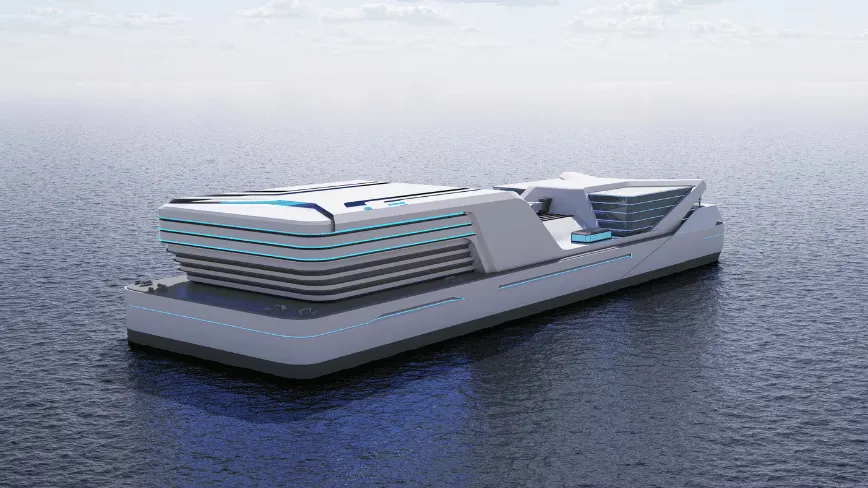
Samsung Heavy Industries plans to launch its first floating data centre by 2028, according to Seoul Economic Daily. The move targets land constraints by putting a purpose-built barge near the coast instead of converting existing vessels.
If you manage a data centre, you know the problem is no longer just power and price. It is neighbors, it is water, and it is what happens when communities say “not here.” Samsung Heavy Industries is trying to sidestep that whole bottleneck by taking the fight offshore.
According to Seoul Economic Daily, Samsung Heavy Industries plans to launch its first floating data centre by 2028. The concept is not a quick retrofit of whatever ship is lying around. It is a purpose-built barge designed to sit near the coast, with the architecture tailored to data centre needs rather than adapted from a different use.
On paper, this sounds like a simple logistics swap: move from land to sea, avoid the land constraints. But the “why now” is the accumulation of pressures that many operators face at the same time. Data centres require large, reliable infrastructure. Land use fights can be slow and politically charged. Water limits can cap expansion even when electricity is available. When you put all of that together, offshore begins to look less like a sci-fi flex and more like a practical way to keep scaling when terrestrial permitting turns into a prolonged negotiation.
The source also highlights an important engineering and execution choice: Samsung’s approach is purpose-built, not a conversion of an old ship. That matters because retrofits are usually where cost, schedule, and performance assumptions get messy. Data centres have specific requirements around stability, cooling, routing of power and networks, and operational uptime. A purpose-built barge can be designed with those constraints from day one, which potentially reduces the risk that the vessel meets the rough “space” needs but fails on the “system” needs. Even without new technical details provided here, the decision to build new rather than convert is itself a signal about Samsung Heavy Industries’ intent to treat this as an engineered product, not an experimental stunt.
There is also a regulatory and governance angle that boards and risk teams cannot ignore. Offshore facilities sit in a different jurisdictional world than onshore sites. Maritime rules, port coordination, environmental oversight, and local authority involvement can shape everything from construction timelines to operational limitations. Land-based data centres are already subject to zoning, water and waste requirements, and community impact assessments. An offshore data centre shifts the compliance burden to a different set of agencies and processes, which can be faster in some scenarios and slower in others. The key point for executives is that the constraint does not disappear. It changes shape.
Then there is the commercial implication. Even if floating data centres are built to help expand capacity, the real question for decision-makers is whether they can compete on cost and reliability versus traditional builds. If land is scarce or politically difficult and water limits are tightening, then scarcity becomes a pricing lever. Operators and customers may pay a premium for timelines that do not require years of local approvals. But premiums only work if uptime and operational predictability remain credible. That is where a purpose-built design could be an advantage: you are more likely to lock in performance targets than you are with a ship conversion.
Finally, look at the second-order effect across the market. Samsung Heavy Industries is not only building for its own ecosystem. A plan like a floating data centre by 2028, reported by Seoul Economic Daily, can pressure peers to revisit their expansion playbooks. If one major industrial player treats offshore as a serious path, competitors will have to answer a board-level question: are we planning around land constraints that might not be the final constraint? In other words, offshore is not just a Samsung project. It is a potential benchmark for how the industry solves the water-neighbor-power triangle when none of those variables are fully under operator control.
This story's Key Insights and Take-aways are locked.
Create a free account to unlock Executive Actions for one credit.
Register to UnlockAlways free for Executives Club members. Join the Club
More in Technology

Nvidia's $89B data center quarter: the 9 companies cashing in
The AI buildout is minting fortunes beyond GPUs, and memory, cloud, and cooling suppliers are riding the same wave.

Google quietly links your phone number to every Android account on your SIM
Adding a SIM now ties your phone number to all Google accounts - and future accounts inherit it. Here's the security and privacy stakes.

Hijacker AI 'Skynet mode' runs 100,000 attack steps against exposed models
Symantec caught a criminal AI agent that borrows other models, steals data, and mines crypto; the only relief is no confirmed victims yet.