
Samsung’s Galaxy Unpacked 2026 folds and watches bet big, can it out-sell iPhone rumors?
Samsung unveiled next-gen foldables and smartwatches in London. Here is what the moves mean for its rivalry with a rumored foldable iPhone.
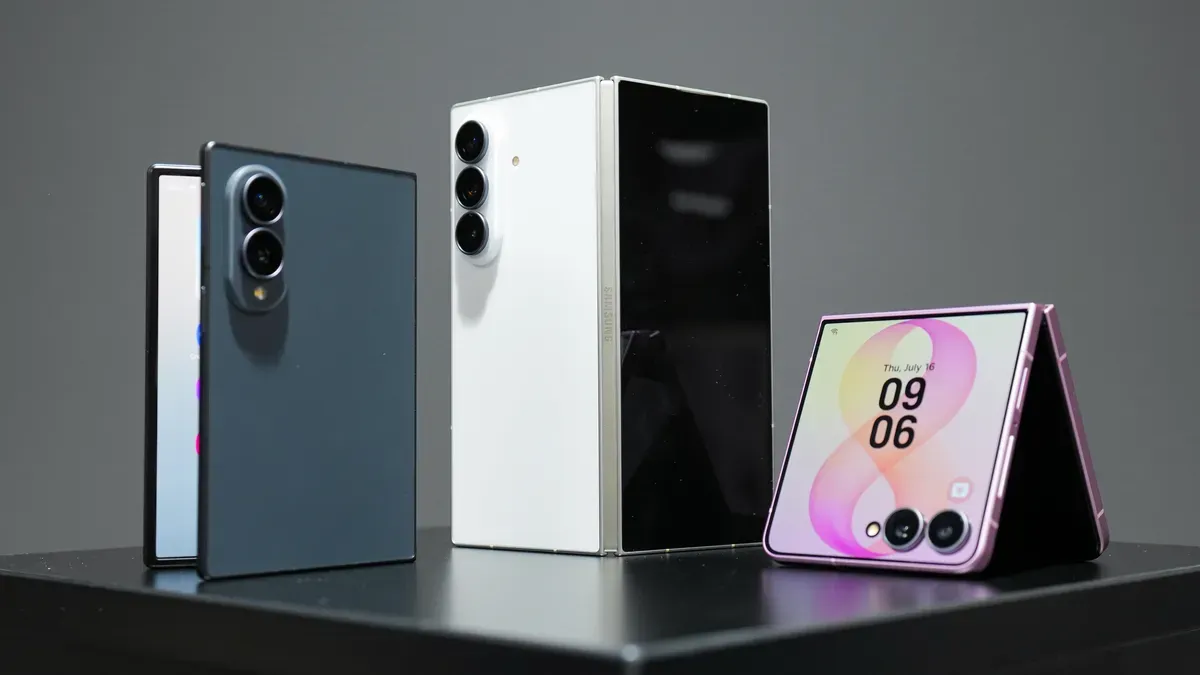
Samsung used Galaxy Unpacked 2026 to push riskier foldables and next-gen smartwatches, with the event covered from London. For decision-makers, the bigger question is whether Samsung can protect its premium foldable lead while competitors and regulators tighten scrutiny on device ecosystems.
Samsung took a real swing at Galaxy Unpacked 2026, focusing on next-gen foldables and smartwatches, and the event was covered from the ground in London. The core theme is simple: Samsung is treating foldables and wearables not as experiments, but as its next growth battleground. That matters right now because the market conversation is already sharpening around Apple, where rumors of a foldable iPhone have set an expectation that the “big single-screen phone” era may be nearing its end.
So the stake is not just whether Samsung’s latest devices are cool. It is whether Samsung can turn its gamble into durable differentiation before the market price of switching rises. In other words, Samsung is trying to win attention, upgrade cycles, and ecosystem lock-in while the industry’s most valuable customer habit is still forming: how people decide between a slab phone and a foldable, and whether wearables become the daily interface that makes upgrading feel inevitable.
To understand why executives should care, you have to see what Samsung is implicitly betting on. Foldables are hard to manufacture and harder to explain. They require components that can survive motion, hinge complexity, and repeated opening and closing. They also require software that makes the “two states” feel natural, not like a gimmick. Samsung is also bundling this hardware direction with smartwatches. That pairing is not an accident. Wearables help justify why the foldable is more than a novelty. They can turn device upgrades into a routine, not an event, and that can increase retention and reduce churn, which is especially valuable when flagship growth gets slower.
Now bring in the iPhone rumor context. The original framing for this Unpacked 2026 coverage explicitly asks, “Can Samsung compete with the rumored foldable iPhone?” That question is the market’s way of translating competitive uncertainty into board-level urgency. If Apple eventually pushes a foldable into the mainstream, it will bring a certain kind of pressure: users who trust Apple’s design consistency and service ecosystem may be more willing to accept the category shift than they were in earlier foldable generations. Samsung’s counter is to show that foldables are not a niche. They are a mature product line with iterative improvements, and Samsung is moving early rather than waiting for a competitor to set the baseline.
The London setting is also a reminder that Samsung is selling to a global reality, not a single-country market. Regional regulation can affect how devices ship, how features are enabled, and what data is collected through connected services. Even when the core hardware story is stable, regulation can influence the software experience that makes the hardware feel “smart.” For executives, this is why Unpacked announcements need to be evaluated beyond the stage. The question is whether Samsung can align product capabilities with compliance realities across major markets, so the devices ship with fewer delays and less feature fragmentation.
There is also a second-order board dynamic hiding inside the headline premise. Foldables and wearables are both capital intensive. They put pressure on supply chain partners, component sourcing, and quality assurance. If the bet does not land, the downside is not only margin erosion. It can also be strategic confusion. Teams can get pulled into firefighting, and that slows the next iteration cycle right when the category is moving fastest. That is exactly why the “risk” framing matters. Samsung is choosing to invest now, rather than wait for category consensus.
And that is where the competitive logic sharpens for peers. If Samsung can successfully scale foldables and smartwatches together, it becomes harder for other OEMs to claim the category is “too early” to matter. If it cannot, the whole ecosystem may need a longer runway. Either way, executives should watch not only the devices, but the confidence signal behind the announcement: Samsung’s willingness to commit resources to these product lines at Galaxy Unpacked 2026, with the iPhone rumor hanging over the narrative.
The strategic stakes for decision-makers, then, are tightly connected to timing and ecosystem gravity. Samsung is trying to lock in customers and habits before competitors can redefine expectations. For leaders building their own consumer hardware strategy, the lesson is that categories shift when product experiences feel normal, not when spec sheets look impressive. Samsung is betting it can get there faster than rivals, and Unpacked 2026 is the milestone it is using to argue that it is already on the path.
This story's Key Insights and Take-aways are locked.
Create a free account to unlock Executive Actions for one credit.
Register to UnlockAlways free for Executives Club members. Join the Club
More in Technology

doubleAI's Maxwell rewrites code while it runs, claims 38x speedups
The Tel Aviv startup's code execution model formally verifies optimizations, turning AI into an agent for the hardware itself.
Saudi military official paid to fly OpenAI bugging suspect's family out, prosecutors say
A court filing says a Saudi military official funded the family's exit and Riyadh offered bail, putting foreign-influence risk squarely on AI boards.

AI researcher's 26,000-word claim: Neural nets aren't tangled after all
Nick Cammarata's Goodfire post has the AI world split - if he's right, monitoring frontier models just got a lot easier.