

Sand: Raiders of Sophie traps solo players with Sea of Thieves-style pressure
A new extraction shooter on early access day turns tramplers into moving targets and solo play into a sprint.
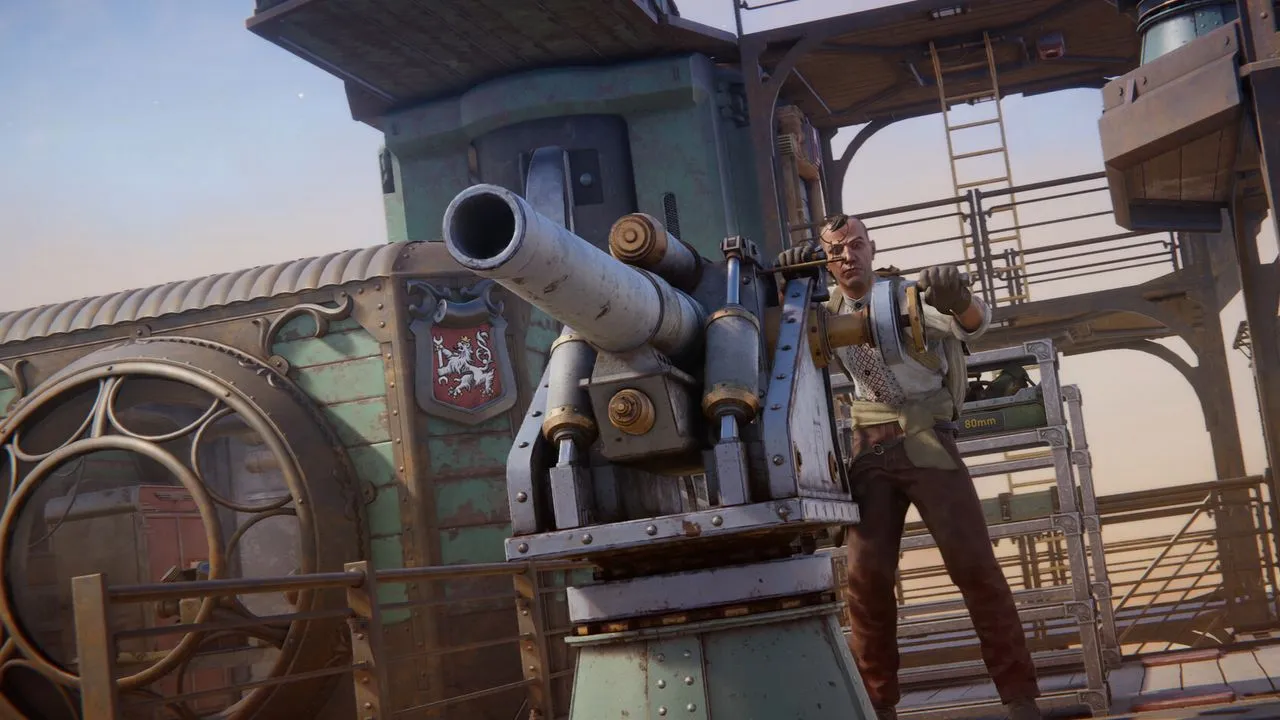
TinyBuild’s Sand: Raiders of Sophie launched early access today after a number of last-minute delays, offering first-person base-building extraction gameplay. The solo experience is tense to the point of near-unplayable, even though a solos-only server option tries to help.
Sand: Raiders of Sophie is out in early access today, after last-minute delays, and the game wastes no time making one thing painfully clear: solo players do not get a calm lane. After about two hours of play, the clearest comparison lands fast. It is like Sea of Thieves, but on land. And when your vehicle gets destroyed, you cannot just respawn a pristine ride a few seconds later. In other words, your “workbench time” is tied to survival, not a convenience timer.
The star of the whole loop is the walking base called a trampler. Before you embark on a mission, which you do from outer space orbiting a desert planet on a Victorian-era gaslamp space station (yes, the aesthetic is as specific as the combat philosophy), you prep both yourself and your trampler. You can build one by snapping together modules or use a preexisting model. Then you load up: handheld weapons like a pistol, shotgun, or rifle, ammo in your pockets, and a crate containing heavy guns for your trampler, such as 40mm and 80mm cannons. After that, you drop onto the planet and you have to physically get the trampler ready for action by mounting guns on the exterior, loading ammo, and manually firing up the huge engine.
This is where Sand earns its “harder for solo” reputation. You climb into a machine that is big enough to make movement a job. Even the smallest mechs are slow and time-consuming to traverse because you clamber up ladders and dash between compartments to reach the guns, engine, steering, and storage areas. If you are solo, that busy Sea of Thieves-style feeling becomes a literal performance test. You are piloting the mech, adjusting how fast you go, checking the map, and scanning the horizon for lootable locations and enemy tramplers. The spotting mechanic leans on black smoke clouds instead of distant sails, which keeps the tension grounded in readable signals rather than UI-only cues.
Then combat hits, and Sand turns teamwork into a mechanic, not a suggestion. When things go down, you have to leave the wheel to man turrets, including some positioned well on the other side of the vehicle. It becomes a constant churn of reloading guns, aiming turrets, repairing damage, and making sure the trampler is not about to crash into something like a big rock or rusted ship. The trampler is still walking, so it is never fully a stationary target. That design choice raises the ceiling for chaos, but it also punishes solo players for every missed moment. You are not “fighting,” in the traditional FPS sense. You are running an industrial operation while enemies try to turn it into scrap.
Even the audio architecture supports the pressure. The trampler makes excellent mech noises: gears groaning, cables jangling, and huge mounted guns that are deafening. Battles can be heard from well across the map, which acts like a distance warning system for where the risk is heading next. Sound, in other words, becomes part of navigation and part of threat assessment. PvE enters with ghoul-like NPCs guarding some lootable locations. The ones encountered in the session were not the most dynamic enemies, basically running toward the player and shooting on sight. But other threats are more punishing in practice: automatons that, as the player describes it, come blasting down from orbit and stomp around after you. A trio of them delivered meaningful artillery pressure and required a decent amount of damage to bring down.
The solo dilemma is made explicit by another design decision: Sand is “definitely not a game meant for solo players,” because the workload is just too much alone. There is, however, one thoughtful feature to soften the blow. If you are playing Sand solo, you can join a server that is solos-only. That means you will at least avoid getting mobbed by larger crews. Notably, the source compares this favorably to Sea of Thieves, which does not do that. From an operator or publisher lens, this is a classic retention lever: when a product’s core fantasy is coordination and shared workload, solo players need a guardrail that prevents the worst mismatch of skill and team size.
Once you loot and stash items in the trampler’s cargo hold, you drive to an extraction point where most combat takes place. You disembark and climb a tall tower to kick off the extraction sequence, where a ship takes a few minutes to come down from orbit to collect you. That is the cue for everyone in the area to stomp your way and try to blow you to hell first. In three voyages so far, two ended early due to launch-day server issues. Still, the session produced clear examples of the stakes: one mission saw the player’s trampler blown up by computer-controlled walkers swarming them, yet they survived and reached an extraction point where another player was about to lift off. The player tried to stow aboard that player’s trampler to extract with them, but once the other trampler took off, the player simply died. In the last mission, the player looted old ships in the desert, shot a few ghouls, bombarded a player attempting to extract but failed to stop them, then extracted themselves while another player stomped over and fired cannon shots at them.
All of this lands on a simple business takeaway: Sand is building a multiplayer-first loop where solo is possible, but not comfortable, and where vehicles and extraction windows are “expensive” in time and risk. For founders, investors, and operators watching extraction shooters and co-op games, the second-order question is whether solo guardrails like solos-only servers can preserve the game’s core chaos without hollowing it out. Because once your trampler is destroyed and respawns are not instant, every system becomes a commitment. Early access can test whether that commitment becomes a hook or a churn trigger, especially while server issues are still working themselves out.
This story's Key Insights and Take-aways are locked.
Create a free account to unlock Executive Actions for one credit.
Register to UnlockAlways free for Executives Club members. Join the Club
More in Entertainment

Russell Brand's accuser 'bewildered and confused' as he denies 7 sex charges
The criminal case against the comedian is a live test of how media companies manage talent risk when serious allegations go public.

'It's a Magic Trick': Ballet Experts Say Rosalía's SNL Pose Is Impossible
Three ballet experts tell Rolling Stone Rosalía's gravity-defying SNL stillness shouldn't be possible - and why the debate is now part of the show.

Activision CMO: GTA 6 Will Boost Call of Duty, Not Bury It
Activision's top marketer says Rockstar's blockbuster will drive players back to consoles and into Modern Warfare 4, even as the company admits its recent strategy failed.