
Saudi Arabia bows out after 0-0 with Cape Verde, Cape Verde reach the round of 32
A goalless draw ends Saudi Arabia's campaign, while Cape Verde makes knockout history in its first World Cup.
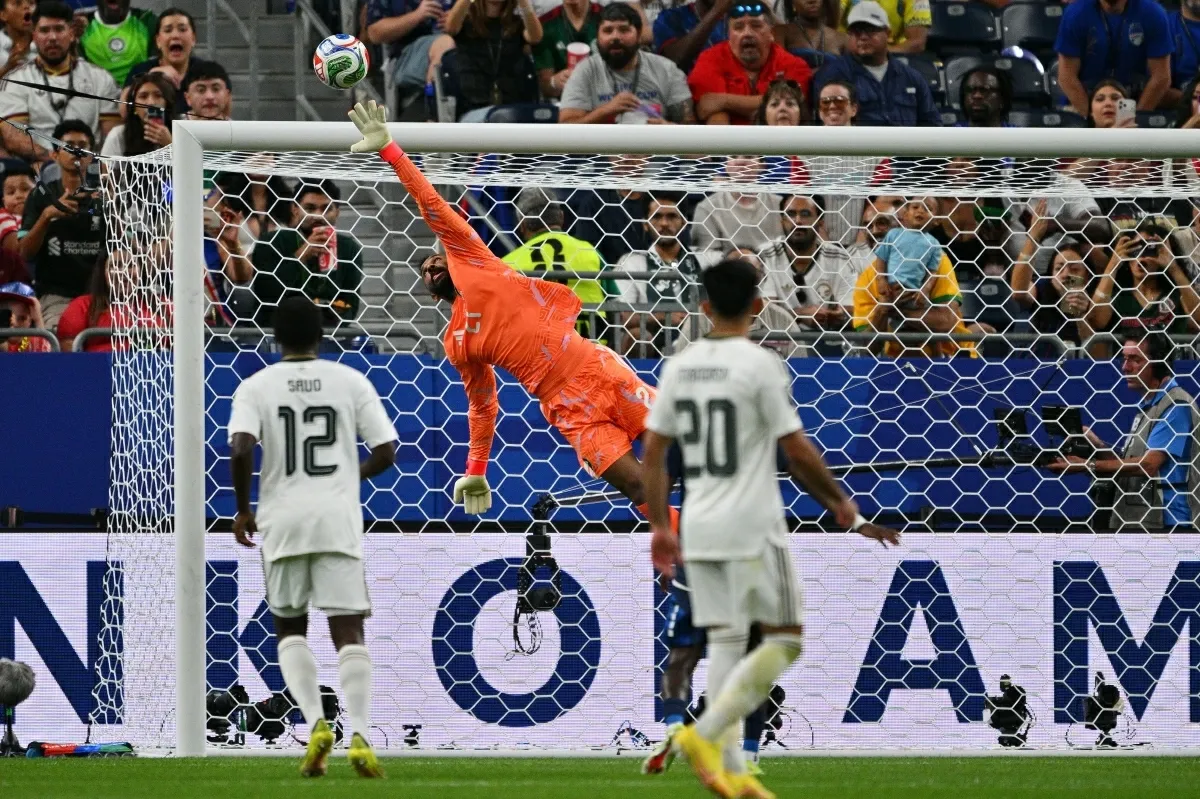
Saudi Arabia's 2026 FIFA World Cup campaign ended after a goalless draw with Cape Verde on Saturday. Cape Verde advanced to the round of 32 in its first-ever World Cup appearance, finishing alongside European champions Spain from Group H.
HOUSTON - Saudi Arabia’s 2026 FIFA World Cup campaign ended after a goalless draw with Cape Verde on Saturday. The result not only sent Saudi Arabia out of the tournament, it also flipped the script for the debutants: Cape Verde reached the round of 32 in their first-ever World Cup appearance, joining European champions Spain from Group H.
For Saudi Arabia, the stakes were straightforward, and they could not convert them. The Green Falcons needed victory to keep advancing hopes alive but could not find the breakthrough in a match that stayed scoreless. In Houston, the Saudi side looked more capable than it had in the previous round, yet the match still came down to a simple football truth: if you do not score, you do not progress.
One month earlier, Saudi Arabia’s team situation changed in a way that would ripple into every decision over the camp, the tactics, and the selection. The match was played exactly one month after Greek coach Georgios Donis took charge of the national team, replacing Hervé Renard shortly before the tournament. That timeline matters because it suggests the improvements were not purely about a single game plan, they were about an organizational reset happening in real time. The source notes Saudi Arabia showed significant improvement from its heavy 4-0 defeat to Spain in the previous round.
Still, improvement is not the same as advancement. In a tournament format where group-stage margins decide everything, the Saudi attack lacked the finishing touch, even while the defense did its job. Saudi goalkeeper Mohammed Al Owais produced a crucial late save to deny Cape Verde from close range and preserve the clean sheet. That is a small victory inside a larger loss: the clean sheet kept Saudi Arabia from a worst-case scenario, but it did not create enough offense to turn the draw into the win they needed.
Saudi Arabia’s group stage left a clear numerical footprint. They finished with two points after opening the tournament with a 1-1 draw against Uruguay, then suffering a defeat to Spain, and finally settling for a scoreless draw against Cape Verde. With two points, the math does not forgive. In most group configurations, two points usually means you need other results to break your way, and you need your own match to at least produce goals. Here, the goals did not come at the crucial moment against Cape Verde.
For Cape Verde, though, this was the kind of outcome that changes how a nation is perceived in global football. The source is explicit: qualification for the knockout stage was historic, because it was secured in their first-ever World Cup appearance. That kind of milestone does not just sit in a match report. It tends to re-rank priorities for federations, sponsorship conversations, and youth pipelines, because suddenly there is evidence the system can produce results on football’s biggest stage.
Also worth noting for context is how Spain ended up in the round of 32 alongside Cape Verde. Spain are described as European champions, and they advanced from Group H with Cape Verde. From an executive lens, that pairing is a reminder that group-stage performance is not only about your own game, it is about your place in the group’s hierarchy. Saudi Arabia needed to beat Cape Verde to keep pressure on the bracket, and without goals, they lost the leverage the group format demands.
Saudi Arabia’s exit is not just a one-off disappointment. The source adds an extra layer of history: Saudi Arabia has exited the World Cup in the group stage in every appearance except its tournament debut in 1994 in the United States, when it reached the round of 16. That detail reframes the whole campaign as part of a longer pattern. A coach change, a tactical uplift, and moments of defensive brilliance can still fall short if the team cannot reliably generate results when qualification is on the line.
The strategic takeaway for decision-makers in sport and beyond is how quickly “almost” becomes “out.” Saudi Arabia improved after a 4-0 loss to Spain and had a late chance to shape the outcome, with Mohammed Al Owais making a crucial save. But the inability to score turned a stronger performance into a group-stage elimination. In tournaments, the scoreboard is the governance mechanism: it decides who keeps executing, who goes home, and whose plan gets another cycle or gets replaced. For federations, boards, sponsors, and the people who fund the next build, Cape Verde’s breakthrough and Saudi Arabia’s repeat group-stage exit are both signals worth treating seriously.
This story's Key Insights and Take-aways are locked.
Create a free account to unlock Executive Actions for one credit.
Register to UnlockAlways free for Executives Club members. Join the Club
More in Business

Bungie cuts most Destiny 2 staff as Sony says Marathon still matters
Herman Hulst confirms layoffs affecting most Destiny and some Marathon teams after Bungie admits Destiny fell short.

SK Hynix jumps 11% after seeking up to $29.4B in Nasdaq listing
The chip giant filed for a Nasdaq listing plan that could raise $29.4 billion, instantly reshaping investor expectations.

Micron revenue hits nearly $42B as AI memory lifts gross margins above 81%
Fiscal Q3 results crush estimates, prove AI memory is rewriting Micron's margins, and change the momentum math for the whole chip stack.