

Saudi government backed ex-OpenAI engineer accused of planting recording device, feds say
A federal judge ordered Abdulrahman Alfozan held without bail after prosecutors detailed WhatsApp chats with Saudi royalty and a military-booked flight for his family.
Abdulrahman Alfozan, a former OpenAI engineer, is in federal custody after prosecutors said he received 'considerable support' from the Saudi government in connection with an alleged recording device planted in an OpenAI conference room. The case shows how a corporate espionage probe can escalate into a national security matter, putting tech companies and their employees in the crosshairs of international diplomacy.
Federal prosecutors say a former OpenAI engineer accused of planting a recording device in a conference room received 'what appears to be considerable support' from the Saudi government, and a federal magistrate judge on Monday ordered him to remain in custody pending trial. The disclosure came in a motion to keep Abdulrahman Alfozan, a Saudi national and former OpenAI employee, detained while the case proceeds.
Alfozan was arrested by the FBI on October 9. According to prosecutors, he frequently communicated with an unnamed member of the Saudi Royal Family on WhatsApp over the last two years, with contact as recent as October 5. Prosecutors cited a May 2026 message in which the royal told Alfozan, 'Saudi needs you more then [sic] the US!' and Alfozan replied '100,' indicating agreement. The government also said an unnamed member of the Saudi military booked a flight for Alfozan's wife and son on October 11, even though an October 12 reservation already existed and was 'paid for by the Saudi government.' His wife and son are now in Saudi Arabia, and his parents and all or all but one of his siblings are there as well.
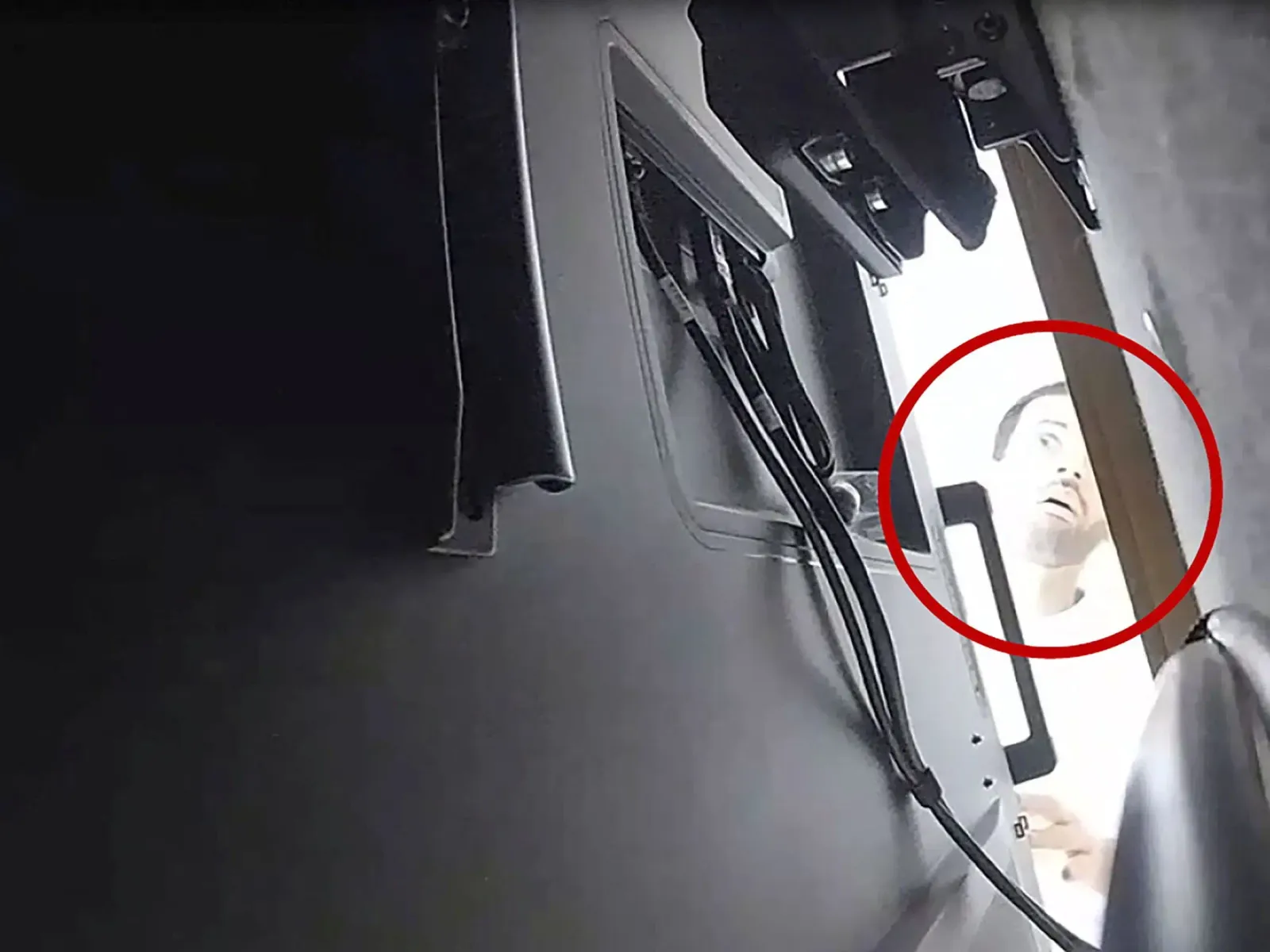
The criminal complaint describes an alleged effort to plant a listening device in a conference room where sensitive discussions take place. OpenAI's security cameras caught Alfozan near the room on multiple occasions, despite his lack of authorization for the high-level meetings held there. In the days surrounding the device's installation, OpenAI executives met with government officials in that very room, prosecutors wrote. 'Defendant's conduct could pose a danger to the national security of the United States.' The complaint also included a photo of what prosecutors said was Alfozan peering behind the TV where the recording device was found.
Prosecutors also detailed what they found on Alfozan's iPhone: photos of 'what appear to be the input/output panels on televisions and other electronic devices in various locations in OpenAI buildings,' including another conference room where sensitive meetings frequently occurred. A note modified as recently as September 13 listed 'Riyadh tasks' such as finding an apartment and a job for his wife and obtaining an ID and a Saudi passport for his son. Another note titled 'OpenAI leave' suggested Alfozan was planning an '[e]arly... pick up' of the devices he had installed or intended to install, then extending his parental leave 'to full.'
Alfozan's attorney, William Pernik, pushed back on the flight-risk argument. He noted that Alfozan learned OpenAI had found the device eight to ten days before his arrest, and if he intended to flee, he would have done so then. Pernik also said the one-way ticket prosecutors flagged lacked context: 70 percent of the airline bookings in Alfozan's email since January 2021, or 96 of 138, were one-way tickets.
The case underscores how quickly a corporate security incident can become a national security matter. OpenAI sits at the center of the global AI race, and its conversations with government officials are exactly the kind of intelligence a foreign state might want. For technology companies, the episode is a reminder that insider threats are not just about stolen code or leaked documents; they can involve physical surveillance, foreign state actors, and diplomatic fallout. The judge's decision to keep Alfozan in custody signals that courts are taking these risks seriously, and companies should expect closer scrutiny of employees with access to sensitive spaces.
This story's Key Insights and Take-aways are locked.
Create a free account to unlock Executive Actions for one credit.
Register to UnlockAlways free for Executives Club members. Join the Club
More in Business

Elon Musk unveils a flying car, and SpaceX helped build it
The Tesla CEO's showcase at a SpaceX facility signals a future where road and rocket engineering converge.

Apple's $2,000 iPhone Duo opens preorders, taking on Samsung and Google
Apple's first foldable hits the market at a premium price, reshaping a category Samsung and Google have led.

Pope Leo XIV, first American pope, diagnosed with lung cancer
The 71-year-old Chicago-born pontiff underwent successful surgery on his right lung, and his diagnosis raises new questions about his AI-focused papacy and the Vatican's future.