
Saudi military official paid to fly OpenAI bugging suspect's family out, prosecutors say
A court filing says a Saudi military official funded the family's exit and Riyadh offered bail, putting foreign-influence risk squarely on AI boards.

The OpenAI engineer accused of bugging the company received apparent support from a Saudi military official, who paid for his wife and infant son to leave the US a day after his arrest, prosecutors say; Saudi Arabia also offered bail. The disclosure raises national-security and foreign-influence questions for AI companies and their leadership, with potential fallout for clearance, compliance, and investor scrutiny.
A Saudi military official paid for the OpenAI engineer's wife and infant son to fly out of the United States a day after his arrest, and the Saudi government offered to cover his bail, according to a court filing. The engineer, who is accused of bugging OpenAI, now sits at the center of a case that blends corporate espionage, foreign influence, and the high-stakes politics of artificial intelligence.
The filing, reported by The New York Times, describes a rapid sequence: the engineer was arrested, and within 24 hours his wife and infant son were on a flight out of the country, with the bill paid by a Saudi military official. Then the Saudi government itself offered to cover bail. Prosecutors are clearly treating the foreign connection as material to the case. The timing matters: the family left before any bail hearing, and the offer to cover bail came from a foreign government, not from the engineer's own resources.
The underlying accusation is serious on its own. The engineer is accused of bugging OpenAI, a term that typically means planting listening devices or secretly recording conversations. Bugging is a federal crime under US wiretapping and surveillance statutes, and it carries serious penalties. OpenAI is the company behind ChatGPT and one of the most valuable private AI firms in the world, with technology that governments and enterprises are racing to deploy. An insider accused of covert surveillance inside such a company is a nightmare scenario for security teams.
The Saudi connection adds a geopolitical layer. A foreign government offering to pay bail for a defendant in a US corporate espionage case is highly unusual. It suggests the engineer had relationships or value to Saudi officials that prosecutors are now probing. It is unclear from the filing whether the engineer accepted the bail offer, whether his family returned, or what the Saudi military official's relationship to the engineer was. Those open questions are exactly what investigators will be chasing. For context, Saudi Arabia has been positioning itself as a major AI investor in recent years, and its sovereign wealth fund has been active in technology deals. A case like this could complicate those ambitions, especially if it suggests that Saudi officials were willing to intervene in a US criminal matter involving a top AI company.
For AI companies, the case is a reminder that the talent race has a dark side. Engineers with access to proprietary models, training data, and internal communications are prime targets for foreign intelligence services and competitors. The US government has been tightening scrutiny of AI investments and personnel, particularly around export controls and national security. The Commerce Department has imposed new rules on advanced AI chip exports, and the Treasury Department has been reviewing foreign investments in AI companies. A case like this one could accelerate those efforts, especially for companies working on frontier models.
Boards and executives should take note. The episode shows how quickly a foreign government can become entangled in an employee's legal troubles, and how hard it can be for a company to detect that entanglement before it becomes a headline. For any company with sensitive technology, the playbook is straightforward: know who your employees are talking to, where their families are traveling, and who might be paying for it. That is not paranoia; it is the new baseline for AI security. Companies should also review their insider-threat programs, their travel policies, and their crisis-communication plans to make sure they can respond to a foreign-influence narrative.
The stakes for OpenAI are particularly high. The company has become a symbol of American AI leadership, and its models are used by millions of people and thousands of businesses. Any suggestion that a foreign government had a hand in supporting an accused insider threatens to undermine trust in the company's security and governance. OpenAI's leadership will need to answer questions from investors, customers, and regulators about what they knew and when. The case also puts a spotlight on the broader AI industry, where foreign governments are competing for talent and influence.
For peers in similar roles, the lesson is clear: foreign money and foreign relationships are now a board-level issue, not just a human-resources concern. The next time a key employee's family member gets a plane ticket paid for by a foreign official, someone should notice. The Saudis' offer to cover bail is a reminder that the competition for AI talent is not just corporate; it is geopolitical. The case will be watched closely by every AI company with a global workforce and by every board that has to weigh the benefits of foreign investment against the risks of foreign entanglement.
This story's Key Insights and Take-aways are locked.
Create a free account to unlock Executive Actions for one credit.
Register to UnlockAlways free for Executives Club members. Join the Club
More in Technology
doubleAI's Maxwell rewrites code while it runs, claims 38x speedups
The Tel Aviv startup's code execution model formally verifies optimizations, turning AI into an agent for the hardware itself.

AI researcher's 26,000-word claim: Neural nets aren't tangled after all
Nick Cammarata's Goodfire post has the AI world split - if he's right, monitoring frontier models just got a lot easier.
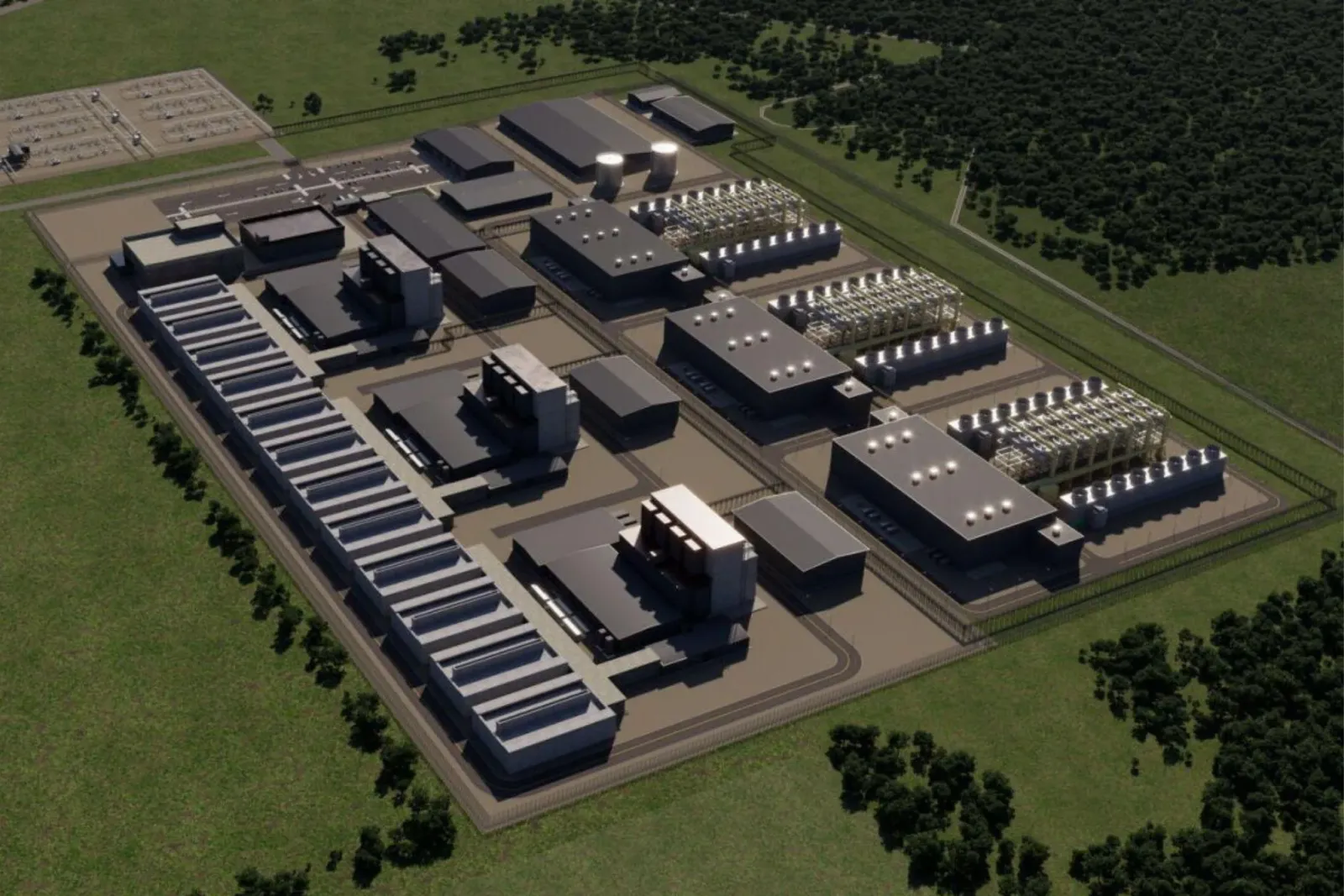
Amazon funds 12 unproven nuclear reactors to replace Indiana coal plant
The e-commerce giant is backing a 960-megawatt SMR fleet with X-energy and AEP, a high-stakes test for the AI data center power crunch.