

Scientists build synthetic blobs that feed, replicate, and split using lab-made DNA
A complete cycle of growth and genetic replication in a dish pushes synthetic life closer to practical drug, food, and fuel use.
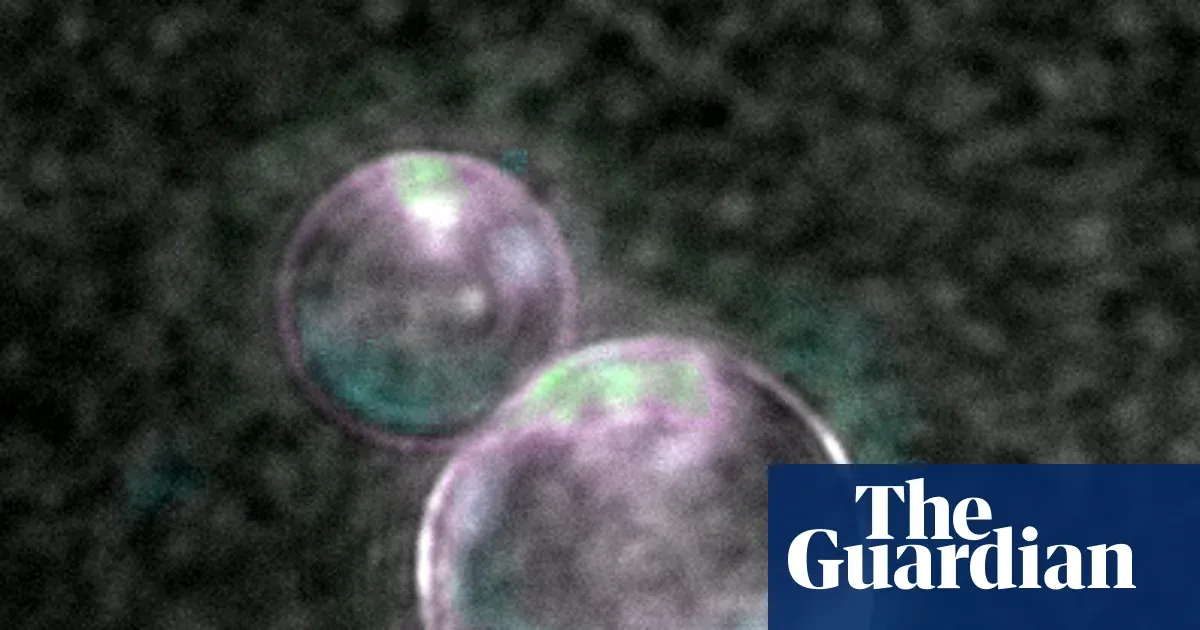
Researchers say they created tiny, quivering synthetic cells made from chemical compounds that use lab-made DNA to feed, grow, and multiply. The consequence for decision-makers is a new credibility boost for “life from scratch” efforts with long-tail implications for biotech value chains.
Tiny, quivering spheres made from chemical compounds are raising the temperature on “synthetic life” research, because the lab-made cells are designed to do more than sit still. According to the report, the researchers built synthetic blobs that can feed, grow, and multiply in a dish. Even more important, they claim these cells are among the first to demonstrate a complete cell cycle, covering growth, genetic replication, and splitting to produce the next generation.
That matters because a “complete cell cycle” is the difference between an experiment that looks alive and something that behaves like a living system over time. The cells are believed to be the first to show the full loop in a controlled setting: growth, copying their genetic material, then dividing to generate the next generation. In other words, the story is not just about building a body, it is about building a process that can run again and again.
To understand why executives should care, zoom out to how synthetic biology typically turns into business. Early breakthroughs often start as proof that biology can be engineered, but the path to real products usually depends on repeatability, control, and scale. If a system can reliably cycle through growth, genetic replication, and splitting, it is closer to the fundamental requirement for manufacturing biology, whether the end goal is drugs, food, or fuel. The report frames the potential outcomes bluntly: artificial organisms could eventually be used to make drugs, food, and fuel.
There is also a funding and governance angle here. “Life from scratch” research is the kind of headline that can attract both grants and risk capital, but it also tends to trigger board-level questions fast: what is the safety profile, what are the containment assumptions, and how quickly can lab results be translated into regulated, commercial settings. A synthetic system that replicates carries obvious intellectual and operational value, but it also increases the need for tight oversight. Even before any product exists, the ability to demonstrate genetic replication and splitting forces teams to think about verification, traceability, and failure modes in a way that static demonstrations do not.
Regulation is the other pressure point. Synthetic organisms and lab-generated genetic systems are usually examined through multiple lenses, including biosafety and biosecurity concerns, plus rules around biological materials and how they are produced and used. The key practical point is that the closer researchers get to systems that replicate, the more regulators and institutional review boards will ask whether standard controls are sufficient. This is not about the report claiming anything beyond the dish experiment. It is about the direction of travel: once you show replication and division, you are edging toward categories regulators take more seriously, because replication changes the risk calculus.
Technically, the report says the synthetic cells were made from chemical compounds. That detail is not window dressing. Many synthetic biology efforts rely on living machinery, or on components that borrow heavily from living systems. A chemical-compound approach signals a different engineering strategy, one that may make it easier to control components and design systems around specific functions. It also hints at why the researchers believe they are closer to creating life from scratch, because they are not merely tweaking existing organisms, they are trying to assemble the cycle itself.
Strategically, there is a clear second-order effect for peers in biotech and adjacent tech: platforms that can reproduce and evolve biological behavior inside a dish tend to become the center of gravity for the next wave of applications. The report’s stated targets are drugs, food, and fuel. Those are not niche markets. Each one comes with massive demand signals, but also with different regulatory thresholds, supply-chain constraints, and commercialization timelines. A credible step toward complete cell-cycle function could help some teams justify investment in downstream work like screening, optimization, and integration into industrial processes.
For executives, the headline is simple: researchers claim they built synthetic blobs using lab-made DNA that can feed, grow, and replicate, then split to form the next generation. The stake is bigger than one paper. It is about whether synthetic biology is moving from intriguing demonstrations to systems that can behave like biological production units. If that transition accelerates, boards will need to decide how to position for a future where “life-like” systems are not just engineered, but cycled, reproduced, and eventually scaled.
This story's Key Insights and Take-aways are locked.
Create a free account to unlock Executive Actions for one credit.
Register to UnlockAlways free for Executives Club members. Join the Club
More in Science

PLOS One study: AI debate impersonations beat politicians on authenticity and coherence
A public judging experiment found AI-made replies scored higher than real debate responses on key persuasion metrics.
Scientists show “junk DNA” can join ancient cancer-control pathways
New evidence links recently evolved genetic elements to the oldest cellular circuits that help regulate cancer.

Rubin Observatory starts 10-year cosmic time-lapse to map a changing universe
A decade-long survey begins in Chile, turning night-by-night sky variation into a long data asset for science and tech.