
Secretlab CEO Ian Ang goes anti-copycat, spends $2M on proprietary materials, and shrugs at AI
Patents, bespoke manufacturing, and a clear line on copying and AI pressure as Secretlab launches the Atlas at $499.
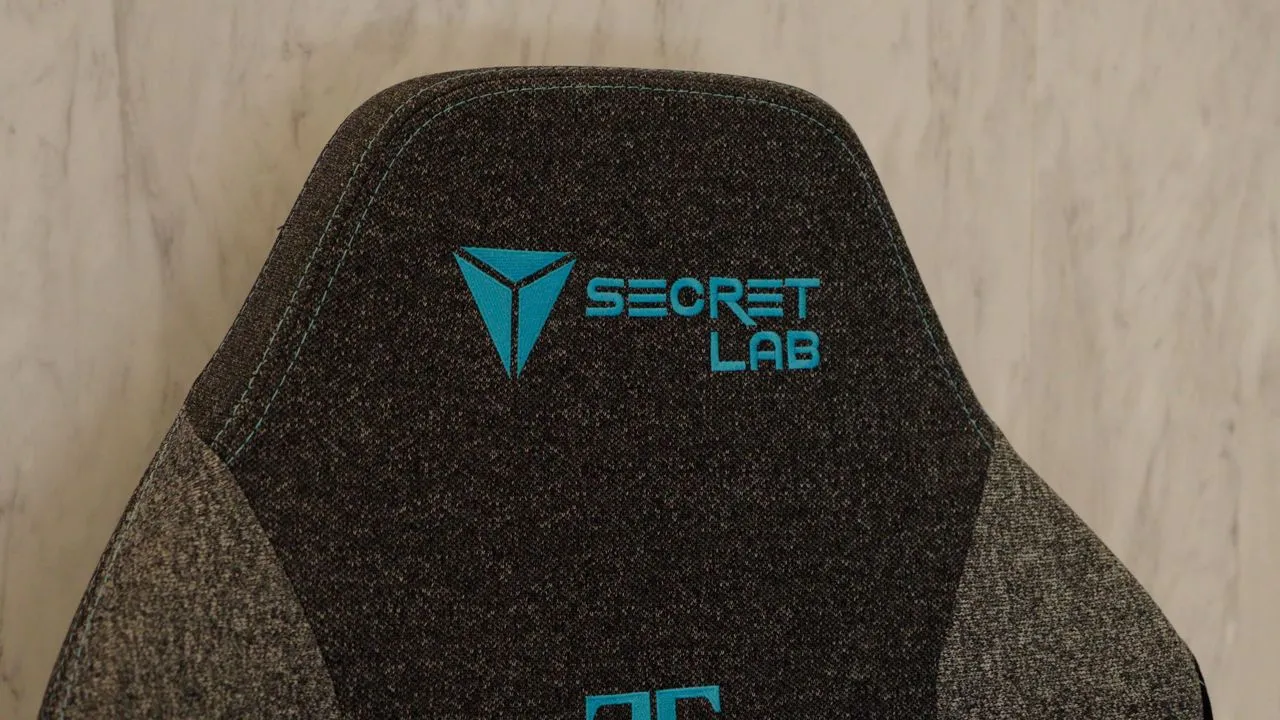
Secretlab CEO Ian Ang, speaking from the company's Singapore HQ, lays out how it protects against copycats with patents and proprietary manufacturing, while launching its new Atlas chair starting at $499. For decision-makers, Ang’s stance signals where resource allocation could land as markets push toward AI-first messaging and faster imitation cycles.
Ian Ang, CEO of Secretlab, is building chairs the hard way: protect the design, make the materials yourself, and do not outsource the future to whatever AI pitch is trending. In his Singapore HQ, he points to an uncomfortable industry reality, “People copy us,” adding that it bothers the people who created the work because it is effectively plagiarism. The company’s response is not vibes. Over the last several years, Secretlab has applied for patents for core products and concepts, including filings around 2021 or later for the Titan Evo design and other elements filed under Vincent Sin's name, such as monitor arms and a chair-mounted footrest.
If you are wondering whether this is a “do more, automate everything” moment for the chair business, Ang makes it very clear it is not. He says he does not feel pressure to adopt AI, going so far as to criticize the incentive structure behind it: “If we were owned by outside investors, you can bet that AI will be somehow jammed down our throats.” That is a telling line in an industry where outside money often brings a single narrative to the top of the product roadmap. Ang’s view is that Secretlab should stay focused on quality and innovation rather than treating AI as a mandatory overlay.
To understand why this matters, zoom out to what Secretlab sells today and how the business got there. The company rose to prominence with the Omega, which PC Gamer rated as the best gaming chair from 2018 until 2021. The original Titan took its place, and shortly after came the Titan Evo, which still holds that position today. Those chairs are easy to spot behind Twitch streamers, which is exactly the sort of visibility that can attract imitators. Ang explains that Secretlab does not run a formal Twitch strategy. “For us, we started with esports,” he says, describing himself and co-founder Alaric Choo as ex-semi-professional esports players. Their game of choice was Starcraft II, and Ang frames the origin story as a supply gap: chairs were not a real product category at the time, so he assembled his own gaming setup in 2014 or 2013 and realized he could not find a chair that fit the whole ecosystem.
That “we could not find it, so we built it” logic also shows up in how Secretlab deals with copying. The company has industrial designers on staff and a test-and-build culture that is meant to turn proprietary know-how into physical advantage. Vincent Sin, head of industrial design, walks through the Atlas and the labs. One example: the InfinitePrecision armrest, which needed an armrest with “infinite positions” and therefore required a gas piston sized and strong enough to make the mechanism work. Sin explains it only became possible after Secretlab convinced a manufacturer to produce a gas piston to exact specifications. And Ang adds the commercial friction that accompanies bespoke manufacturing: you show up to the manufacturer and say you will only make 1000 units. The response, he says, is typically that they do not want to do it, and Secretlab had to offer a big counterbalance, essentially paying for everything including capital expenditure.
The incentive is not only technical. It is credibility with the customers who care about precision. Secretlab points to esports pros as inspiration, including Starcraft legend Flash, who (in Ang's recounting) brought a ruler to measure the distance between his keyboard and mouse, and Keria from League of Legends team T1, who was spotted measuring their armrests while setting up for a tournament. Ang’s honesty lands here too: he admits infinitely adjustable armrests are more useful for pros than for the average consumer. He also says the InfinitePrecision armrest is a “loss making venture,” because the resources poured into it could support esports teams and tournaments, while the average buyer will likely not use it the same way. This is an important second-order signal: Secretlab is spending to build capabilities and brand legitimacy, not just to maximize margin on a single component.
That capability-building shows up again in materials, where Ang describes a very specific decision: Secretlab wants an exact leatherette that is not available on the market, so it invested $2 million to set up manufacturing lines in its factories to make it. The Atlas launches at $499. There is also a NanoGen model starting at $699 that uses Secretlab's proprietary leatherette or foam. In the test facility, the leatherette is prodded, pulled, and poked at repeatedly by specially designed machines, which is the behind-the-scenes version of “proprietary” meaning more than a marketing adjective.
Ang frames all of this as the opposite of a “sell-out cash grab.” When asked about budget options, the company’s position is that it is not built for that, and it highlights products like the Secretlab Titan Evo Lite at $449 while still implying the lineup is oriented around premium innovation. “We’re built for innovation and making great quality products,” Ang says. The logic is straightforward but brutal: if Secretlab took something more off the shelf, it could cut costs. But it would also lose the supplier-level push that comes from owning the material story and the manufacturing constraints behind it.
For executive readers watching adjacent markets, the lesson is not that every category should reject AI. It is that copycat risk and brand moats often come from the unglamorous parts of operations, patents, supplier bargaining, and manufacturing lines you cannot easily replicate. Ang’s comments also hint at how ownership and funding shape strategy. If the board and capital markets reward AI-first narratives, teams may feel pressure to graft “AI” onto roadmaps. Secretlab’s leadership appears to be betting that the moat comes from physical outcomes customers can feel, plus legal protection for the concepts that make those outcomes hard to duplicate. In other words: in a world where imitation is cheap, winning may look like expensive, deliberate build work, not automated storytelling.
This story's Key Insights and Take-aways are locked.
Create a free account to unlock Executive Actions for one credit.
Register to UnlockAlways free for Executives Club members. Join the Club
More in Business

Anthropic’s Levant Alpöge cracks the Jacobian conjecture after 87 years
A Harvard valedictorian used Claude to hit a 1939 breakthrough, but the missing “why” is the real problem.

Uber buys Delivery Hero for nearly $15B, vaulting to top food delivery outside China
The deal doubles Uber's dual-services footprint and pushes a ride-and-eats bundling play into 50 more markets.

Epic and Google drop settlement bid, forcing rival Android app stores by July 22
Google told the court it is ready to carry third-party app stores starting Wednesday, July 22.