

Self-driving excavator startup Bedrock digs up $600M, now worth $4.1B
Bedrock Robotics banks $600M to automate excavators, valuing the startup at $4.1B.
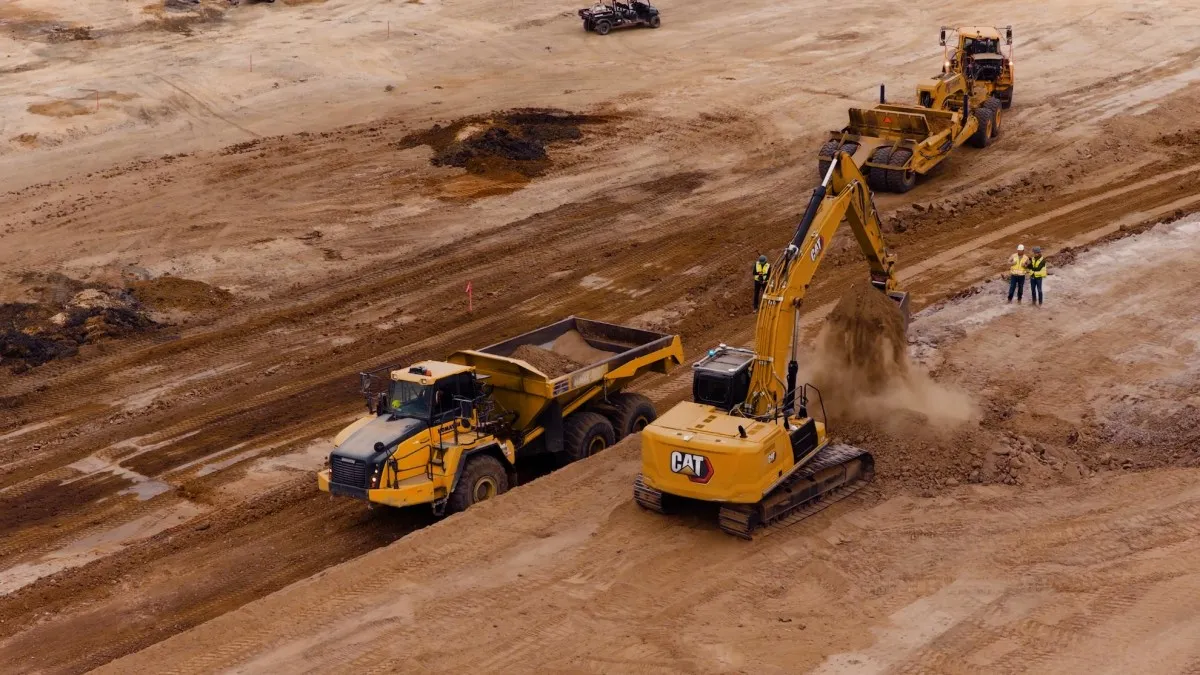
Bedrock Robotics, a startup focused on autonomous excavators, has raised $600M in new funding, bringing its valuation to $4.1B. The round underscores how a growing shortage of skilled operators is pushing construction toward self-driving heavy machinery.
Bedrock Robotics has raised $600 million in new funding, pushing its valuation to $4.1 billion, as the startup doubles down on autonomous excavators. The company is betting that a growing shortage of skilled operators will force the construction industry to embrace self-driving heavy machinery, and investors are clearly buying that thesis.
The $600 million round is a striking number for a construction technology startup, a sector that has historically seen smaller checks. It signals that autonomy in heavy equipment has moved from experimental to essential in the eyes of capital allocators. Bedrock's focus on excavators is deliberate: these machines are central to almost every construction project, from digging foundations to grading land, and they are among the hardest positions to fill with qualified operators.
The operator shortage is not a temporary blip. For decades, excavator operation has been a skilled trade learned through years of hands-on experience. As veteran operators retire, fewer young workers are entering the field, and construction firms are left competing for a shrinking pool of talent. That dynamic has made automation an increasingly attractive answer, not just for cost savings but for keeping projects on schedule.
Autonomous excavators work by combining sensors, GPS, and machine learning to perform tasks like digging, loading, and grading without a human in the cab. For context, these systems typically use LiDAR and cameras to map the worksite, then execute precise movements based on pre-programmed plans or real-time feedback. The result is a machine that can operate for longer hours, with consistent accuracy, and without the physical strain that comes with a 12-hour shift in a cramped cab.
The funding round also reflects a broader shift in construction technology. The industry has long been slow to digitize, but labor shortages, safety concerns, and pressure to improve productivity are pushing contractors to adopt automation. Bedrock's valuation, at $4.1 billion, places it among the most valuable startups in the space, a sign that investors believe the company can scale beyond pilot projects and into mainstream deployment.
Regulators are still catching up. Autonomous equipment operating near workers raises safety questions, and standards for certification are still evolving. For context, autonomous heavy equipment is often deployed first in controlled environments like mines or large construction sites, where risk can be managed. As the technology matures, expect more clarity on how these machines will be approved for broader use, which will determine how quickly contractors can integrate them into everyday operations.
For equipment manufacturers and construction firms, the implications are significant. If autonomous excavators become standard, the economics of project bidding change: labor costs become more predictable, and projects can run around the clock. But adoption will not be instant. Contractors will need to invest in new equipment, retrain their teams, and navigate safety regulations that were written for human operators. Bedrock's success will depend on proving that its machines can work safely and reliably on real job sites, not just in controlled demos.
There is also a second-order effect on the workforce. While autonomy may ease the operator shortage, it will likely change the nature of the job rather than eliminate it. Skilled workers may shift from sitting in the cab to supervising fleets of machines, managing autonomous systems, and handling edge cases that require human judgment. That transition will require new training programs and a rethinking of how construction labor is structured. For executives across construction, mining, and logistics, this round is a clear signal: capital is flowing to automation, and the operator shortage is not going to resolve itself. Companies that wait too long to evaluate autonomous equipment risk falling behind on cost and efficiency. Bedrock's $600 million raise is not just a milestone for one startup; it is a marker that the industry's future is being built now, one self-driving excavator at a time.
This story's Key Insights and Take-aways are locked.
Create a free account to unlock Executive Actions for one credit.
Register to UnlockAlways free for Executives Club members. Join the Club
More in Technology

Microsoft offers buyouts to 60,000 as AI efficiency push reshapes its workforce
The voluntary buyout offer is the clearest sign yet that Microsoft will trim headcount even as it accelerates AI infrastructure spending.

Reddit's r/opensource bans AI slop, solo devs, and non-English speakers
New rules require a year of maintenance, three contributors, and English fluency, leaving independent developers locked out of the forum they need to grow.
Nvidia's $89B data center quarter: the 9 companies cashing in
The AI buildout is minting fortunes beyond GPUs, and memory, cloud, and cooling suppliers are riding the same wave.