

Sergey Brin says AlphaGo accelerated humans, not erased them
In a Google DeepMind event, the cofounder argued Go showed AI can push people to get better.
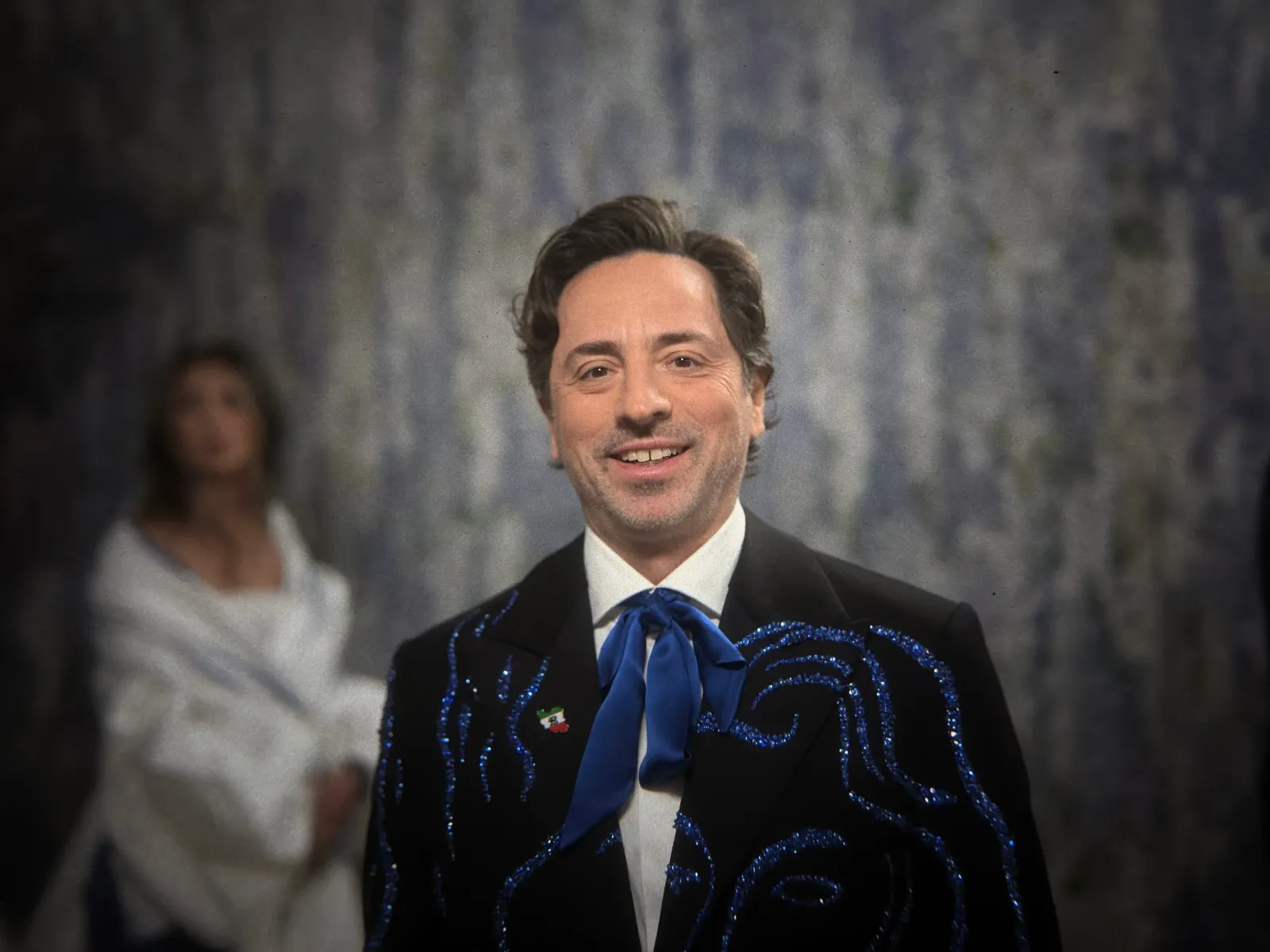
Google cofounder Sergey Brin said AI is unlikely to replace humans, pointing to Google DeepMind's AlphaGo pushing top Go players to improve after competition. For decision-makers, the message challenges the job-obsolescence narrative and reframes AI investment around human augmentation.
Google cofounder Sergey Brin is pushing back on the most anxious AI storyline: that machines will replace people. Speaking during an unscripted fireside chat at Google DeepMind Build Day at AGI House, Brin argued that when computers outperform humans in a domain, it does not freeze human progress. It can accelerate it.
His example was as specific as it gets: Google's AlphaGo challenged elite Go players Lee Sedol and Ke Jie. Brin said the game of Go advanced after AlphaGo, and that the players who faced it improved. “And by the way, since AlphaGo, the game of Go has advanced a lot,” Brin said. He added: “The players that played against it, Lee Sedol, became vastly better after, and Ke Jie after he played AlphaGo also. It has pushed the state of the art.”
This is a rare argument in AI debates because it is not a vague aspiration. It is tied to two named, real-world matches. Sedol was one of the world's top Go players and a multiple-time international champion when he won one of five games against AlphaGo in March 2016. Ke Jie was the world's No. 1-ranked Go player when he faced AlphaGo in 2017 and lost all three games. Brin's point is straightforward: in Go, after the computer proved it could win, human excellence did not stall. Instead, the competitive standard moved.
To be clear, Go is a two-player board game that originated in China. Players place black and white stones on a grid. The objective is to control more territory than the opponent and capture their stones. It is not a modern digital puzzle invented for the age of machine learning. That matters because it underlines the mechanism Brin is pointing to: when AI raises the ceiling, humans often respond by climbing higher.
Brin made the broader human framing explicit. He said, “The fact that computers can do things well has actually not stopped humans getting better and better at them, getting more and more recognition and enjoying those things.” Then he tied that to what AI might do next: “I think we're going to find AI can do a whole lot of pretty surprising things, but I think they also help advance people in doing it.”
That argument lands in the middle of a wider, messy labor conversation. As workers worry that AI could make their jobs obsolete, the debate has split into replacement versus augmentation camps. The source notes that a recent poll by Quinnipiac University found that 30% of Americans believe AI could make their jobs obsolete. At the same time, it says some executives have pointed to AI as a factor in layoffs, but many researchers and economists argue that the evidence for widespread AI-driven job losses remains limited. In other words: fear is real, but the data-backed narrative of mass replacement is not.
For the companies and boards living with these headlines, the second-order implication is not just philosophical. It affects how you design your AI roadmap, how you talk about workforce strategy, and how you anticipate regulatory and political pressure. If the dominant narrative becomes “AI replaces,” leaders may be forced into defensive postures. If the conversation shifts toward “AI augments,” the policy focus and internal KPIs can change toward training, productivity, and redeployment rather than pure cost cutting.
The source also highlights that in Silicon Valley, discussion has shifted from job-count anxiety toward job-shape reality. Many researchers and economists, and multiple tech leaders, emphasize that AI changes the nature of work. Machines handle routine tasks, while people lean harder into judgment, creativity, and decision-making. That theme is echoed by named executives and a senior technical leader: Salesforce CEO Marc Benioff, Duolingo CEO Luis von Ahn, and former Google distinguished engineer Kelsey Hightower have all recently said that soft skills like empathy, communication, and relationship-building cannot be replaced by AI.
Where does Brin’s Go argument fit into this? It offers a concrete, high-signal example of augmentation, not replacement. Instead of treating AI like a competitor that ends the story, he frames it like a catalyst that raises the craft. That is the same logic companies often want internally: AI systems that improve performance should also create new workflows where people level up alongside the tools.
Strategically, peers should take the lesson seriously because the stakes are reputational and operational. Investors and regulators are watching whether AI is deployed as a workforce disruptor or as an engine for capability building. Employees are watching which story leadership tells. And competitors are watching where the standard of performance shifts when AI enters the room. Brin’s message is basically: if AI can push the state of the art in Go, it may do something similar in the skills and systems humans rely on at work. The question for decision-makers is whether you plan for that upward spiral or react to the downward fear headline.
This story's Key Insights and Take-aways are locked.
Create a free account to unlock Executive Actions for one credit.
Register to UnlockAlways free for Executives Club members. Join the Club
More in Business

Anthropic’s Levant Alpöge cracks the Jacobian conjecture after 87 years
A Harvard valedictorian used Claude to hit a 1939 breakthrough, but the missing “why” is the real problem.

Uber buys Delivery Hero for nearly $15B, vaulting to top food delivery outside China
The deal doubles Uber's dual-services footprint and pushes a ride-and-eats bundling play into 50 more markets.

Epic and Google drop settlement bid, forcing rival Android app stores by July 22
Google told the court it is ready to carry third-party app stores starting Wednesday, July 22.