

Shawn Layden: Sony’s disc-ending move was “fairly dramatic” and likely “a straight spreadsheet decision”
What a 32-year Sony veteran says about why Sony ended game disc production, and why resale probably didn’t decide it.
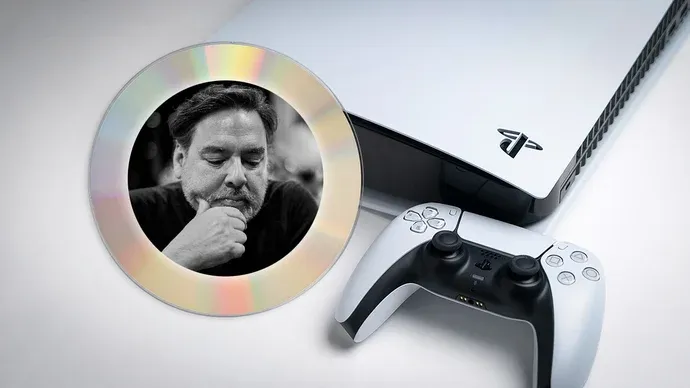
Shawn Layden, a Sony veteran with 32 years and former PlayStation Worldwide Studios leader, described Sony’s surprise end to game disc production as “fairly dramatic.” In his interview, he said Sony treated it like a spreadsheet decision and did not think second-hand sales were a deciding factor.
Shawn Layden calls Sony’s decision to end game disc production “fairly dramatic.” The former PlayStation Worldwide Studios leader, and a Sony veteran of 32 years, also told Eurogamer the move was essentially a “spreadsheet” call, not a moral crusade or a reactive headline. The result is that one of gaming’s most familiar distribution artifacts, the physical disc, is being actively removed from the production line.
Layden’s specific framing matters because it points to how Sony likely treats this kind of change internally: as a numbers-and-risk problem with a time horizon, rather than as something driven primarily by consumer behavior like used game sales. He said he did not think second-hand sales were a deciding factor. In other words, if your mental model of “disc removal” was that Sony finally cracked down because resale cannibalized new sales, Layden’s take suggests a different core driver.
So what else could a “spreadsheet” decision be optimizing? In practice, disc-based distribution forces companies to balance manufacturing costs, supply chain complexity, and retail logistics against the value that physical media still captures. Even when demand for discs declines, the legacy of hardware generations and retailer ecosystems can keep physical products around longer than the economics strictly justify. That creates a classic board-level tension: keep supporting a familiar channel because it reduces friction, or modernize because the cost structure is no longer worth it. Layden’s emphasis that Sony had always wrestled with “this exact decision” in the past signals that the company did not stumble into this. It re-litigated the same choice repeatedly, until it crossed the threshold where execution won.
This is also where regulatory and compliance realities, even when they are not the headline, tend to matter. Physical media is bound up with standards for labeling, packaging, distribution, and in many markets the operational burden is real. Digital distribution changes the shape of those burdens. It can also affect how consumer protection rules and platform obligations get implemented, since downloads and entitlements behave differently than shelf inventory. When a long-running debate finally ends, it is often because the company can see a clearer line from policy requirements and operational risk to unit economics. Layden’s “spreadsheet decision” phrasing fits that pattern: reduce uncertainty, quantify constraints, and move.
There is a second-order implication, too, for how executives evaluate market signals. Used game sales have long been the most obvious narrative around why publishers keep or kill physical. But Layden says second-hand sales were not a deciding factor. That suggests Sony may believe it can manage channel leakage through pricing, assortment decisions, account-based engagement, and digital storefront strategy, without tying the disc decision directly to resale. It also suggests the company looked at the opportunity cost: every dollar and engineer hour spent sustaining disc production is a dollar and hour not spent improving digital experiences, expanding services, or supporting newer device ecosystems.
Even for decision-makers who never set foot in PlayStation hardware meetings, the lesson is operational. “Fairly dramatic” is how Layden described the outcome, but the reasoning he highlighted is incremental logic. A spreadsheet decision is not a single moment of bravado. It is the accumulation of variables: cost curves, forecasted demand by region and platform, contractual manufacturing timelines, retailer relationships, and the internal trade-offs between legacy support and future investment.
That also reframes the strategic stake. If Sony’s board and leadership team treat the disc end as a spreadsheet call, the decision is likely designed to be reversible or at least manageable if market conditions shift. The company can model scenarios, estimate breakpoints, and select the timing when the risk-adjusted return clears the bar. For other publishers and platform operators watching, the question becomes less “did resale doom discs?” and more “what internal model did the company use to justify leaving discs behind, and how did the assumptions evolve until it was no longer a debate?”
In the end, Layden’s comments place Sony’s move into a familiar executive category: a long-running internal debate that becomes an action only after the math is clean enough to defend. For founders, investors, and operators, the practical takeaway is that technology transitions often look cultural from the outside, but they are usually operational from the inside. Sony ending disc production is dramatic in its optics, but it sounds, per Layden, like a decision that finally lined up with the spreadsheet.
This story's Key Insights and Take-aways are locked.
Create a free account to unlock Executive Actions for one credit.
Register to UnlockAlways free for Executives Club members. Join the Club
More in Entertainment

Russell Brand's accuser 'bewildered and confused' as he denies 7 sex charges
The criminal case against the comedian is a live test of how media companies manage talent risk when serious allegations go public.

'It's a Magic Trick': Ballet Experts Say Rosalía's SNL Pose Is Impossible
Three ballet experts tell Rolling Stone Rosalía's gravity-defying SNL stillness shouldn't be possible - and why the debate is now part of the show.

Activision CMO: GTA 6 Will Boost Call of Duty, Not Bury It
Activision's top marketer says Rockstar's blockbuster will drive players back to consoles and into Modern Warfare 4, even as the company admits its recent strategy failed.