

Shein Shares Slide on Hong Kong Debut After Years of IPO Hurdles
The fast-fashion giant finally goes public in Hong Kong, but the market's cool reception signals lingering concerns about its business model and regulatory risks.
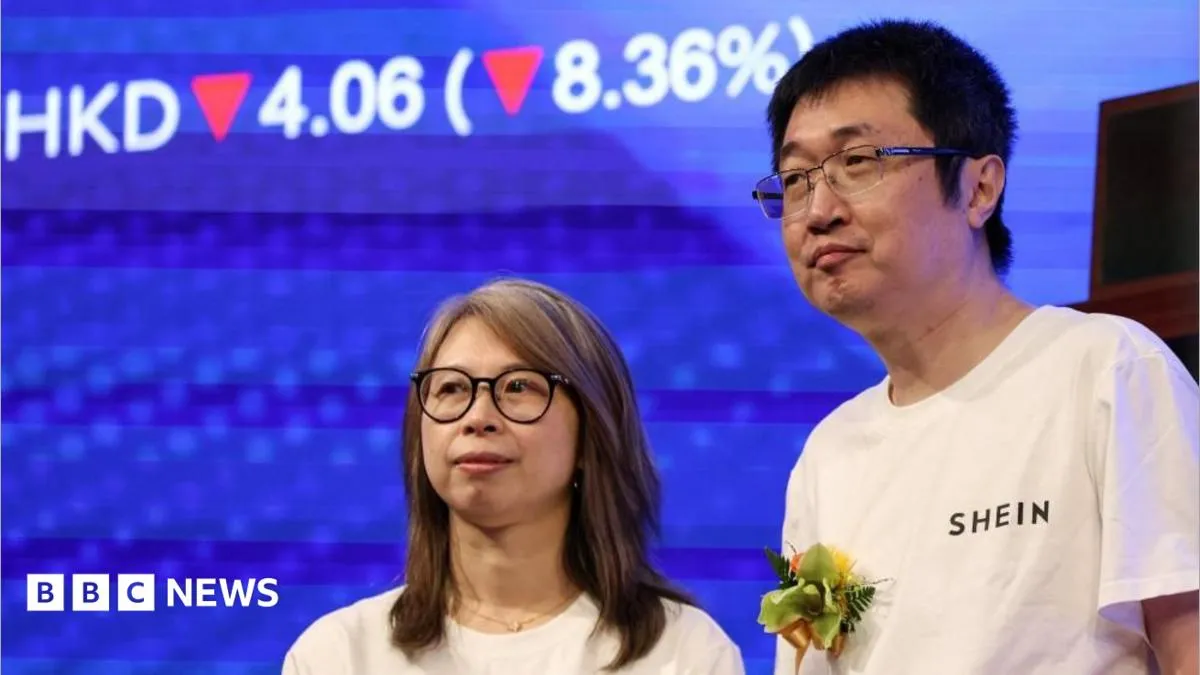
Shein's shares slid on its long-awaited Hong Kong listing Tuesday, capping a years-long quest that saw the fast-fashion giant repeatedly thwarted in New York and London. The weak debut underscores investor skepticism about the company's valuation, supply chain practices, and ability to sustain growth amid intensifying regulatory pressure.
Shein shares slid on their first day of trading in Hong Kong on Tuesday, a sobering start for a company that had spent years chasing a public listing. The debut marks the culmination of a long and winding road that originally targeted New York and London, only to be rerouted to Hong Kong after regulatory and political headwinds repeatedly blocked those plans. For a retailer that has become a global phenomenon with its ultra-cheap, trend-driven apparel, the muted market reception raises questions about whether investors are willing to bet on its future at the valuation it once sought.
The slide is particularly notable given the hype that has long surrounded Shein. The company, founded in China and now headquartered in Singapore, has grown into one of the world's largest fast-fashion players, leveraging a data-driven supply chain that can churn out new styles in days. Its app has been downloaded billions of times, and its low prices have made it a staple for budget-conscious shoppers across the US, Europe, and emerging markets. Yet that explosive growth has also attracted intense scrutiny over labor practices, environmental impact, and data privacy, issues that have complicated its previous attempts to go public.
The company's quest for a listing began years ago, with plans to float in New York. Those efforts were derailed by a combination of US regulatory pressure, including investigations into its supply chain and forced labor allegations, as well as broader tensions between Washington and Beijing over Chinese-owned tech companies. London was then floated as an alternative, but that too stalled, partly due to political opposition and the company's own concerns about valuation. Hong Kong, with its closer ties to mainland China and a more accommodating regulatory environment, emerged as the pragmatic choice, even as the city's stock market has faced its own challenges in recent years.
Tuesday's trading session saw shares open and then decline, reflecting a cautious mood among institutional investors. While the exact percentage drop was not disclosed in the initial report, the slide itself is a signal that the market is not fully convinced by Shein's growth story. Analysts point to several factors: the company's reliance on a tariff exemption that has been under threat in the US, rising competition from rivals like Temu and Amazon, and a broader slowdown in e-commerce growth as pandemic-era habits fade. Additionally, Shein's business model, which depends on rapid production and low margins, faces mounting regulatory costs as governments in the US and Europe push for greater transparency and accountability in supply chains.
The Hong Kong listing also comes at a delicate time for global markets. Interest rates remain elevated, and investors have become more selective about backing loss-making or low-margin businesses. Shein, despite its massive revenue, has historically operated on thin margins, and its profitability has been questioned. The company has reportedly made efforts to improve its environmental and social credentials, but skeptics argue that these are insufficient to address the fundamental risks embedded in its model. The slide on debut suggests that many investors are unwilling to pay a premium for a company whose future is clouded by regulatory uncertainty and competitive pressures.
For the broader retail and e-commerce sector, Shein's debut serves as a barometer of investor sentiment toward fast-fashion and cross-border e-commerce. A weak performance could discourage other Chinese-founded companies from pursuing listings in Hong Kong, while also emboldening regulators who have argued that such firms need stricter oversight. Conversely, if Shein can stabilize its stock and demonstrate resilience, it might reassure the market that the model can adapt to a more regulated environment. The company's ability to navigate these challenges will be closely watched by its peers, including PDD Holdings' Temu, which has adopted a similar playbook.
For decision-makers, the takeaway is clear: Shein's long-awaited listing is not just a corporate milestone but a test of whether the fast-fashion giant can transition from a hyper-growth startup to a sustainable public company. The slide on day one is a warning that investors are demanding more than just scale; they want evidence of durable profitability, ethical practices, and strategic clarity. As Shein begins its life as a publicly traded entity, its leadership will need to convince the market that it can address these concerns without sacrificing the agility that made it a global force. The coming quarters will reveal whether the company can turn this rocky debut into a foundation for long-term success, or whether the slide marks the beginning of a more difficult chapter.
This story's Key Insights and Take-aways are locked.
Create a free account to unlock Executive Actions for one credit.
Register to UnlockAlways free for Executives Club members. Join the Club
More in Business

Tim Cook steps down as Apple CEO, stays on as chair with $45M equity
The 'Trump whisperer' keeps his White House and Beijing access as Apple navigates tariffs and a $4.6 trillion market cap.

Snowflake shares surge as AI data demand crushes estimates, lifting full-year forecast
Stocks jumped on stronger-than-expected guidance, signaling enterprise AI workloads are accelerating faster than Wall Street priced in.

Tim Cook's 15-year Apple CEO run ends: 3 lessons for any successor
After 15 years, Tim Cook hands Apple to John Ternus - here's how he turned a $350B company into a $4.6T juggernaut.