

Shenzhen workers at IO-AI Tech steer humanoids with VR rigs, turning bodies into controllers
In China’s hardware capital, IO-AI Tech uses body-driven humanoid control that hints at a new operator model for robotics.

In Shenzhen, IO-AI Tech workers control humanoid robots using a VR rig reminiscent of Ready Player One. For decision-makers, it signals how robotics teams are compressing the “human in the loop” layer into more scalable, software-like interaction.
Shenzhen-based IO-AI Tech is hiring the next generation of robot operators, and they are not holding a joystick. Workers at the company control humanoid robots using a VR rig reminiscent of Ready Player One, essentially turning their own embodied movement into the control input for the machines.
That sounds playful, but it is also strategically serious: if you can control a complex humanoid through an immersive interface, you can shorten the distance between “we built hardware” and “someone can actually drive it.” In other words, the bottleneck stops being only mechanical engineering and starts becoming how quickly you can package control, feedback, and training into something operators can learn.
Shenzhen matters here because it is not just a city with robots. It is one of the world’s densest hardware ecosystems, where companies iterate fast, prototypes become products, and production realities shape product design from day one. In that environment, the control layer is a business lever. A VR-first control approach can reduce friction during early deployments by letting the same team that prototypes the system also run it in the field, or at least simulate real interactions with tight feedback loops. That is a different cadence than waiting for a single “expert operator” role to scale across customers.
For executives, the big question is what kind of operating model this suggests. Traditional robotics workflows often separate the people who program systems from the people who run them in real conditions. A VR rig blurs that boundary. Instead of translating intent through multiple steps, the operator provides movement and context through an interface that feels closer to the task. When the interface is embodied, you can also imagine faster troubleshooting because missteps are visible in real time. The second-order effect is that training and iteration can become more like software operations than like classic industrial automation.
Regulation and safety framing are the other layer executives cannot ignore, even when the story begins with VR. Robots that move like humans, in environments designed for humans, raise questions about safe operation, liability, and reliability. Even in a setting focused on hands-on control, companies typically need to think through risk controls: how the robot behaves when the operator makes a mistake, what happens if tracking degrades, and how the system limits force or motion. A VR-driven approach does not eliminate those requirements, but it can change the shape of them. For example, developers may be able to enforce guardrails through the control software, because the operator is feeding inputs into a software mediation layer.
There is also a talent and scaling implication hidden in this kind of interface. Building humanoids is hard, but operating them can be harder if the control scheme demands rare expertise. A VR rig that resembles Ready Player One culture is culturally legible. It may attract operators who are more comfortable with immersive systems than with specialized robotics consoles. That does not automatically make control easy, but it can expand the pool of people who can contribute to data collection, testing, and deployment. For a company chasing momentum, broader operator accessibility can matter as much as breakthroughs in locomotion.
Finally, this is a competitive signal. When a hardware company leans into VR control in Shenzhen, it is telling the market that “human in the loop” does not have to be clunky. It can be immersive, repeatable, and potentially more scalable than older paradigms. For peers, the strategic stakes are clear: if the path to useful humanoid behavior becomes faster because the operator interface is better, then timelines compress. Budgets shift. Product roadmaps get revised. And the teams that win may not be the ones with only the best actuators, but the ones that best integrate control, feedback, and training into a system operators can actually master.
This story's Key Insights and Take-aways are locked.
Create a free account to unlock Executive Actions for one credit.
Register to UnlockAlways free for Executives Club members. Join the Club
More in Technology

Nvidia's $89B data center quarter: the 9 companies cashing in
The AI buildout is minting fortunes beyond GPUs, and memory, cloud, and cooling suppliers are riding the same wave.
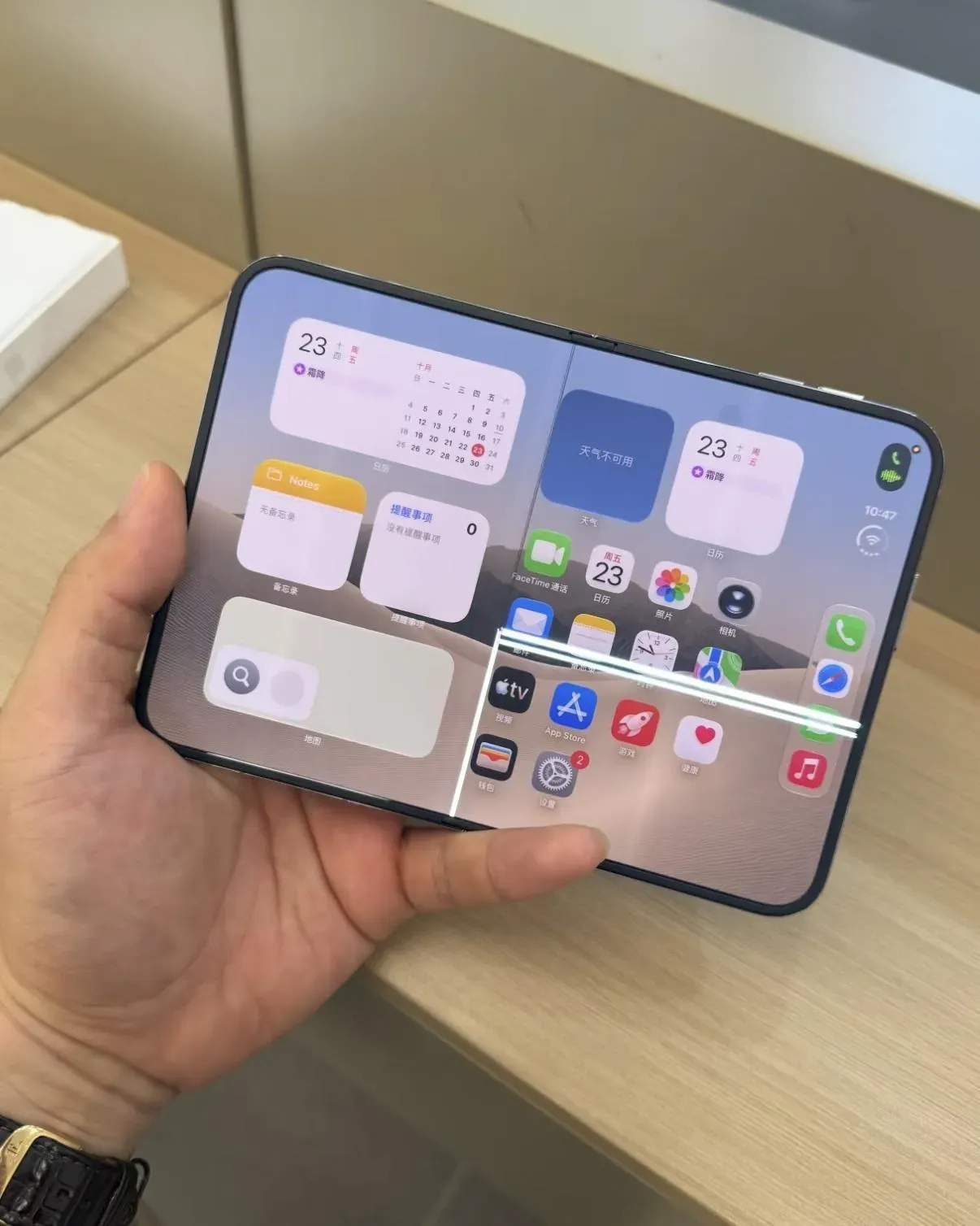
A YouTuber dissected the iPhone Duo and thinks he found crackgate's cause
CuriousHagi's teardown of Apple's foldable reveals a gear-like hinge that may explain why screens crack in the same spot within hours.

Google quietly links your phone number to every Android account on your SIM
Adding a SIM now ties your phone number to all Google accounts - and future accounts inherit it. Here's the security and privacy stakes.