

Silent Hill: Townfall’s Screen Burn used magnets on broken TVs to perfect its CRTV
How Screen Burn made a digital game prop feel analog, and why that matters when budgets demand “authenticity.”
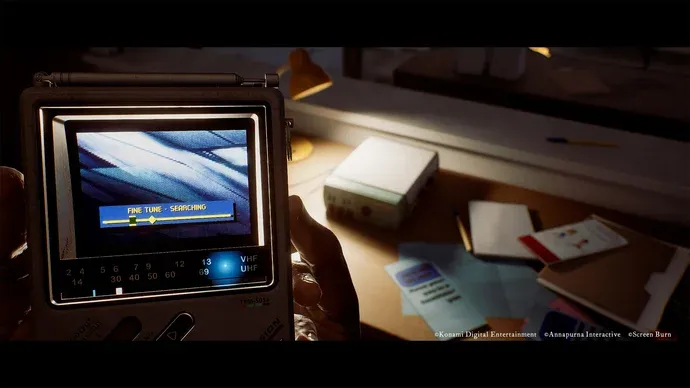
Silent Hill: Townfall studio Screen Burn used broken TVs and magnets to make its in-game gadget, the CRTV, feel analogue as well as look it. For decision-makers, it is a reminder that production choices now compete on sensory realism, not just graphics.
Silent Hill: Townfall studio Screen Burn didn’t just model a CRT. It used broken TVs and magnets to make its in-game gadget, the CRTV, feel analogue as well as look it.
That is the whole trick, and it is exactly why it is interesting. When players talk about “immersion,” they often mean visuals. Screen Burn went after something harder to fake: the messy, physical behavior that comes from real hardware. Even if you never see the magnets in-game, the end result is a CRTV that behaves and presents like an actual, imperfect cathode-ray tube, not a clean screen with a “vintage” filter.
If you are leading a studio, running a publishing pipeline, or funding interactive entertainment, this is a useful signal. The market has moved past “pretty enough.” Players and reviewers now look for consistency across the experience: the UI, the motion, the lighting, the sound, and the tactile cues that suggest the world has physical rules. Getting those cues right is expensive, because it requires more than design talent. It often requires engineering time, prototyping, and production coordination between artists and technical teams.
Screen Burn’s choice also illustrates how analog authenticity works as an industrial problem, not a mood. A CRT is not just a color palette. It has scan behavior, imperfect clarity, and the kind of artifacts that come from real components aging, misaligning, or being physically altered. Magnets are a straightforward way to introduce distortion effects that resemble those physical behaviors, but the deeper point is the workflow mindset: instead of simulating the vibe, the team harvested real-world artifacts and translated them into game visuals and behavior.
There is also a risk-management angle hiding in plain sight. Physical prototyping with damaged equipment can raise practical concerns, even when the work is creative. Studios typically have health and safety processes for handling broken electronics and components, and magnets can have their own operational constraints around storage and use. While the source only states that Screen Burn used broken TVs and magnets, the second-order lesson for executives is broader: authenticity efforts are not “free.” They need clear internal guardrails so creativity does not become avoidable disruption.
Now zoom out to the regulatory and policy environment that game and media companies increasingly face. Even when a story is about art direction, the way teams handle hardware can collide with compliance expectations. Electronics disposal and handling in particular is a regulated category in many jurisdictions because of hazardous materials and recycling requirements. Screen Burn’s use of broken TVs suggests the studio was comfortable working with obsolete hardware inputs. For decision-makers, that is a reminder to treat production pipelines like supply chains: you need an answer for where hardware comes from, how it is stored, and how it gets retired.
There is a business consequence too. Props and in-game gadgets can become marketing assets. A distinctive CRTV is not just a background object. It can shape streamable moments, screenshot culture, and “this looks different” conversations. If your budget is capped, the easiest way to stand out is not always higher resolution. Sometimes it is a specific, credible feature that players can recognize as authentic. Screen Burn’s approach is a small example of how teams are spending effort where it creates perceived reality.
For boards and operators, the strategic takeaway is about allocation. When teams can show they are investing in authenticity through physical experimentation, it becomes easier to justify spend that might otherwise look like “extra.” Investors and leadership teams want proof of differentiation, not just production output. In this case, the proof is process: Screen Burn used broken TVs and magnets specifically to make the CRTV feel analogue as well as look it. That is not a generic promise. It is a concrete development method tied to a specific in-game artifact.
If you are in a similar role at a studio or publishing partner, the question becomes: where are you substituting simulation for reality, and where are you testing artifacts instead of imagining them? Screen Burn’s CRTV suggests the winning teams are narrowing the gap between the physical world and the digital experience, even if it means getting hands-on with broken hardware and using something as simple as magnets to capture what a screen cannot easily manufacture from scratch.
This story's Key Insights and Take-aways are locked.
Create a free account to unlock Executive Actions for one credit.
Register to UnlockAlways free for Executives Club members. Join the Club
More in Entertainment

'It's a Magic Trick': Ballet Experts Say Rosalía's SNL Pose Is Impossible
Three ballet experts tell Rolling Stone Rosalía's gravity-defying SNL stillness shouldn't be possible - and why the debate is now part of the show.

Activision CMO: GTA 6 Will Boost Call of Duty, Not Bury It
Activision's top marketer says Rockstar's blockbuster will drive players back to consoles and into Modern Warfare 4, even as the company admits its recent strategy failed.

Justice to Score GTA 6, Share New Song with Tame Impala, SZA, King Gizzard
Rockstar taps the French duo for the GTA VI score, and the first taste is a genre-melting collab with Tame Impala, SZA, and King Gizzard & The Lizard Wizard.