
Simon Le Bon says Duran Duran split income equally to stay together for 50 years
Their rules on publishing and band payouts may look old-school, but it is a modern blueprint for reducing resentment.
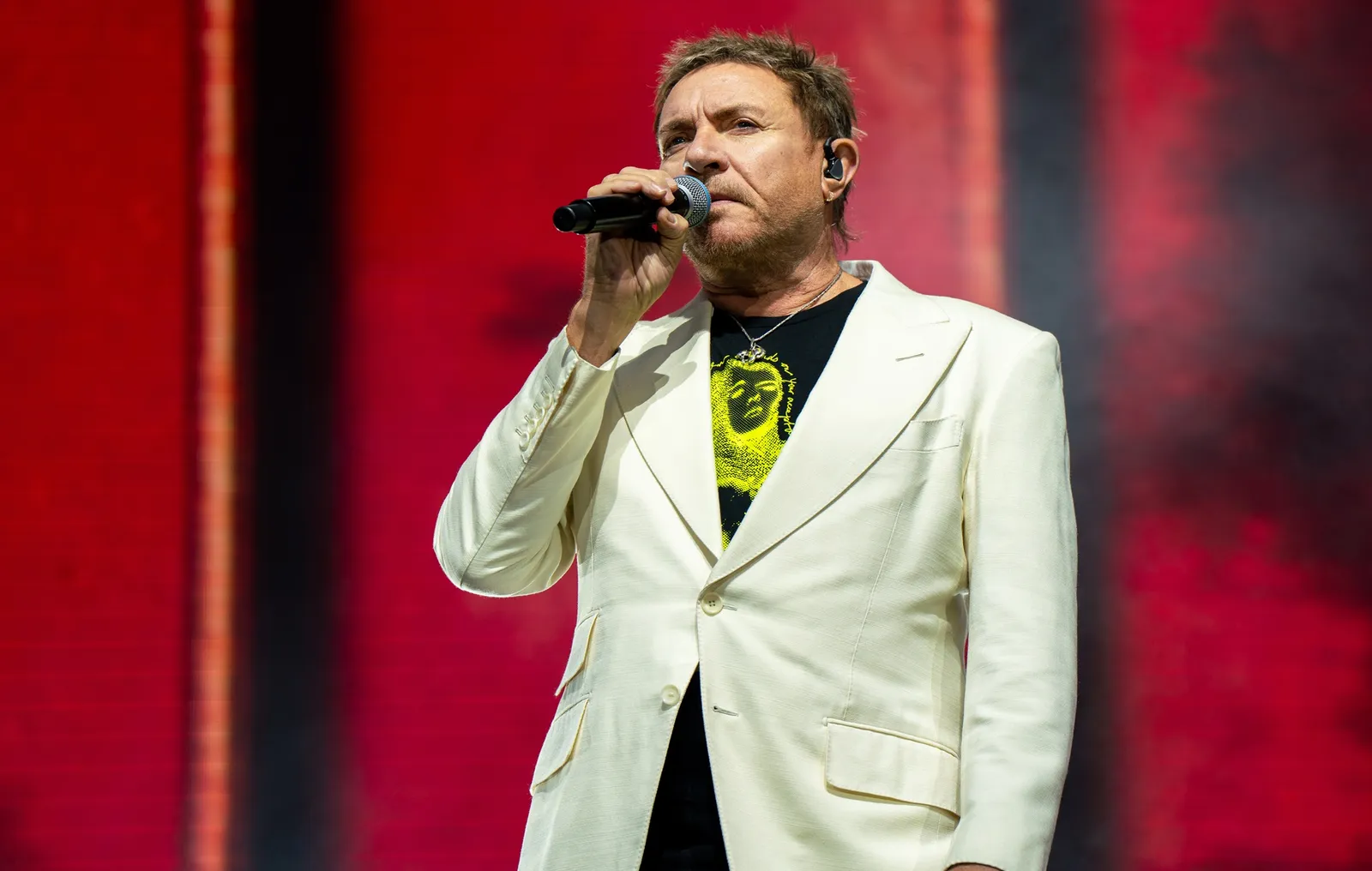
Duran Duran frontman Simon Le Bon told ITV News that the band survives nearly 50 years by splitting all income equally among the core lineup: Le Bon, John Taylor, Roger Taylor, and Nick Rhodes. For decision-makers, the key is how equal publishing shares can stabilize creative relationships, even when not everyone writes the songs.
Duran Duran have done something most bands struggle to replicate: staying intact for nearly 50 years in a music industry famous for churn. In an interview with ITV News, frontman Simon Le Bon credited one simple (and pretty unusual) operating principle. “We split all the income equally.”
Le Bon tied that approach directly to publishing. He said it “doesn’t matter if you write something or if you don’t write on it,” because “you get an equal share of the publishing.” The point was less romance and more risk management. He described how this structure keeps everyone “happy,” eliminates “resentment for financial reasons,” and, according to him, means “only the best material gets on the album.” He also said, “I don’t know how many other bands do that.”
If you are thinking, “That sounds like teamwork,” sure. But executives should also hear a governance story. Bands are effectively mini-companies, and money allocation is the closest thing to corporate conflict. When publishing splits reward only writers, the math can start to feel like a scoreboard. When you do not write, you are not just contributing less creatively, you are potentially building less financial upside. Le Bon’s model flips that incentive. By treating publishing as a shared outcome of the group rather than a transactional reward for individual authorship, Duran Duran reduced the emotional volatility that can turn creative partners into contractual opponents.
That matters even more in the real world of music economics, where publishing is one of the most important income streams over time. A song can keep earning long after the tour is over. So “who owns what” does not just affect today’s paycheck. It can shape the long-run value of a catalog and the long-run relationships that protect it. Le Bon’s comments suggest that for Duran Duran, equal income and equal publishing shares function like a long-duration settlement between members. You can keep writing, keep arranging, keep contributing ideas, without the group constantly renegotiating whose work deserves extra upside.
There is also a leadership layer here. Le Bon said the band “like[s] each other,” “like[s] working together,” and “rely[ies] on each other for musical ideas.” In other words, the payout structure is not floating in a vacuum. It is coupled with a shared creative process among the core lineup: him, John Taylor, Roger Taylor, and Nick Rhodes. For boards or founders looking at partnerships, that combination is often the differentiator. Fairness without shared culture is still a powder keg. Culture without fairness is still a slow burn. Duran Duran, at least based on Le Bon’s framing, try to get both.
This is not just band trivia. The interview lands right before a high-profile moment for them: they are set to headline BST Hyde Park 2026 in London on Sunday July 5. They previously topped the bill at BST Hyde Park in 2022. The 2020 edition was announced for them but was cancelled because of the COVID-19 pandemic. These are exactly the types of shocks that test internal cohesion. If income allocation had been a friction point, an industry-wide disruption would have only made it louder.
Le Bon’s Glastonbury comments reinforce the bigger picture: the band is still operating like an enterprise that protects its positioning. He said they will not play at Glastonbury unless they are one of the headliners. “Well, we want to - but not in a disco tent at 3pm, which is what we were offered,” he told ITV News. They “want the right slot,” and “we shouldn’t be below anybody on the bill,” so “we’ll hold out because we’re a headline act.” In 2023, Le Bon told NME something similar, saying he would love to do Glastonbury but “we just need to get the right slot.” He explained they had had the chance before, but “it wasn’t playing the main stage.”
For executives, that is the second-order payoff. When internal economics are stable, groups can be more decisive externally. If you are not constantly managing resentment over financial splits, you can negotiate tour and festival terms with sharper confidence. You can hold out for the slot that preserves brand value and audience expectations. You can focus on strategy rather than internal recalibration.
Duran Duran also recently revealed they will tour the UK with an arena tour later this year. Their last live dates in the UK were in October last year, before which they headlined the closing night of Latitude 2024 and played at the opening ceremony of the Commonwealth Games in Birmingham in 2022. They have sold over 100 million records, been inducted into the Rock and Roll Hall of Fame, and won Grammy and BRIT Awards. The combination of longevity, recognition, and still being able to sell the headline package is the real proof point behind Le Bon’s claim.
So what should a decision-maker take from this? If you are structuring creative teams, joint ventures, studios, labels, or even tech partnerships that create shared IP, you are really designing incentives. Le Bon’s “equal share of the publishing” principle is a stark example of how governance can prevent slow-motion relationship breakups. The lesson is not that every group must literally split income equally. The lesson is that internal payout logic has to match the reality of how the team actually works, or the resentment will show up eventually, whether the next festival slot is offered or not.
This story's Key Insights and Take-aways are locked.
Create a free account to unlock Executive Actions for one credit.
Register to UnlockAlways free for Executives Club members. Join the Club
More in Business

Anthropic’s Levant Alpöge cracks the Jacobian conjecture after 87 years
A Harvard valedictorian used Claude to hit a 1939 breakthrough, but the missing “why” is the real problem.

Uber buys Delivery Hero for nearly $15B, vaulting to top food delivery outside China
The deal doubles Uber's dual-services footprint and pushes a ride-and-eats bundling play into 50 more markets.

Epic and Google drop settlement bid, forcing rival Android app stores by July 22
Google told the court it is ready to carry third-party app stores starting Wednesday, July 22.