

Sinclair preempts ABC and NBC network programming to air Trump speech
A Sinclair spokesperson says its ABC and NBC affiliates preempted network coverage after ABC and NBC declined to air live.
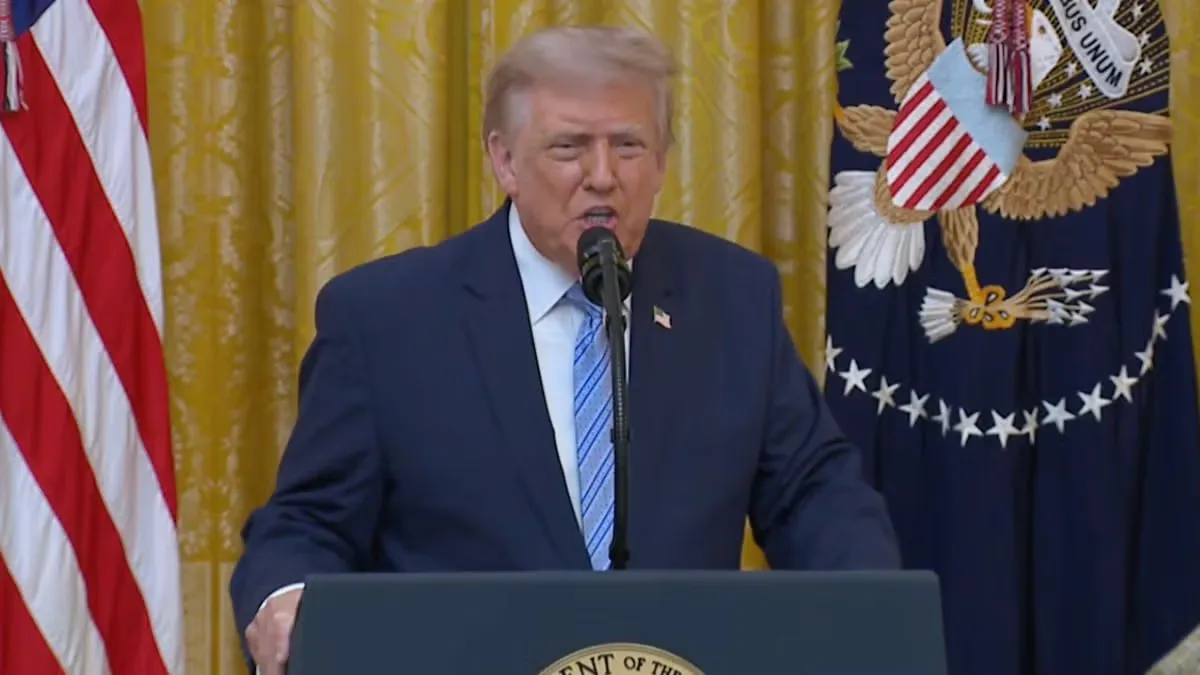
Sinclair, Inc. confirmed to TheWrap that its ABC and NBC affiliated stations preempted network programming to carry President Donald Trump’s 9 p.m. ET primetime speech. The consequence for decision-makers: network distribution choices, affiliate control, and regulator pressure collide in real time.
Thursday evening’s primetime TV plan had a fork in the road, and Sinclair-Owned stations picked a side. TheWrap reports that Sinclair, Inc. said its NBC and ABC affiliated stations “preempted network programming” to air President Donald Trump’s speech through a segment called The National News Desk. The move mattered because the major broadcast networks, ABC News and NBC News, had already indicated they would not run the address as standard broadcast programming. Instead, they were opting for streaming coverage, with broadcast interruption plans that were tightly constrained.
That is the core reversal: Sinclair’s local affiliates aired the speech, while the networks that typically set the broadcast agenda chose not to. A Sinclair spokesperson told TheWrap the decision came after “NBC and ABC networks chose not to air the address,” adding that “FOX and CBS networks aired the President’s address,” carried by Sinclair’s FOX and CBS affiliated stations. This wasn’t a minor scheduling tweak. It was a live distribution choice that reshaped what millions saw, and it landed right as Trump used the moment to publicly condemn “ABC and NBC” during his remarks.
The lead-up helps explain why this fight, whether intended or not, was so visible. Earlier in the day, ABC News and NBC News confirmed to TheWrap they planned to carry Trump’s 9 p.m. ET speech live on their respective streaming news services while limiting broadcast network coverage. ABC News also said its Special Report team was prepared to interrupt ABC’s primetime lineup “should significant developments occur.” NBC News said it planned on broadcasting a special report after the speech was over. So even though both networks supported the story, they placed the “live” experience on streaming, not the traditional broadcast path that anchors viewing habits and ad inventory.
Against that backdrop, Sinclair’s affiliates effectively became the broadcast version of a workaround. When a network declines to go live on linear TV, affiliates can still choose what to air locally, subject to agreements and operational realities. Sinclair’s spokesperson framed its decision as preemption of network programming rather than a negotiated addition. That language is important for operators and boards, because it signals not just editorial preference but authority to override the default network feed at the station level.
Trump, for his part, responded directly in the speech. TheWrap notes that he took a moment to condemn the networks’ decision, saying, “In a rare move, NBC and ABC Fake News have both said that they would not cover this speech.” He continued by accusing China of “sinister election meddling” in Joe Biden’s 2020 win and claimed the networks did not want to reveal information because of how they felt about the topic and the “radical left.” He also argued that “Fraud like this should mean a revocation of their licenses,” and complained that the networks and media use “public multi-billion-dollar-in-value airwaves” without paying “for multi-billion-dollar assets.”
What makes this consequential beyond the moment is how quickly technology distribution choices turned into a political and regulatory narrative. Streaming-first delivery changes the audience funnel, potentially shifts ad targeting and measurement, and alters the “must-see” power of prime-time linear programming. When the president publicly links broadcast licensing to election integrity claims, it adds pressure to the entire broadcast ecosystem, including affiliate operators who, in Sinclair’s case, still aired the speech even as the networks opted for limited linear coverage.
There is also a governance and incentives layer here. Networks that choose streaming and limited broadcast coverage may believe they are protecting programming strategy, controlling editorial interruption, or preserving a more stable primetime schedule. Affiliates, however, sit closer to local market expectations and can decide what they believe will deliver audience and revenue in real time. In this episode, Sinclair’s stations chose to preempt network programming to carry The National News Desk with Trump’s remarks, while ABC and NBC held the live line on streaming.
For decision-makers running media companies, distribution partners, and boards evaluating risk, this is a live case study in how “where” coverage happens can be as important as “what” is covered. When networks decline to air an address live on broadcast but stream it instead, affiliates may face immediate operational pressure, advertiser questions, and political amplification, especially if the president uses the disparity to argue about licensing, public airwaves, and “free and fair elections.” Representatives for ABC News and NBC News did not immediately respond to TheWrap’s request for comment, leaving the practical reality on display: viewers got different primary experiences based on station affiliation and network feed decisions.
The second-order implication for peers: the next time a high-profile address or breaking political event arrives, linear broadcast coverage will not be a single coordinated system. It will be a patchwork shaped by network streaming strategies, affiliate preemption authority, and the speed at which political figures can translate platform differences into legitimacy arguments. That is the strategic stake. In a world where “live” can mean streaming, cable simulcast, local feeds, or post-event special reports, media companies will be judged not only on timeliness but on whether their coverage path feels aligned with the moment.
This story's Key Insights and Take-aways are locked.
Create a free account to unlock Executive Actions for one credit.
Register to UnlockAlways free for Executives Club members. Join the Club
More in Politics

LA County: DOJ's 20,000 'noncitizen' voter list is 'unreliable,' includes U.S.-born
Preliminary review by Los Angeles County election officials finds errors in the federal list, raising the stakes for voter roll integrity ahead of November.

Trump's $1.5B Pentagon chip investment lands in North Carolina
A $1.5 billion defense infusion for North Carolina chipmaking signals a new era of Pentagon-backed reshoring - here's what it means for the industry.

Nigeria confirms first Ebola case in Abuja, a woman just off a Uganda flight
Health Minister Muhammad Ali Pate says the patient flew in from Uganda, putting Africa's latest outbreak on Nigeria's doorstep.