
SK Hynix CEO sees memory crunch to 2030, shrugs off oversupply fears
The CEO's bold timeline signals AI-driven demand will outpace capacity, but boards should weigh the risk of a cyclical correction.
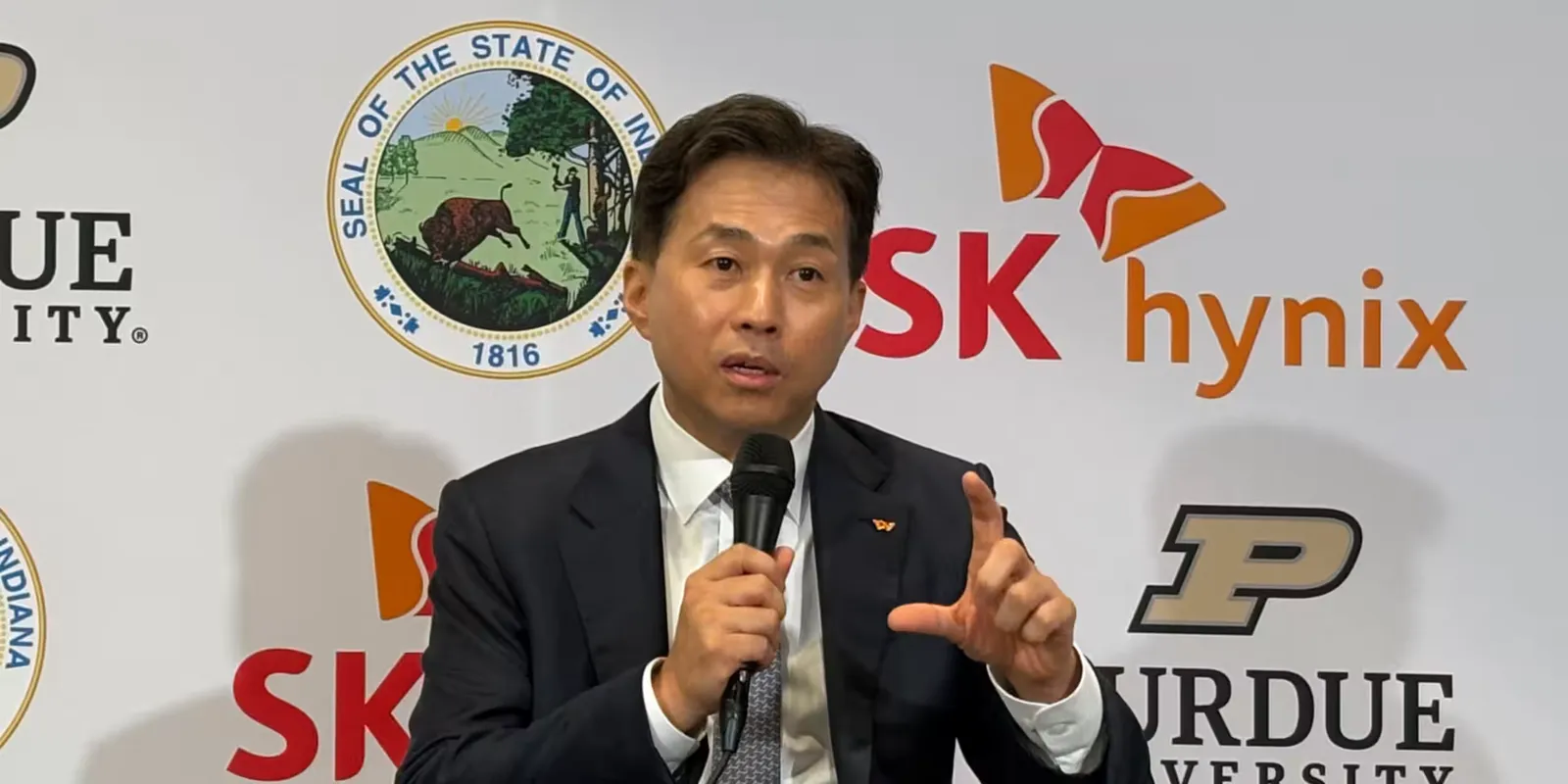
SK Hynix's CEO publicly dismissed memory chip oversupply risks, projecting a supply crunch lasting through 2030. For decision-makers, this signals sustained pricing power and strategic urgency in securing long-term capacity and customer contracts.
SK Hynix's CEO has drawn a line in the sand: memory chip oversupply is not a near-term threat, and the industry's tightness will persist until the end of 2030. The statement, reported by Nikkei Asia, directly counters the growing chorus of analysts and rivals who warn that aggressive capacity expansion could flood the market within two years. For executives across tech and manufacturing, this is not just a supply chain footnote - it is a signal about the durability of AI-driven demand and the pricing leverage that memory makers expect to hold for the rest of the decade.
The CEO's confidence rests on the structural shift in demand from artificial intelligence. High-bandwidth memory (HBM) and advanced DRAM are now the lifeblood of AI accelerators, and every major hyperscaler is racing to secure supply. SK Hynix, as a leading supplier of HBM to Nvidia, has seen its order books stretch years into the future. The CEO's dismissal of oversupply risks suggests that even with new fabs coming online, the industry's ability to produce the most advanced memory chips will lag demand. This is a bet that the AI buildout is not a bubble but a sustained infrastructure wave, akin to the cloud migration of the 2010s.
Historically, the memory industry has been brutally cyclical. Boom periods trigger massive capital expenditure, followed by oversupply and price crashes that wipe out margins. The last downturn, from 2022 to 2023, saw memory prices collapse by more than 50%, forcing SK Hynix and its rivals to cut production and delay fabs. The current recovery, driven by AI, has been faster and more concentrated than past cycles. But the CEO's projection of a crunch through 2030 implies that the industry has learned to discipline capacity additions, or that the demand curve is simply steeper than any previous cycle.
For context, the memory market is dominated by three players: SK Hynix, Samsung Electronics, and Micron Technology. Together, they control nearly all of the DRAM and NAND supply. Their capital expenditure decisions are closely watched because they move the global economy - memory chips are in everything from smartphones to data centers. SK Hynix's stance suggests that the company will not rush to add capacity just to chase short-term revenue, preferring to maximize margins on existing lines. That is a strategic choice that could frustrate customers seeking lower prices, but it also protects shareholder returns.
The CEO's timeline to 2030 is notably longer than most analyst forecasts. Many expect the current shortage to ease by 2025 or 2026 as new fabs in the US, Japan, and South Korea come online. The CEO's dismissal of oversupply risks may be a negotiating tactic - signaling to customers that they should sign long-term contracts now rather than wait for prices to drop. It could also be a genuine read on the technical challenges of producing next-generation memory, which requires extreme ultraviolet lithography and advanced packaging. Yield rates are still improving, and any hiccup in production could extend the crunch.
For boards and CFOs, the implication is clear: memory costs are likely to remain elevated for years, which will pressure margins for any company that buys memory in volume - from server makers to smartphone OEMs. Procurement strategies should shift from spot buying to multi-year agreements with price floors. At the same time, investors in memory stocks should watch for signs of overcapacity in the mid-2020s, as the CEO's confidence could be tested if AI demand softens or if competitors break ranks and flood the market.
The strategic stakes extend beyond memory itself. SK Hynix's position as a bellwether for AI hardware means its CEO's outlook influences capital allocation across the semiconductor supply chain. Equipment makers like ASML and Applied Materials will see sustained orders if SK Hynix and its peers keep building. Foundries and packaging firms will also benefit. But if the CEO is wrong, the industry could face a repeat of the 2022 crash, with painful write-downs and layoffs. The next two years will reveal whether this is a confident forecast or a hopeful one.
For now, the message is unambiguous: the memory crunch is not a temporary blip but a structural condition. Executives who plan around a 2030 horizon will secure supply and pricing certainty, while those who bet on a quick correction may find themselves scrambling. The CEO's dismissal of oversupply is a call to action - not just for memory buyers, but for anyone whose business depends on the relentless march of AI infrastructure.
This story's Key Insights and Take-aways are locked.
Create a free account to unlock Executive Actions for one credit.
Register to UnlockAlways free for Executives Club members. Join the Club
More in Business
Tim Cook steps down as Apple CEO, stays on as chair with $45M equity
The 'Trump whisperer' keeps his White House and Beijing access as Apple navigates tariffs and a $4.6 trillion market cap.
Snowflake shares surge as AI data demand crushes estimates, lifting full-year forecast
Stocks jumped on stronger-than-expected guidance, signaling enterprise AI workloads are accelerating faster than Wall Street priced in.
Tim Cook's 15-year Apple CEO run ends: 3 lessons for any successor
After 15 years, Tim Cook hands Apple to John Ternus - here's how he turned a $350B company into a $4.6T juggernaut.