
SkyDrive targets first flight in 2028, betting Japan greenlights eVTOL aviation on time
The flying-car startup’s 2028 skies goal hits a hard constraint: aircraft certification and airspace rules.
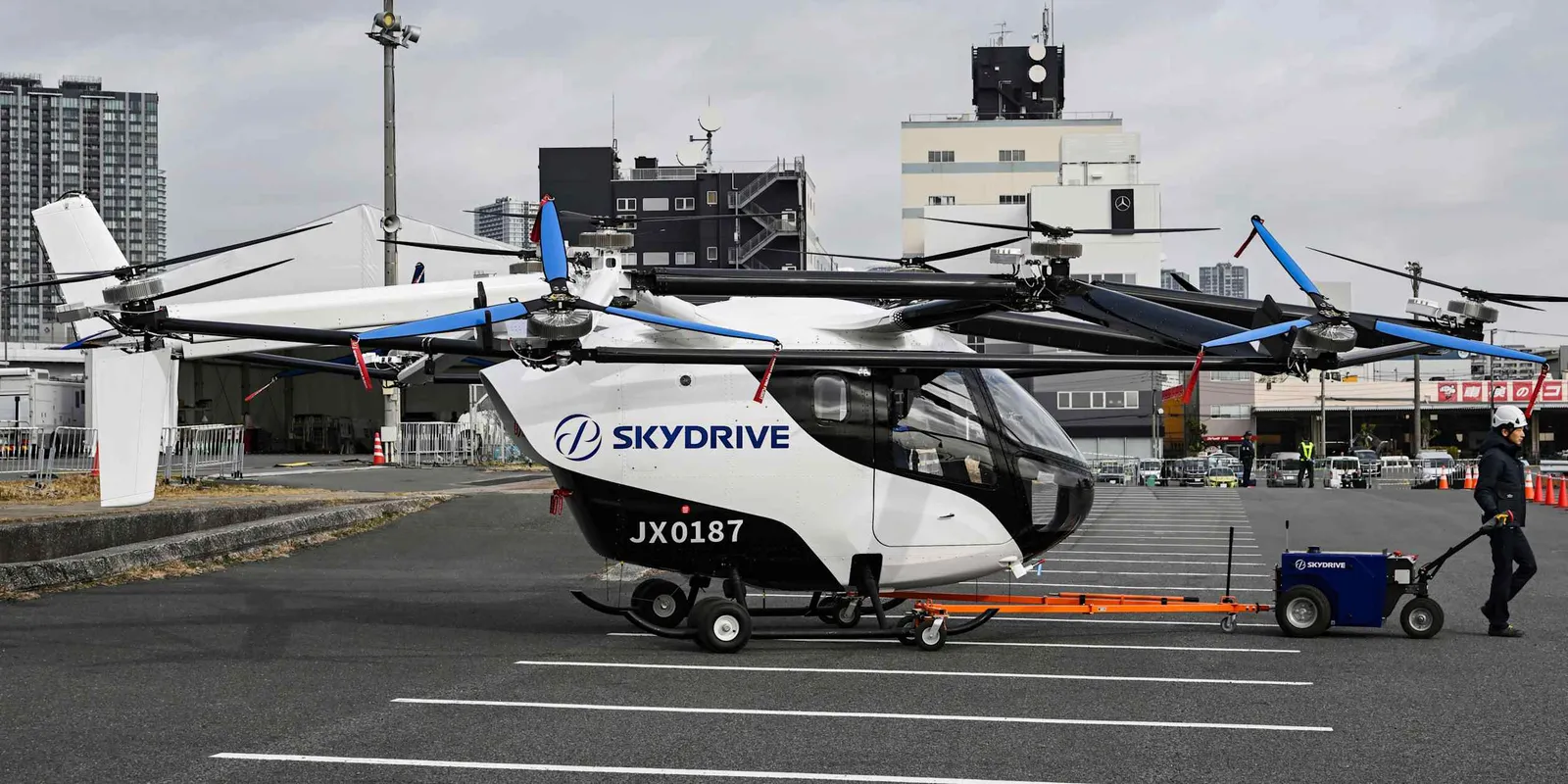
Japan’s flying car startup SkyDrive aims to begin flying operations in 2028 with its eVTOL aircraft. For decision-makers, the 2028 timeline is a proxy bet on Japan’s aviation approval pace and the capital required to survive delays.
SkyDrive, Japan’s flying-car startup, is setting a concrete date for the dream: it aims to get its aircraft flying in 2028. That matters because eVTOL timelines are rarely just engineering problems. They are licensing problems, airspace problems, and money-timing problems all at once. In other words, 2028 is not just a target. It is a deadline the company, regulators, and investors will all be judged against.
The key reason SkyDrive’s 2028 plan is worth tracking is that flying cars sit in the no-man’s-land between “cool prototype” and “certified aircraft.” The business model depends on proving that an eVTOL can meet safety standards, operate under approved flight rules, and scale beyond demonstrations. If SkyDrive lands 2028, it gets something far bigger than attention. It gets the right to sell a future that customers can actually trust, partners can actually insure, and airlines and airspace managers can actually integrate.
For operators and boards, eVTOL development is a long runway, not a sprint. Even when hardware works in a controlled setting, regulators still have to answer questions like: how will the aircraft be maintained, how will failures be handled, what training will pilots need, and what routes can the aircraft fly. These requirements exist for a reason, but they also create a practical risk: every month of delay can be expensive, especially when R&D teams, supply chains, testing schedules, and certification work all have to move in sync.
That is why a specific year like 2028 is such a useful signal. It tells you the company believes it can manage the workstreams that typically stretch out: test flying, data collection, safety validation, and the paperwork needed for certification and commercial operations. It also implies that SkyDrive is planning around a certain regulatory cadence in Japan. And if that cadence slips, the company will face the classic startup crunch: either raise more capital on worse terms or narrow the plan to survive.
There is also an ecosystem angle here. Flying cars are not just about one startup. They are about whether an entire “new aviation category” can be normalized. Airports, vertiport operators, air traffic management systems, insurers, emergency response planners, and local governments all have roles. If SkyDrive reaches 2028 with momentum, it can act as a catalyst, reducing uncertainty for other entrants and encouraging suppliers and infrastructure players to commit. If it misses, the market often gets delayed too, not because people lose interest, but because risk premiums rise and institutions wait for proof.
For decision-makers watching from adjacent industries, SkyDrive’s timeline is a reminder that regulation is the real schedule anchor. The company’s goal will likely depend on how quickly Japan’s aviation authorities can evaluate certification pathways for eVTOL aircraft and how clear the rules are for operations. That clarity affects more than SkyDrive. It affects how quickly investors can underwrite development risk and how quickly partners can plan operational partnerships.
Finally, there is a strategic lesson for boards considering investments in hard-tech transportation. An eVTOL story is not just “will the aircraft fly?” It is “can the company finance and document a safe system long enough to earn regulatory permission to scale?” SkyDrive targeting 2028 is a bet that Japan’s regulatory process, plus the company’s engineering and testing progress, can converge by then. If the bet pays off, it could mark a major step toward making urban air mobility feel real. If it does not, the industry will learn the same expensive lesson it has learned before: in aviation, time is a cost center, and certification is the product.
This story's Key Insights and Take-aways are locked.
Create a free account to unlock Executive Actions for one credit.
Register to UnlockAlways free for Executives Club members. Join the Club
More in Business

Anthropic’s Levant Alpöge cracks the Jacobian conjecture after 87 years
A Harvard valedictorian used Claude to hit a 1939 breakthrough, but the missing “why” is the real problem.

Uber buys Delivery Hero for nearly $15B, vaulting to top food delivery outside China
The deal doubles Uber's dual-services footprint and pushes a ride-and-eats bundling play into 50 more markets.

Epic and Google drop settlement bid, forcing rival Android app stores by July 22
Google told the court it is ready to carry third-party app stores starting Wednesday, July 22.