
Slash’s Nicolas Brilliante burned $80,000 in AI tokens on a “brainrot shooter”
The incident shows why companies are tightening AI spend controls and what “marketing credits” can’t fix.
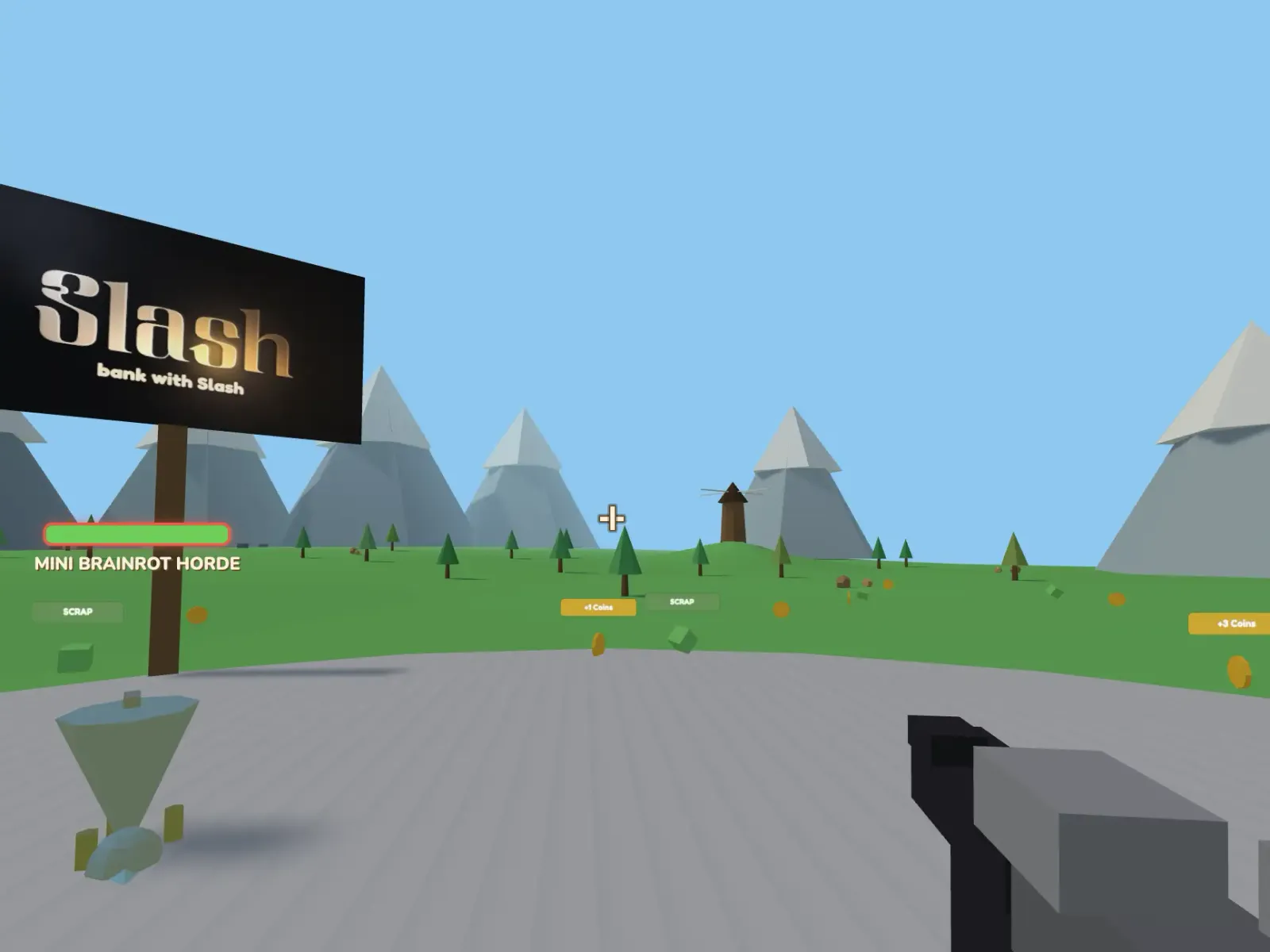
Fintech firm Slash said its head of strategic verticals, Nicolas Brilliante, burned $80,000 in tokens coding a bare-bones “Brainrot shooter” game. The $81,267 dashboard screenshot and Slash’s “write it off as a marketing expense” framing are forcing executives to rethink AI spending, productivity, and guardrails.
Slash’s head of strategic verticals, Nicolas Brilliante, racked up an AI coding bill of $80,000 in tokens on a “brainrot shooter” game, according to Slash’s own post on X. The company said it encouraged employees to “vibe code” more, then watched the credits run hot after Brilliante “burned $80k in credits on the Slash card for a brainrot shooter.”
Brilliante then posted a screenshot that appeared to show an AI usage dashboard totaling $81,267, calling it “a genuine accident” and saying he “underestimated my own ability.” The whole situation came packaged as a pitch to let people play the game so Slash can “write this off as a marketing expense,” a move that is fun, but also unintentionally educational for anyone managing budgets in the age of token sprees.
Here is the key detail: the game was AI-coded. It is “literally called ‘Brainrot shooter,’” and it is described as a bare-bones game set in a Minecraft-esque landscape where players shoot characters with internet-viral brainrot names like “skibidi toilet” and “tung tung tung sahur.” In other words, this was not a months-long product roadmap. It was fast-coded content that, at least for one employee and one card, turned into a very real spend number quickly.
That speed matters because the AI billing problem is not just about total cost. It is about cost behavior. In many teams, early AI experimentation is treated like cheap iteration, but credits can behave like unchecked compute: you get value if you aim well, but you can also burn through budgets when prompts run wild, outputs become iterative by default, or usage thresholds are missing. Polymarket picked up the story with an X post saying Slash “was forced to roll back its AI coding push after an employee burned $80,000 in tokens in the first week.” Whether or not you read that as “forced,” the underlying pattern is familiar: once a line item becomes visible, the organization reacts.
Slash’s framing adds another layer. On Tuesday, Slash posted that it encouraged “vibe coding” more but then experienced the $80k hit, and asked people to play the game so it can write it off as a “marketing expense.” For finance teams, that idea is not automatically a slam dunk. “Marketing expense” is the label companies use when activity creates publicity or customer-facing value. But the incident shows how quickly internal experimentation can blend into external optics once screenshots go viral, especially when a product is built with employees’ AI tools and paid through company mechanisms.
And the optics are already rippling. The story was picked up by Business Insider and then amplified by Polymarket, meaning it bypassed normal internal communication channels. This is second-order damage executives should worry about. Even if the spend is eventually categorized, the headline risk of “AI tokens accidentally cost $80,000” becomes a story employees and boards will reference later when someone asks, “Why did we let this happen?” The cost may be reconcilable. The narrative is sticky.
Zoom out and the larger market context becomes clear. The source notes that Brilliante is not the only employee building quickly in the era of “tokenmaxxing,” a shorthand for maximizing AI usage, and that many companies are looking at AI spending “with a more critical lens.” It also points to a broader pattern: some firms found AI costs did not translate into productivity gains and cut back on AI budgets. The incident lands right inside that shift.
Companies mentioned in the source are already moving in the same direction: Uber, Coinbase, and Walmart have set caps on how much employees can spend on AI. Walmart specifically said it did this to clamp down on unnecessary, repetitive vibe coding. Put that next to Slash’s “please play it so we can write it off” move and you get a real executive lesson: fun does not substitute for governance, and governance does not kill experimentation, but it does force experimentation to be measurable.
For decision-makers at fintechs and other software-driven businesses, the strategic stake is straightforward. If teams can spend company credits quickly, you need guardrails that protect both the P&L and the learning curve. If you cannot see usage early, you can discover problems after the credits have already burned. If you can label spend as marketing after the fact, you might still lose trust in the system that allowed the spend in the first place. Slash’s episode is a reminder that AI experimentation is no longer just an engineering story. It is a finance, controls, and board narrative story, and the control plane has to mature before the next token bill does.
This story's Key Insights and Take-aways are locked.
Create a free account to unlock Executive Actions for one credit.
Register to UnlockAlways free for Executives Club members. Join the Club
More in Business

SK Hynix jumps 11% after seeking up to $29.4B in Nasdaq listing
The chip giant filed for a Nasdaq listing plan that could raise $29.4 billion, instantly reshaping investor expectations.

Micron revenue hits nearly $42B as AI memory lifts gross margins above 81%
Fiscal Q3 results crush estimates, prove AI memory is rewriting Micron's margins, and change the momentum math for the whole chip stack.

SpaceX sells $25B in debt under two weeks after IPO, despite $90B in orders
The satellite and rocket company’s quick $25 billion borrowing move signals how it plans to finance scale after going public.