

SLB’s $70B growth bet: exploration “is back” after Strait of Hormuz shocks
Oil services giant SLB aims to profit from inventory rebuilding and geopolitically driven regional energy security.
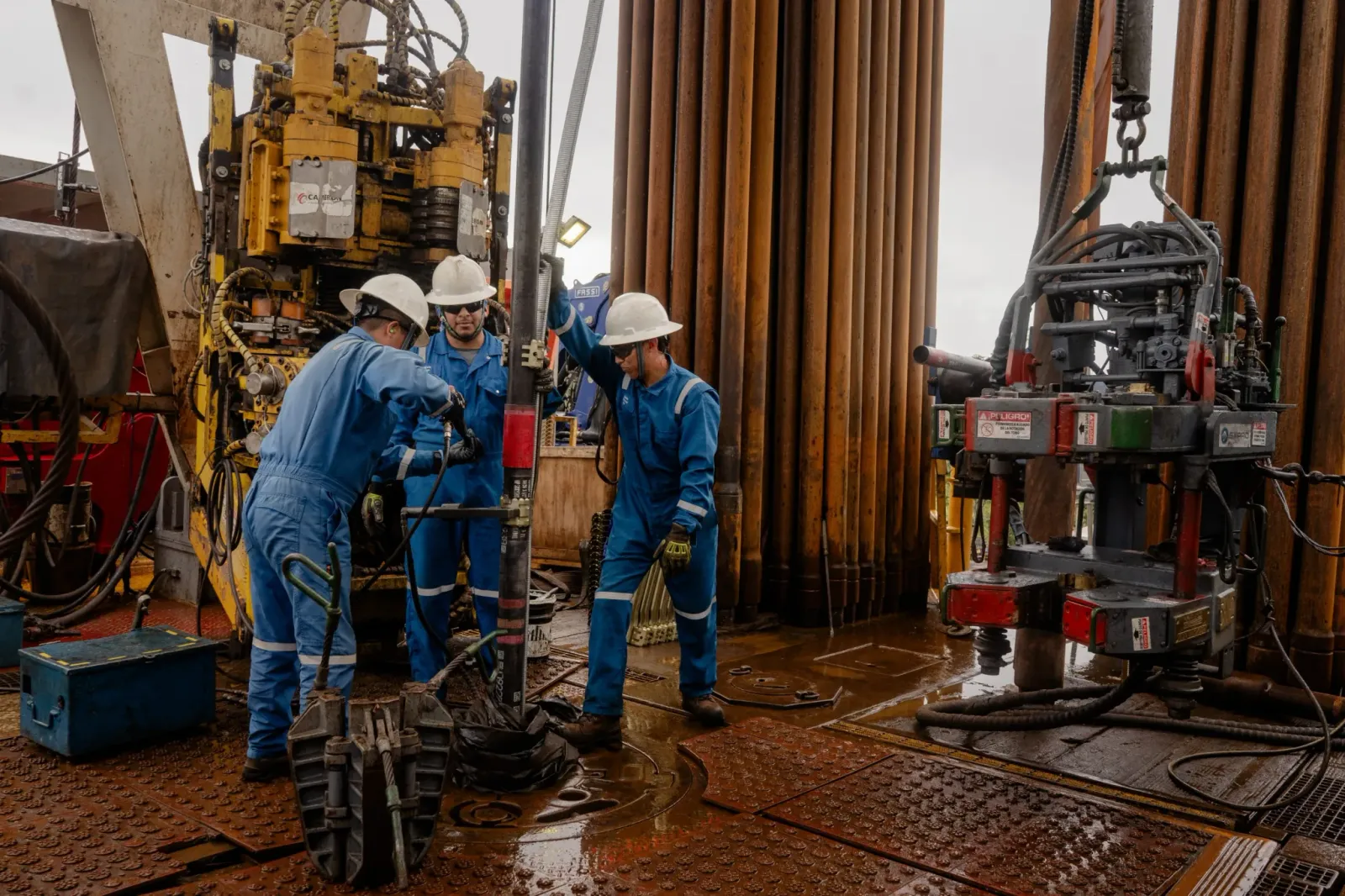
SLB, the Schlumberger-founded oilfield services and energy technology company led by CEO Olivier Le Peuch, is positioning itself for a new wave of oil exploration and production after the Strait of Hormuz shock. For decision-makers, this could reshape capital allocation toward services that do the heavy lifting behind energy security and AI-enabled operations.
SLB is one of those companies that quietly keeps the world running and then charges rent for it. But after the months-long closure of the Strait of Hormuz, Fortune frames SLB, the global oil services giant, as being “poised to cash in” on a very specific new demand: AI-adjacent energy infrastructure work powered by renewed exploration. CEO Olivier Le Peuch says it plainly: “Exploration is back.” In other words, when the world’s energy supply gets choked and inventories get thin, countries do not just buy more oil. They try to find and produce more, faster, with more resilience. And SLB is built for the finding part.
The shock is not small. The article says Middle East conflict “chok[ed] off nearly 20% of the world’s oil and gas supply,” with emergency oil reserves shrinking “from the U.S. to China.” That kind of disruption pushes governments and companies toward the same playbook: replenish lost fossil fuel inventories, build bigger stockpiles, and become more energy secure through more domestic production. Le Peuch links it to a broader pivot away from a peak globalization world, where energy strategy becomes a buffer against geopolitical risk, and where energy supply supports growth and even AI investments.
To understand why SLB is a headline-worthy beneficiary, start with what the company actually does. For nearly a century, the Schlumberger legacy has been about finding hard-to-reach underground reserves. Back in 1912, Conrad Schlumberger used conductivity tests with wired electrodes to map buried underground structures, proving electric instruments could reveal what was otherwise invisible from the surface. Conrad and his brother Marcel then created early well logs using electric cables for subsurface readings, with outputs that “resembled EKG heart monitor readings.” They founded the Société de Prospection Électrique in 1926, and from there SLB (then Schlumberger) scaled into places including Venezuela, the United States, and the Soviet Union. By the end of the 1930s, it had moved into the Middle East, more than 20 years before the formation of OPEC.
That historical footprint matters now because the article argues SLB benefits from how energy projects survive political chaos. Le Peuch, 62, is described as the first French CEO of SLB since 1986 and as someone who has lived inside crisis management since joining the company as a young electrical engineer. The CEO says the company is “very used to this,” adding it is “part of the routine, unfortunately, that we have learned to live with crisis management, and working in situations that are geopolitically complex.” In this context, “geopolitically complex” is not just a vibe. SLB is operating with a business model that keeps it embedded across international markets.
The article also underlines SLB’s scale in plain operational terms. SLB employs 109,000 workers worldwide, more than ExxonMobil and Chevron combined. In Venezuela, SLB works with Chevron and the state-owned PDVSA to reinvigorate what the article calls the world’s “largest proven oil reserves.” In the Middle East, SLB partners with Saudi Aramco, the United Arab Emirates’ ADNOC, Kuwait Petroleum, and others. And it cites Melius Research energy head James West emphasizing SLB’s staying power: “The thing about SLB is they don’t leave,” West says, “They don’t leave countries when there’s a coup or a change in government or a conflict.” The second-order takeaway is that when countries decide to rebuild energy capacity, SLB is often already there with people, equipment, and processes in place.
But the growth story comes with an uncomfortable twist. Despite being described as the largest oilfield services and energy technology company in the world, SLB’s financial market standing has lagged Big Oil during the downturn. The article notes ExxonMobil’s market cap at “$600 billion” in mid-July, after hitting an all-time high this year, while SLB sits “below $75 billion,” down from its shale boom height. It offers a mechanism for why: drilling and services demand are cyclical, and the service providers get hit harder when markets soften. Jim Wicklund, an energy investment firm veteran analyst and managing director at PPHB, is quoted saying SLB and peers are “the end of the whip in terms of volatility.” When oil and gas prices go down, service companies go down harder. The article describes the “boat anchor” problem: if you own a drilling rig in a down market, that rig becomes a liability.
Tech and operational efficiency can even amplify the revenue squeeze. The piece explains that drill timelines have fallen dramatically. A well that ExxonMobil may have paid SLB to drill for “30 days” in the past can now be completed in “less than a week.” Great for oil producers, but painful for those who own the rigs and supply the heavy work. Wicklund notes that if a rig’s time is compressed, an owner can “just lost 80% of your revenues.” That is why the article connects SLB’s current optimism to a macro reset. Years of underinvestment and worries about “peak oil demand” are being challenged by renewed exploration activity triggered by geopolitical shocks.
If all of this sounds like it belongs only to oil executives, the article quietly expands the frame. It ties this energy security pivot to AI. Le Peuch says countries now want “a bigger buffer of energy supply,” including “a bit more flexibility to respond to this crisis,” and that energy diversification and domestic production become strategies that also support “their AI investments.” For the decision-makers reading this, the implication is less about predicting AI and more about recognizing the supply-chain reality: compute needs power, power needs energy, and energy security needs infrastructure and drilling. The services industry, which the article says “does all the grunt work” for drilling, fracking, and digital and AI-driven automation, is where the work actually happens.
The bottom line is that SLB’s advantage may not be brand. It is embeddedness and execution under pressure, paired with a cyclical inflection point. Le Peuch says “the peak of globalization is behind us,” and “the geopolitics are shaping the world differently.” When that happens, energy projects do not just compete on cost. They compete on resilience. And when exploration ramps up, the companies that map underground structures, mobilize labor, and operationalize complex work get pulled forward again. For boards and investors evaluating oil services peers, the key question shifts from “will demand return” to “who can scale in the right regions fast enough,” especially when the Strait of Hormuz stops being a distant shipping story and starts being a global inventory problem.
This story's Key Insights and Take-aways are locked.
Create a free account to unlock Executive Actions for one credit.
Register to UnlockAlways free for Executives Club members. Join the Club
More in Business

Anthropic’s Levant Alpöge cracks the Jacobian conjecture after 87 years
A Harvard valedictorian used Claude to hit a 1939 breakthrough, but the missing “why” is the real problem.

Uber buys Delivery Hero for nearly $15B, vaulting to top food delivery outside China
The deal doubles Uber's dual-services footprint and pushes a ride-and-eats bundling play into 50 more markets.

Epic and Google drop settlement bid, forcing rival Android app stores by July 22
Google told the court it is ready to carry third-party app stores starting Wednesday, July 22.