
Snyk's $8.5B valuation crumbled to $1.16 per employee share
The cybersecurity darling's internal share price has plummeted to $1.16, a stark sign of the AI era's toll on SaaS startups.
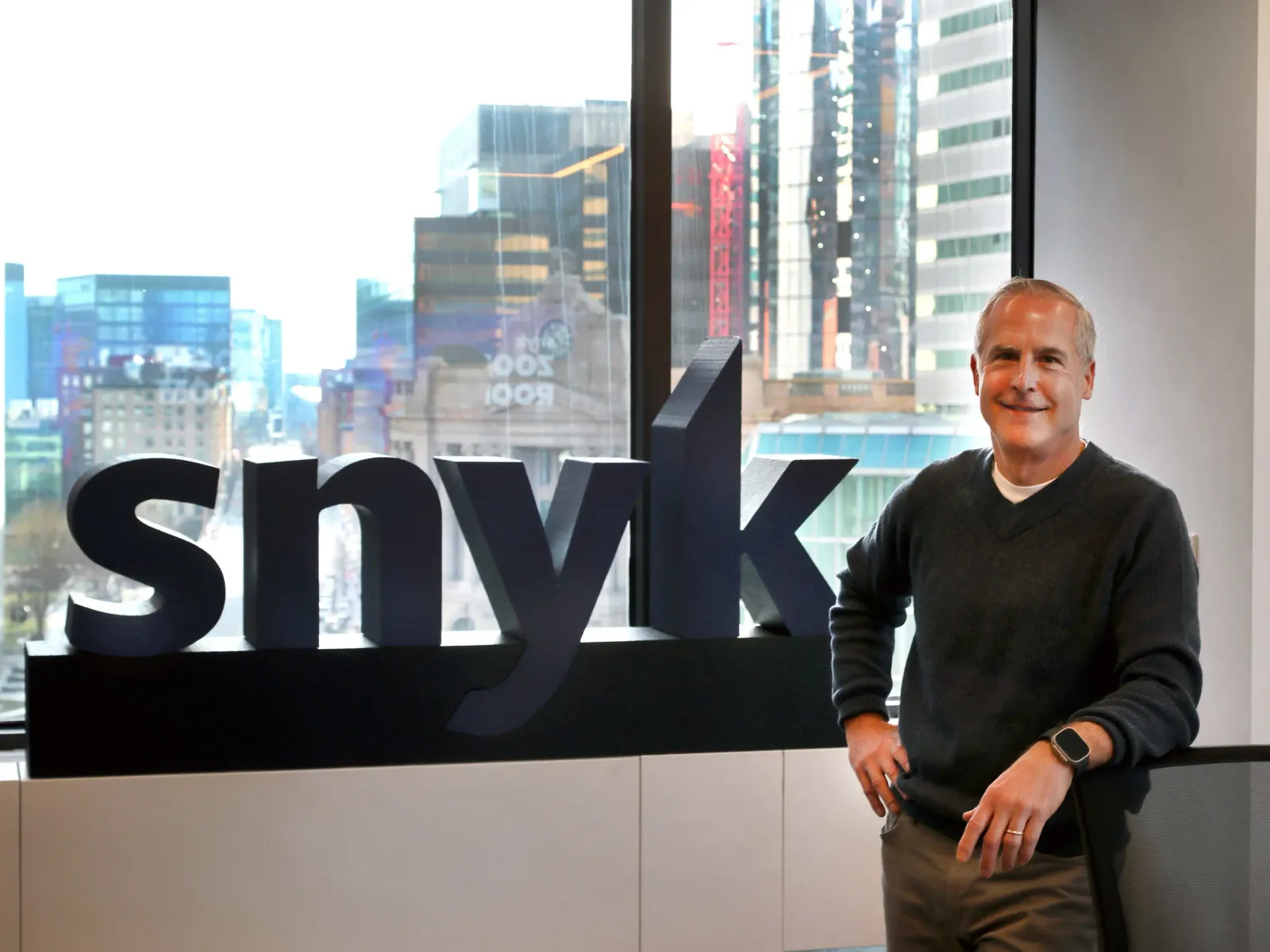
Snyk, once valued at $8.5 billion, now prices employee shares at $1.16 each, according to an internal document. The collapse underscores how AI competition and a leadership transition have eroded confidence in the cybersecurity startup.
Snyk, the Boston-based cybersecurity startup that rode the software boom to an $8.5 billion valuation in 2021, now prices the stock it hands to employees at just $1.16 per share, according to an internal document reviewed by Business Insider. That figure, as of late August, marks a stunning collapse from the over $10 per share employees saw at the company's peak - and a brutal reminder that equity compensation can evaporate faster than a funding round closes. Snyk declined to comment on employee share valuations and did not provide a current company valuation, but the internal number tells a story of its own: the AI era is rewriting the economics of software startups, and not in their favor.
The slide was gradual, then sudden. One former employee recalled shares worth over $10 around Snyk's peak valuation. By the summer of 2025, they had fallen to roughly $3. Now they sit at $1.16 - an 88% drop from the peak, and a fraction of the $8.5 billion headline valuation that once made Snyk one of cybersecurity's brightest stars. The company raised more than $1 billion from investors since its 2015 founding, with a $7.4 billion valuation in a 2022 round. But the market has moved on. Dan Morgan, a senior trust portfolio manager at Synovus Trust, told Business Insider that dramatic valuation drops have hit some software-as-a-service (SaaS) companies this year due to powerful new AI systems, and that startups are particularly vulnerable compared to larger, well-established firms. "I would say it's definitely a trend, not an exception," he said.
Snyk's core product - a vulnerability scanner that quickly finds bugs in code - faces direct competition from AI labs like Anthropic and cybersecurity rivals like Wiz, which Google acquired in March. Coinbase, for example, previously told Business Insider it used Anthropic's Claude to scan its codebase for bugs. That is a fundamental threat: if AI can do the scanning faster and cheaper, why pay a dedicated startup? Snyk was growing steadily but remained unprofitable by the end of 2024, losing $188 million on $278 million in revenue, according to UK government records. In December 2024, then-CEO Peter McKay told TechCrunch the company was "very close to break-even" and had plans for an initial public offering, though it wasn't rushing.
Leadership has been in flux. After about seven years as CEO, McKay announced in February he would step down, saying the company needed a new leader with "deep roots in product innovation and AI." He now works as a "value accelerator advisor" for Goldman Sachs and as an advisor at Snyk. Snyk's chief financial officer, Kenneth MacAskill, stepped in as interim CEO. The company has also gone through at least two rounds of job cuts since 2025, according to former employees' LinkedIn posts. In June, Snyk said it was "flattening leadership" and "simplifying our structure" to move faster. Despite the turmoil, Snyk said that 2026 has "brought accelerating momentum" and that it has launched three new solutions over the past few months.
The broader market tells a similar story. Airtable, once valued at over $11 billion in 2021, agreed to be sold for $1.3 billion earlier this month. Domo, another SaaS company, was once worth $2.8 billion and now has a market capitalization of less than $200 million. These are not isolated incidents; they are the collateral damage of AI's rise, which has compressed the value of traditional software tools that can be replicated or superseded by large language models. For Snyk, the $1.16 share price is not just a number on a cap table - it is a signal to employees that their equity is worth a fraction of what they were promised, and a warning to investors that the company's growth story has hit a wall.
For executives and boards at similar startups, the lesson is stark: equity compensation is only as valuable as the market believes your product is defensible. When AI shifts the competitive landscape, internal valuations can crater before you have time to pivot. Snyk's leadership transition and job cuts suggest a company scrambling to adapt, but the $1.16 share price is a hard data point that the market has already made its judgment. The question now is whether Snyk can launch enough new solutions to claw back credibility - or whether it becomes the next cautionary tale in the AI-driven repricing of software.
This story's Key Insights and Take-aways are locked.
Create a free account to unlock Executive Actions for one credit.
Register to UnlockAlways free for Executives Club members. Join the Club
More in Business

Tim Cook steps down as Apple CEO, stays on as chair with $45M equity
The 'Trump whisperer' keeps his White House and Beijing access as Apple navigates tariffs and a $4.6 trillion market cap.
Snowflake shares surge as AI data demand crushes estimates, lifting full-year forecast
Stocks jumped on stronger-than-expected guidance, signaling enterprise AI workloads are accelerating faster than Wall Street priced in.

Tim Cook's 15-year Apple CEO run ends: 3 lessons for any successor
After 15 years, Tim Cook hands Apple to John Ternus - here's how he turned a $350B company into a $4.6T juggernaut.