
SoftBank's SB Energy files IPO with zero revenue, leans on OpenAI
The data center firm has no operating facilities and no revenue, yet its future hinges on OpenAI contracts. Here's what that means for investors.
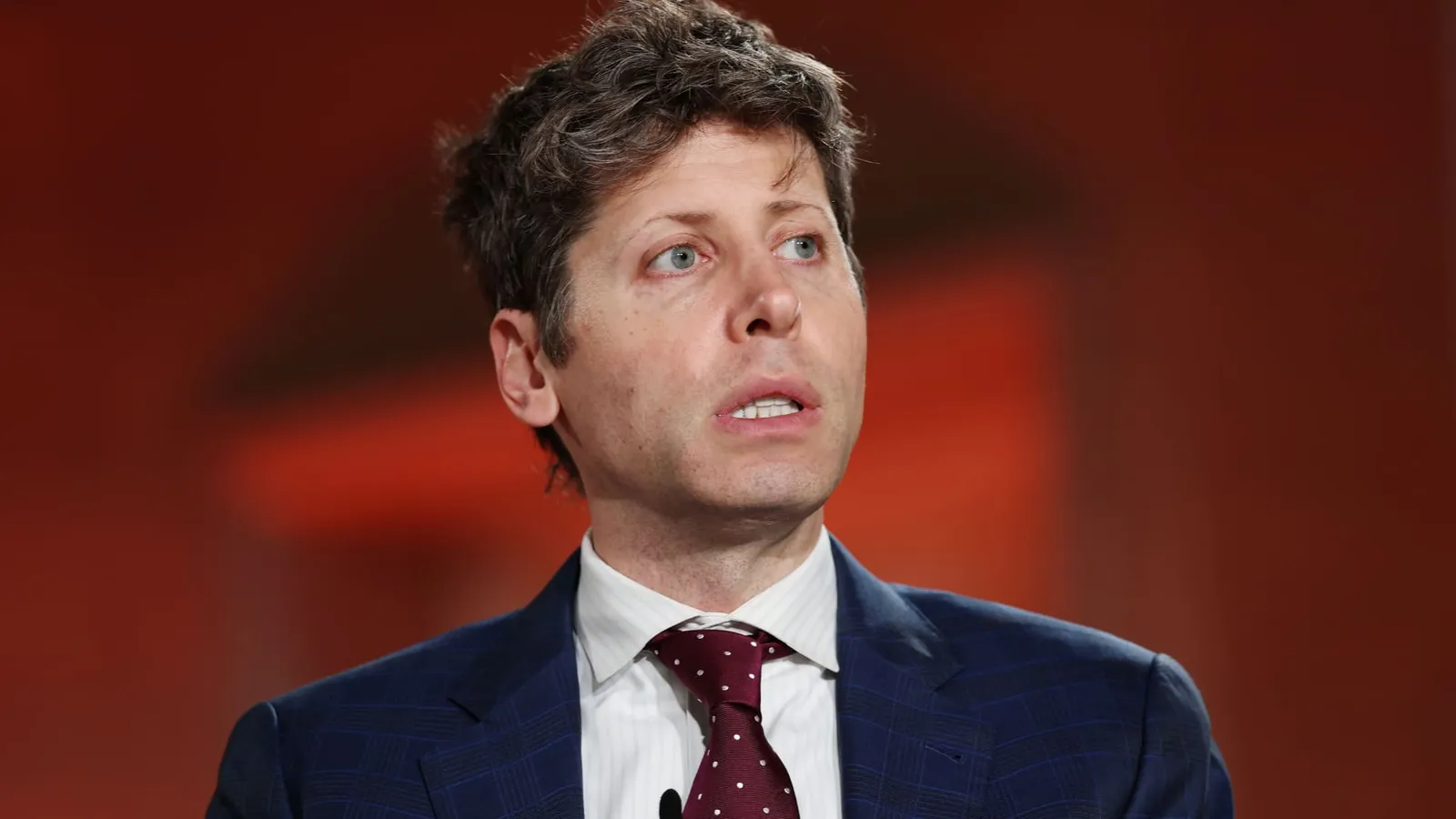
SoftBank's SB Energy filed for an IPO, disclosing it is 'substantially dependent' on OpenAI despite having no revenue or operational data centers. The filing signals SoftBank's aggressive AI infrastructure bet and raises questions about valuation and execution risk.
SoftBank's SB Energy has filed for an initial public offering, and the paperwork contains a stark admission: the company has generated zero revenue from its data center business, and none of its data centers are operational yet. In the S-1 filing, SB Energy says it is 'substantially dependent' on OpenAI, its anchor customer, for future business. That dependence is the entire thesis of the IPO, but it is also the biggest risk, because the company is essentially asking public investors to fund a build-out that has not produced a single dollar of sales or a single live facility.
The filing lands at a moment when the AI infrastructure gold rush is in full swing, with hyperscalers and startups alike pouring billions into data centers to meet the compute demands of large language models. SoftBank, led by Masayoshi Son, has been one of the most aggressive players in this space, and SB Energy is its vehicle for AI-focused data center development. The company's plan is to construct and operate facilities that will host OpenAI's workloads, but as of the filing, those facilities exist only on paper. This is a pre-revenue, pre-operational company going public, which is rare in the current market and signals either extraordinary confidence or extraordinary risk.
The 'substantial dependence' on OpenAI cuts both ways. On one hand, it provides a clear demand signal: OpenAI needs massive compute capacity, and SB Energy is positioning itself as a dedicated provider. On the other, it means SB Energy's fortunes are tied to a single customer, and that customer's own financial health, contract terms, and willingness to pay are beyond SB Energy's control. If OpenAI scales back, renegotiates, or finds cheaper alternatives, SB Energy has no revenue cushion and no diversified client base to fall back on. The filing does not disclose the specific terms of any OpenAI agreement, but the language suggests that without OpenAI, the business model collapses.
For investors, the IPO presents a classic dilemma: the opportunity is tied to the most important technology trend of the decade, but the execution risk is extreme. Data center construction is capital-intensive, subject to supply chain delays, permitting issues, and power constraints. SB Energy has not yet proven it can build a single facility, let alone operate a fleet of them profitably. The company will need to raise significant capital, and the IPO proceeds are likely earmarked for construction, but there is no guarantee that the build-out will stay on schedule or on budget. The market has seen pre-revenue tech companies before, but those were typically software firms with low marginal costs; data centers are the opposite, with massive upfront capex and long payback periods.
The regulatory backdrop adds another layer. The SEC has been scrutinizing AI-related claims, and SB Energy's reliance on OpenAI will likely draw questions about forward-looking statements. The company will need to demonstrate that its projections are grounded in real contracts and realistic timelines, not just hype. Meanwhile, the broader data center market is facing headwinds from power shortages and environmental concerns, which could delay projects and increase costs. SB Energy's filing does not address these challenges in detail, but they are material risks that any investor should weigh.
For executives and boards watching this IPO, the takeaway is about the shifting nature of infrastructure financing. SoftBank is effectively using the public markets to fund a speculative bet on AI compute demand, and the success or failure of SB Energy will be a bellwether for similar vehicles. If the IPO prices well and the stock holds, it could open the door for other pre-revenue AI infrastructure plays. If it stumbles, it will serve as a cautionary tale about the limits of narrative-driven investing. The filing also highlights the growing power of OpenAI as a counterparty: a single customer can now anchor an entire company's valuation, which gives OpenAI enormous leverage in negotiations and raises questions about concentration risk across the AI supply chain.
In the end, SB Energy's IPO is a bet on two things: that AI compute demand will continue to explode, and that SoftBank can execute on a massive construction program. The first is plausible, the second is unproven. For investors, the filing offers a rare look at a company that is essentially a blank check for AI infrastructure, but it comes with the explicit warning that the check has not been cashed yet. The next few quarters will reveal whether SB Energy can turn its OpenAI dependence into a revenue stream, or whether it becomes another cautionary tale in the AI boom's first wave of public market experiments.
This story's Key Insights and Take-aways are locked.
Create a free account to unlock Executive Actions for one credit.
Register to UnlockAlways free for Executives Club members. Join the Club
More in Technology

AI researcher's 26,000-word claim: Neural nets aren't tangled after all
Nick Cammarata's Goodfire post has the AI world split - if he's right, monitoring frontier models just got a lot easier.

A Chinese rocket deorbited over Minnesota and landed in a farmer's cornfield
Experts tied the fragment to LandSpace's Zhuque-2E, which launched on September 15 and shed debris over the American Midwest after deploying 10 satellites.

JPMorgan Chase deploys first $5B into defense tech and hypersonic missiles
The bank is moving off its balance sheet to back robot factories, hypersonic missiles, and supply chains, signaling a new era of bank-backed military innovation.