
Sony and Alamo Drafthouse enter talks to reopen LA's closed Cinerama Dome
A possible lease and operator shift could bring the Hollywood landmark back, but only after expensive code-heavy upgrades.
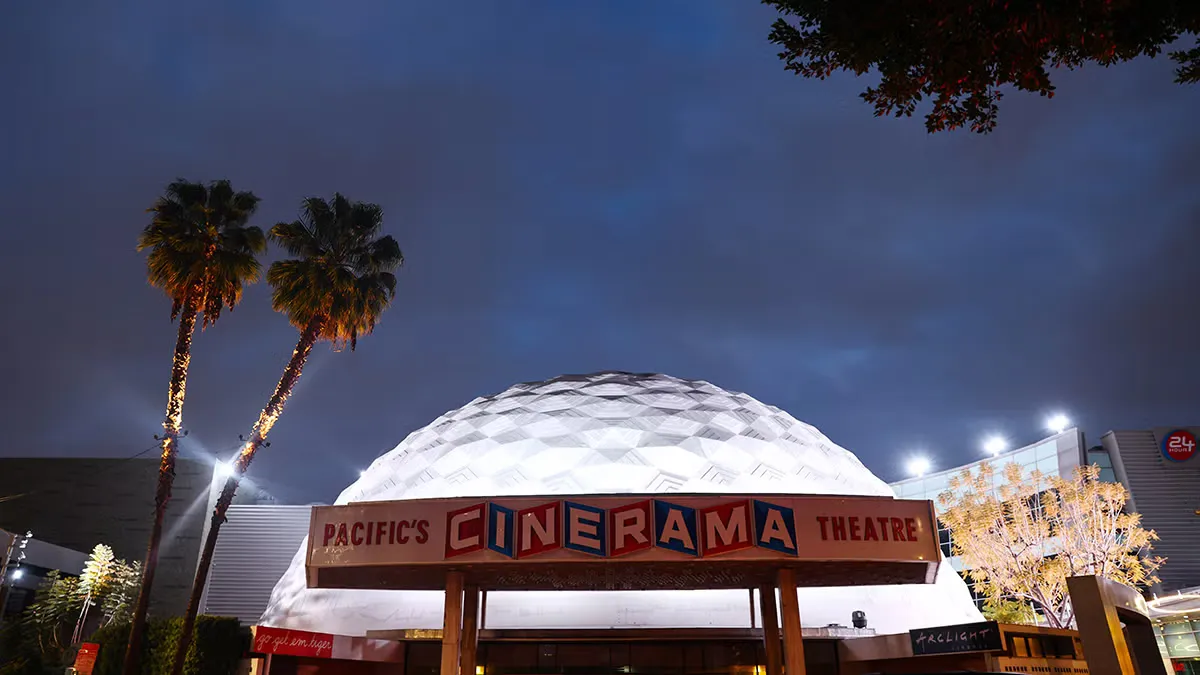
Sony is in talks with Robertson Properties Group about a potential lease and reopening of the long-closed Cinerama Dome and adjacent multiplex, formerly ArcLight Hollywood. If a deal forms, Sony Pictures Experiences could route operations through Alamo Drafthouse, but refurbishment and zoning timelines are still the bottleneck for decision-makers.
Sony is in talks for a potential lease and reopening of the long-closed Cinerama Dome with Robertson Properties Group, TheWrap has learned. The Cinerama Dome has been shuttered since the COVID-era shutdown of Arclight Cinemas, when ArcLight said it would not reopen in 2021.
This is not just nostalgia. If an agreement is reached, Alamo Drafthouse, which Sony acquired in 2024, would likely be involved in operating the chain, per Deadline. Sony declined TheWrap's request for comment, so the publicly visible part of this story is still mostly process. But the implications are clear for anyone tracking premium exhibition: a major LA screen complex could go from dark to destination again, and it would likely do so under a chain Sony now controls.
To understand why this matters, you have to zoom out to how theater real estate works. Cinerama Dome sits in a Hollywood ecosystem where operators, landlords, and capital all have to align, and where reopening tends to be less about “will people show up?” and more about “can we get the building compliant and commercially viable?” The adjacent multiplex formerly known as ArcLight Hollywood is part of that same complex. While the Cinerama Dome itself remains closed, many of the former ArcLight locations have already moved on to new tenants. Sherman Oaks Galleria, for example, now has new seats and an Imax auditorium after a refurbishment by Regal. Culver City is now operated by Amazon.
The contrast explains the pressure. When prime theaters reopen, they tend to reset local competition. When they do not, nearby chains capture both attention and spend. That is why executives pay attention when a high-identity venue like Cinerama Dome is “in play,” even if the talk stage is quiet. Sony and Robertson Properties Group have to make the math work, not just the marketing pitch.
And the math sounds brutal, at least according to what insiders told TheWrap last year. Any reopening of the multiplex would require a costly refurbishment: new seats, concessions equipment, sound and picture upgrades, new fire alarms, and accessibility lifts to meet building codes. There was also the possibility of major interior changes to make the Dome more suitable for 70mm screenings, if the new owners so chose. In other words, this is not a paint-and-pilot-light project. It is a full modernization plus compliance exercise, with optional enhancements that tie directly to the cinephile promise of 70mm.
Sony may be the company willing to fund that kind of lift. The source points to Sony’s existing exhibition strategy through a division called Sony Pictures Experiences, led by Alamo CEO Michael Kustermann. That connection matters because it suggests Sony is not approaching this as a one-off landlord negotiation. It has an operating playbook it can deploy, and a chain it already owns that knows how to run premium formats.
Alamo Drafthouse itself is a complicated fit for cinephile communities, at least lately. Longtime patrons have criticized its change to a mobile ordering system despite its “no phones” policy. At the same time, Alamo has clear performance signals: it was the sixth highest-grossing theater chain for the opening weekend of Universal’s “The Odyssey.” It is also notable in format terms, because Alamo was the only chain in the top 10 to not have an Imax screen, instead screening the film in 35mm and 70mm across its locations nationwide. That format detail lines up interestingly with the Dome’s potential 70mm suitability upgrades mentioned by insiders.
Meanwhile, ownership and history are adding emotional and political friction. The Cinerama Dome opened in 1963 by William R. Forman, founder of ArcLight's parent company Pacific Theaters. It is still owned by Forman's grandson, Chris Forman, CEO of the Decurion Corporation. Decurion has been secretive about any potential reopening plans, and the closed status has drawn ire from Los Angeles’ cinephile community. Film student Ben Steinberg organized the “Save the Cinerama Dome” grassroots campaign and has drawn more than 12,000 followers with updates and protests. After a protest in which Steinberg projected Forman's face onto the Dome itself in April, he was ordered to turn off the projector by police. He then announced he would put his organizing on hold to avoid legal action from Decurion and Robertson Properties Group.
Regulatory posture is also part of the story, and it is where deals either stall or accelerate. Robertson’s representatives told local officials at a zoning board meeting that the company is working “to ensure the Cinerama Dome and the Dome Theater Complex can reopen in the future” during a hearing to renew the building’s conditional use permit to serve alcohol. Robertson has made similar promises at past zoning board meetings to renew the permit, but has never provided a timetable for reopening. For executives and boards, that is the tell: the permit renewal keeps options alive, but without a schedule, everyone is stuck in an investment limbo where costs escalate and competitors keep moving.
So what is the second-order stake? If Sony can turn these talks into a lease and a reopening plan, it would not just restore a landmark. It could reshape premium attendance expectations in LA by reintroducing a heavily identity-driven venue that has been dark since 2021. It also signals that a Sony-owned operator can absorb the hard refurbishment and compliance cost while deploying its own exhibition division. For peers, investors, and operators watching the premium theater market, this becomes a live case study in who can actually convert “talks” into an opened door, and how quickly landlords, regulators, and operators can align once a high-profile venue like Cinerama Dome reenters the competition.
This story's Key Insights and Take-aways are locked.
Create a free account to unlock Executive Actions for one credit.
Register to UnlockAlways free for Executives Club members. Join the Club
More in Business

Anthropic’s Levant Alpöge cracks the Jacobian conjecture after 87 years
A Harvard valedictorian used Claude to hit a 1939 breakthrough, but the missing “why” is the real problem.

Uber buys Delivery Hero for nearly $15B, vaulting to top food delivery outside China
The deal doubles Uber's dual-services footprint and pushes a ride-and-eats bundling play into 50 more markets.

Epic and Google drop settlement bid, forcing rival Android app stores by July 22
Google told the court it is ready to carry third-party app stores starting Wednesday, July 22.