
Sony-backed ‘Ramayana’ adaptation gets a $500M VFX tease at San Diego Comic Con
Producer Namit Malhotra previewed footage for Sony’s epic adaptation, with a $500 million budget riding on spectacle.

Producer Namit Malhotra teased footage for the VFX spectacle ‘Ramayana’ adaptation at San Diego Comic Con. For decision-makers, the $500 million budget signals how Sony is betting scale, franchise potential, and global draw are worth the risk.
Producer Namit Malhotra teased footage from the ‘Ramayana’ adaptation at San Diego Comic Con, pitching an epic built around Hindu mythology and a VFX-first spectacle. The project is slated for release by Sony and carries a reported $500 million budget, a figure that instantly reframes what kind of film this is. This is not a modest passion project that hopes to find an audience later. It is a big-budget production designed to win attention up front, then justify that spend with scale, spectacle, and broad appeal.
Teasing at SDCC matters because it is where fandom and mainstream media start overlapping in public. When a producer chooses a convention stage, they are not just showing progress to critics. They are testing whether the audience that already cares will show up, share, and build demand. In this case, Malhotra’s SDCC footage preview is the public signal that Sony intends to compete for attention the way other major tentpoles do, with visuals that can travel faster than traditional marketing can. The $500 million budget behind the film, paired with that tease, is the clearest marker that Sony is treating ‘Ramayana’ as a headline property, not a niche release.
To understand why the number is so important, look at how big-budget VFX films typically behave. The economics are brutal in a specific way: the earlier the audience decides it is worth caring, the easier it is to carry the financial weight. Studios with huge VFX overhead need early engagement and wide reach because the “cost of not capturing attention” becomes expensive quickly. A $500 million VFX-driven budget creates a high bar for performance across multiple markets, not just domestic theaters. It also increases pressure on monetization beyond box office, including home viewing, licensing, and other downstream formats, because the production has already committed to a level of scale that smaller revenue streams often struggle to cover.
This is where Sony’s role becomes consequential. When an A-list distributor backs a mythic adaptation and emphasizes VFX, it is implicitly targeting the global audience that modern fandom platforms can help assemble. ‘Ramayana’ is based on a Hindu poem, which positions the story with cultural recognition, but also adds a layer of scrutiny that companies should expect in public-facing storytelling. For executives, that means stakeholders are likely weighing not just creative execution but also how audiences interpret the adaptation across regions. Big spend can be a strength when it delivers clarity and awe, but it can also widen the gap between expectation and reception if the film does not land.
Even though the source is brief, the structure of the announcement suggests an operational reality: the project is far enough along to show footage, which is a meaningful checkpoint. Production teams typically do not surface substantial visuals without confidence that the work will look coherent when it is publicly framed. That is important for governance inside a studio. Once marketing begins to materialize around a release, stakeholders such as studio leadership and financing partners become more tightly linked to forward progress. In plain terms, teases at large events can turn a creative milestone into an accountability milestone, because public expectations start to lock in.
For boards and investors watching film pipelines, this is a familiar pattern: the project’s budget communicates the company’s risk posture. A $500 million commitment suggests Sony expects enough upside from “spectacle plus story” to justify the capital. The higher the budget, the more the film needs to become a cultural event, not just a product. SDCC is one of the loudest places to test that cultural-event potential in advance, because it concentrates viewers who actively seek out genre experiences. The second-order implication is that if the footage resonates, it can accelerate momentum in marketing cycles, partnerships, and distribution planning. If it does not, the financial downside becomes harder to contain.
Finally, for peers running or funding similar adaptations, the strategic lesson is straightforward. Sony is publicly aligning a high-budget VFX gamble with a high-visibility fan funnel by using Namit Malhotra’s SDCC teaser as an early demand signal. Executives elsewhere should treat moments like this as more than publicity. They are operational signals about how a studio intends to build expectation, how it intends to convert attention into revenue, and how prepared it is to back spectacle with serious money.
This story's Key Insights and Take-aways are locked.
Create a free account to unlock Executive Actions for one credit.
Register to UnlockAlways free for Executives Club members. Join the Club
More in Entertainment

'It's a Magic Trick': Ballet Experts Say Rosalía's SNL Pose Is Impossible
Three ballet experts tell Rolling Stone Rosalía's gravity-defying SNL stillness shouldn't be possible - and why the debate is now part of the show.

Activision CMO: GTA 6 Will Boost Call of Duty, Not Bury It
Activision's top marketer says Rockstar's blockbuster will drive players back to consoles and into Modern Warfare 4, even as the company admits its recent strategy failed.
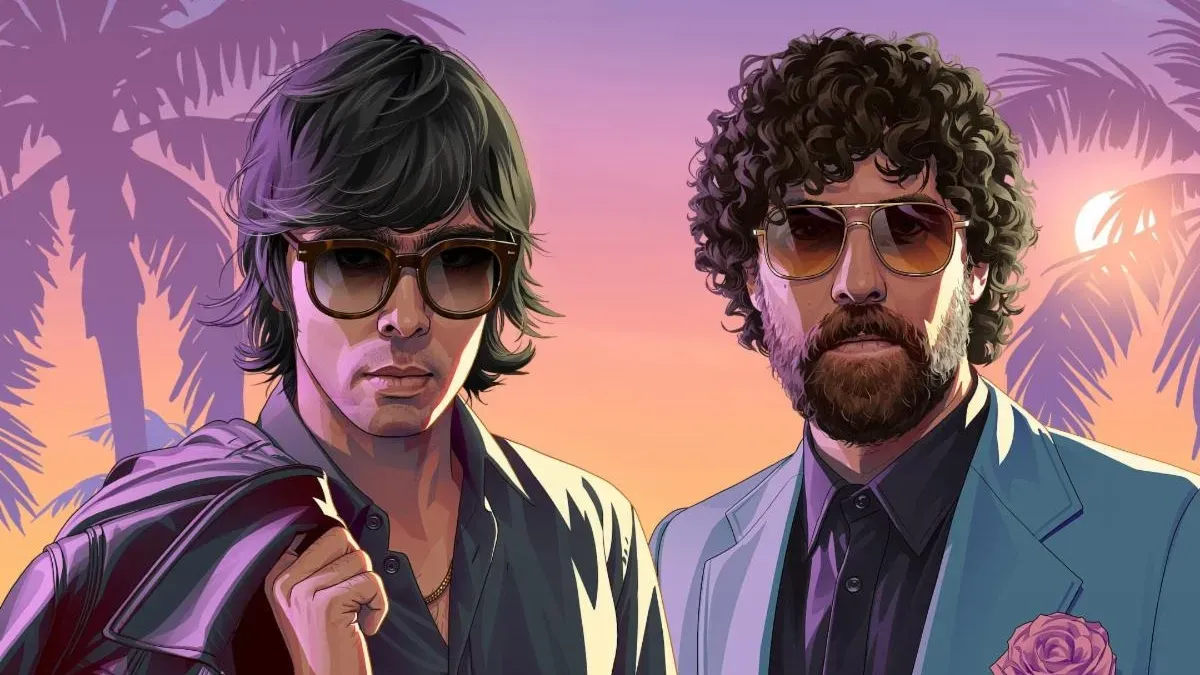
Justice to Score GTA 6, Share New Song with Tame Impala, SZA, King Gizzard
Rockstar taps the French duo for the GTA VI score, and the first taste is a genre-melting collab with Tame Impala, SZA, and King Gizzard & The Lizard Wizard.