

Sony ends PlayStation disc manufacturing in Jan 2028, forcing retailers into a new fight
A new report spotlights why shops are often cheaper, just as Sony’s disc cutoff threatens the physical value chain.
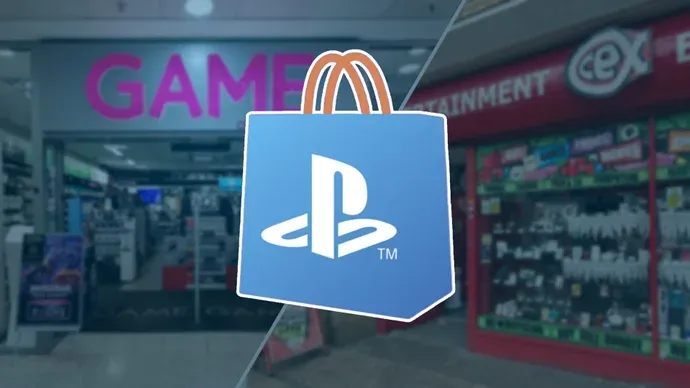
Sony Interactive Entertainment announced it will end manufacturing physical PlayStation discs beginning January 2028. The move accelerates the industry pivot to digital and raises immediate questions about retail economics.
Earlier this month, Sony announced it is ending manufacturing of physical PlayStation discs beginning January 2028. The practical effect is simple and brutal: future PlayStation releases from Sony Interactive Entertainment, and every other publisher on the planet, will be available only in digital formats.
For retailers, the timing lands like a body blow. If shelves are supposed to stay stocked, but the supply chain stops producing the core unit of sale, stores are suddenly forced to justify their whole business model without the thing customers walk in to buy. And that is where the new report Eurogamer is pointing to becomes more than trivia: games are almost always cheaper in shops. That price advantage has historically helped physical retailers win attention and close sales fast, even when digital storefronts were easy and frictionless.
Put those two facts together and you get a pressure cooker. Sony is pulling the lever on the physical supply chain by moving manufacturing away from discs. Retailers then have to compete with digital without being able to lean on the classic “come browse, compare prices, and grab the deal today” pattern. When a category stops producing the main SKU, discounting alone cannot replace the foot traffic and checkout behavior that physical had baked in.
It is also a board-level risk story, not just a store-aisle story. Public and private retailers, plus distribution partners and associated service providers, rely on predictable product rhythms: release calendars, inventory turns, promotions around new games, and predictable demand for physical collections. When Sony shifts that entire rhythm to digital, decision-makers have to rethink everything from inventory management to long-term lease planning, staffing, and the economics of marketing. In a world where the “product” is an access entitlement rather than a disk, revenue streams tend to concentrate more tightly around platform gatekeepers.
There is also a regulatory and policy angle, even if the source is focused on industry mechanics. As markets move from physical media to digital delivery, regulators and lawmakers typically scrutinize consumer protections that were easier to enforce when goods were tangible: return policies, access continuity, and what happens when services change. The immediate question for many executives is not whether regulation will arrive tomorrow, but whether the industry is building habits that will later be the subject of hearings, complaints, or rulemaking. Digital-only pathways can be fine for customers, but they create dependency on platform policies and backend systems.
Meanwhile, the digital transition does not happen in a vacuum. Sony’s announcement implicitly frames a new baseline for the entire market. The source states that future releases will be digital only not just for Sony, but for every other publisher. That is an industry-wide constraint, meaning developers, publishers, and distributors will align their strategies around the digital default. If the unit of manufacture is gone for PlayStation discs starting January 2028, competitors and partners can still sell physical through existing stock arrangements for a while, but the long-term planning assumption becomes digital-first, because the physical manufacturing pipeline is ending.
For executives across the ecosystem, the second-order implications are already visible. Price competition that once played out between digital stores and physical retailers becomes competition among digital storefronts, subscription bundles, and promotional windows, with retailers losing their traditional advantage as a place to find cheaper options. That also changes bargaining dynamics. Retailers historically could push on terms using foot traffic and shelf presence as leverage. With the disc cutoff, they may have less leverage over suppliers and publishers, which can reduce their ability to maintain the lower pricing the report highlights.
The strategic stake is straightforward: if games are almost always cheaper in shops, but shops progressively lose access to the disc-based product flow, retailers face a shrinking value proposition right when consumer expectations about price are being set by digital convenience. Sony’s move forces everyone who profits from physical distribution to confront the same question: how do you remain relevant when the product stops arriving in the form customers can physically buy? For boards and investors, the answer will determine whether the retail future is a controlled transformation or a scramble to survive the next release cycle without the shelf economics that used to carry the category.
This story's Key Insights and Take-aways are locked.
Create a free account to unlock Executive Actions for one credit.
Register to UnlockAlways free for Executives Club members. Join the Club
More in Entertainment

J.K. Simmons says the Batgirl set was done, then Warner Bros. erased it for a tax write-off
A film shot and largely completed was canceled as “not releasable,” leaving even cast in the dark and directors locked out.

McDonald's, Control, and Dead by Daylight all “boarded” Assassin's Creed Black Flag Resynced
Ubisoft’s Black Flag Resynced release sparked a cross-brand social campaign, plus a free monkey code and retail partner hype.

Madison Square Garden’s “risk” list tracked sexuality and race, report says
A new report claims the arena labeled musicians and celebrities as “risks” and logged sensitive traits.