
Sony just priced a Walkman at $5,899. Yes, an MP3 player.
Sony's new Walkman trio runs from $1,899.99 to $5,899. The pricing is a masterclass in anchoring, and a bet on a niche that refuses to die.
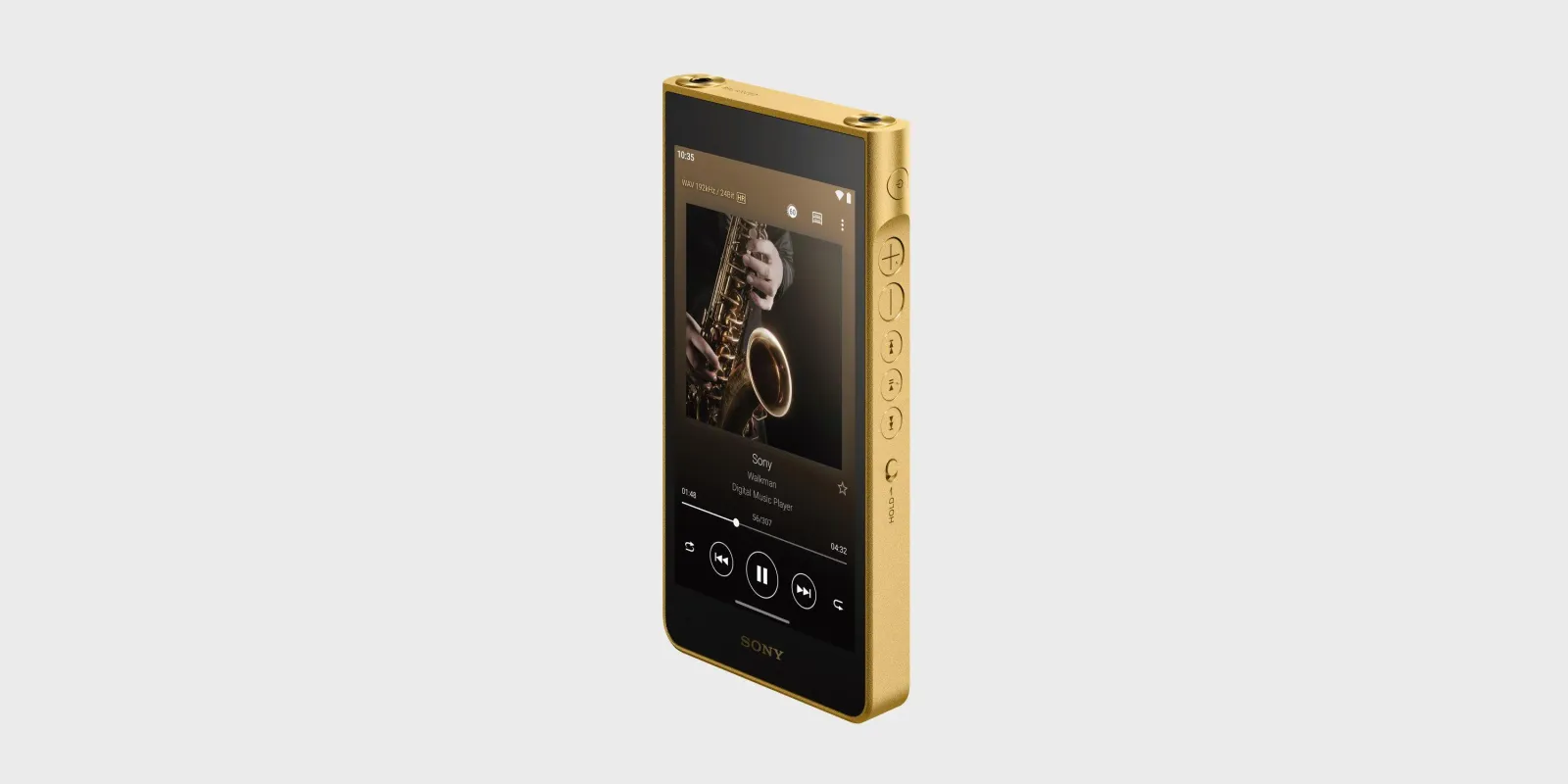
Sony has unveiled three new Walkman portable media players priced from $1,899.99 to $5,899, with the gold-plated NW-WM1ZM3 at the top of the range. For consumer hardware executives, the launch shows how a legacy brand can command luxury margins in a category smartphones supposedly killed.
Sony just announced a trio of new Walkman portable media players, and the flagship will set you back $5,899. That is the gold-plated NW-WM1ZM3, a price that exceeds most flagship laptops and roughly six times the cost of a typical smartphone. For context, the entry-level model in the lineup, the NW-ZX900, starts at an already eye-watering $1,899.99, while the middle option, the NW-WM1AM3, runs $2,999.99 and is nearly identical to the top-tier model minus the gaudy gold shell.
The devices are aimed squarely at the audiophile market, and the price tags make that positioning unmistakable. All three feature Sony's DSD (Direct Stream Digital) Remastering Engine, which upsamples standard PCM audio to an 11.2MHz DSD stream, a spec Sony claims delivers a more analog-like sound. All three also feature gold-plating, a material choice that matters for signal conductivity in high-end audio gear, even if the visible gold shell on the WM1ZM3 is as much about status as sound.
Here is the context that makes this launch more than a curiosity: the dedicated MP3 player should be dead. Smartphones absorbed the portable music player market more than a decade ago, and Apple ended the iPod line in 2022 after a 21-year run. Yet Sony has kept the Walkman brand alive by pushing it upmarket, turning a mass-market icon into a luxury audio product for a shrinking but deeply committed audience. The $1,899.99 entry price is not a mistake; it is a filter. Sony is not trying to sell millions of these. It is trying to sell thousands at very high margins to people who believe a dedicated device with premium components sounds better than a phone.
The pricing structure itself is a masterclass in anchoring. The $2,999.99 NW-WM1AM3 is nearly identical to the $5,899 NW-WM1ZM3, with the gold shell as the primary differentiator. That means Sony is charging a roughly $2,900 premium for gold plating, a material cost that is a fraction of that figure. But the real trick is what the top tier does to the middle tier: next to a $5,899 gold Walkman, a $2,999.99 silver one starts to look almost reasonable. And next to either of those, the $1,899.99 entry model looks like a bargain. This is textbook price anchoring, deployed in a product category most people assumed had vanished.
For executives in consumer hardware, the strategic signal is worth studying. Sony is demonstrating that a brand with enough heritage and technical credibility can extract luxury margins from a category that mass-market logic says is commoditized. The Walkman name, once synonymous with affordable portable music, now functions as a status marker for audiophiles. The DSD Remastering Engine gives the devices a technical story that justifies the price to the target buyer, even if the average consumer cannot hear the difference between 11.2MHz DSD and standard CD-quality audio.
The launch also raises a question for the specialist brands that have long dominated the high-end portable audio niche. Sony's pricing puts it at the top of that market, and the Walkman name gives it a recognition those smaller players cannot match. For those companies, the threat is not that Sony will take their customers; it is that Sony's marketing muscle will expand the niche and pull in new buyers who might otherwise never consider a dedicated music player.
The second-order implications extend beyond Sony. This launch is a reminder that premium segmentation is alive in hardware, even in categories that seem saturated. While most consumer electronics makers compete on price and feature parity, Sony is betting that a small cohort of buyers will pay more for a dedicated device than they would for a phone that does the same job with less fidelity. The bet has worked before: Sony's high-end Walkman line has persisted for years despite the smartphone era, and the company keeps refreshing it with new models.
For the rest of us, the practical takeaway is simpler. If you are an audiophile with $5,899 to spare, Sony has built a gold-plated object of desire that will upscale your music library to a spec most ears cannot fully resolve. If you are not, your phone remains a perfectly good music player, and the $1,899.99 entry-level Walkman is a reminder that Sony is pricing for a niche, not for the mainstream. Either way, the launch is a vivid case study in how a company can keep a legacy brand alive by refusing to compete on price.
This story's Key Insights and Take-aways are locked.
Create a free account to unlock Executive Actions for one credit.
Register to UnlockAlways free for Executives Club members. Join the Club
More in Technology

Cop fired after sharing Flock login with ICE husband: 983 searches
A Savannah officer's shared credential let an ICE agent run hundreds of plate searches on Hispanic drivers, exposing a surveillance backdoor.

Elizabeth Holmes doc 'You Can See Everything' posts second-biggest doc debut ever
The true-crime draw shows fraud narratives still sell - a signal for media execs and a caution for founders.

She blocked an Uber delivery robot to save jobs. Police arrested her.
Carolyn Marvin's disorderly conduct arrest turns a sidewalk standoff into a test case for how cities police the automation-versus-workforce debate.