

Sony Pictures takes international distribution for Nitesh Tiwari's two-part Ramayana
All territories outside India go through Sony, while Dharma Productions handles India distribution for the Rama and Sita epic.
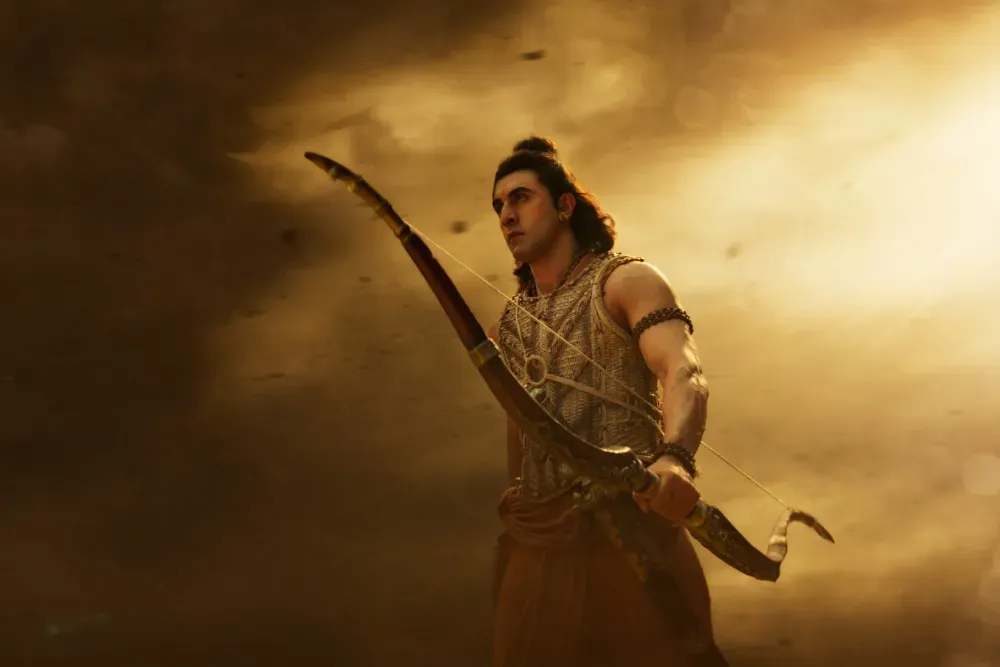
Sony Pictures has signed on as the international distributor for the two-part Indian mythological epic Ramayana, directed by Nitesh Tiwari and produced by Namit Malhotra’s Prime Focus Studios. Dharma Productions, run by media personality Karan Johar, will handle Indian distribution. The split reshapes go-to-market strategy for a major film rollout by separating global theater and local release execution.
Sony Pictures has signed on as the international distributor for Ramayana, the two-part Indian mythological epic directed by Nitesh Tiwari and produced by Namit Malhotra’s Prime Focus Studios. The key detail for executives is the geography: Sony’s deal covers “all territories outside India,” while Indian distribution will be handled by Dharma Productions, the company associated with media personality Karan Johar.
That division of responsibilities matters because it puts two different distribution engines in charge of the same brand moment, with the film’s narrative core as the unifying asset. Ramayana follows the exiled prince Rama and his wife Sita, a story with built-in global familiarity among diaspora audiences and a clear path to mainstream attention through spectacle. When a project like this lands with an international heavyweight like Sony for everything outside India, it signals confidence in exportability, not just local success.
For decision-makers, the commercial logic is straightforward but not always easy. International distribution is where releases get stress-tested across very different audience profiles, rating systems, marketing norms, and release calendars. Sony stepping in for “all territories outside India” reduces uncertainty for the producers on global execution, since Sony brings established workflows for territory packaging, press strategy, and exhibition relationships. Meanwhile, Dharma Productions handling India keeps local momentum with a player that can coordinate audience expectations in the domestic market, where mythological epics often have different timing and cultural signaling than generic genre fare.
This is also a deal structure that fits how big Indian film projects increasingly think about scale. Prime Focus Studios is the producer here, and projects it backs typically aim to play on multiple levels: commercial entertainment, event-level cinema, and premium brand positioning. By pairing a producer with international distribution muscle through Sony and a domestic execution arm through Dharma Productions, the project can align incentives across borders. The international distributor benefits from a compelling title and a two-part format that can keep marketing spend and audience anticipation building across releases. The local distributor benefits from owning the domestic rollout, where cultural context and festival-adjacent behavior can influence turnout.
Another second-order implication: split distribution can affect how the film is evaluated by boards and investors, because performance metrics become multi-layered. Instead of one party owning everything end-to-end, stakeholders should expect dashboards that separate territories and responsibilities. International take rates, marketing commitments, and exhibition terms may not mirror domestic economics. That means execs will want clarity on how the two-part release schedule impacts cash flow, not just box office. In a two-part model, the first installment can function as market testing for the second, and international reception can influence internal decision-making about marketing emphasis, localization support, and promotional spending.
There is also the brand and audience-management angle. Ramayana is not a niche reference title; it is a cultural touchstone. That cuts both ways. For Sony, international distribution for a story like Rama and Sita is an opportunity to market an event that feels accessible even when audiences do not share the same cultural background. For Dharma Productions, India distribution carries a different kind of expectation, because mythological storytelling can attract both strong demand and intense scrutiny around representation and tone. When those expectations sit on two different distribution platforms, coordination becomes part of the job, even if the territories are cleanly separated.
From a market context standpoint, the global distribution space has been rewarding for titles that arrive with credible production value and recognizable narrative engines. Mythological epics offer that combination, especially when they are built as large-scale cinema rather than straight-to-platform content. A Sony international distribution role also hints at confidence in the kind of rollout that can travel: teaser strategy, trailer packaging, and publicity that works for both diaspora communities and broader mainstream viewers.
For peers in similar roles, the strategic stakes are simple: distribution partnerships now look less like “who releases the movie” and more like “who controls the narrative rollout across markets.” If Sony is the international distributor for Ramayana and Dharma Productions leads India, producers and executives alike will be watching how the two-part structure translates across audiences. The companies involved are not just distributing a film. They are building a template for how major Indian epics can be packaged for global attention without losing domestic relevance.
This story's Key Insights and Take-aways are locked.
Create a free account to unlock Executive Actions for one credit.
Register to UnlockAlways free for Executives Club members. Join the Club
More in Entertainment

'It's a Magic Trick': Ballet Experts Say Rosalía's SNL Pose Is Impossible
Three ballet experts tell Rolling Stone Rosalía's gravity-defying SNL stillness shouldn't be possible - and why the debate is now part of the show.

Activision CMO: GTA 6 Will Boost Call of Duty, Not Bury It
Activision's top marketer says Rockstar's blockbuster will drive players back to consoles and into Modern Warfare 4, even as the company admits its recent strategy failed.
Justice to Score GTA 6, Share New Song with Tame Impala, SZA, King Gizzard
Rockstar taps the French duo for the GTA VI score, and the first taste is a genre-melting collab with Tame Impala, SZA, and King Gizzard & The Lizard Wizard.