
Sony’s plan to end PlayStation disc production accelerates the death of physical game media
The Vergecast breaks down why disc-based gaming is ending, how digitization is reshaping costs, and what it means for everyone else.
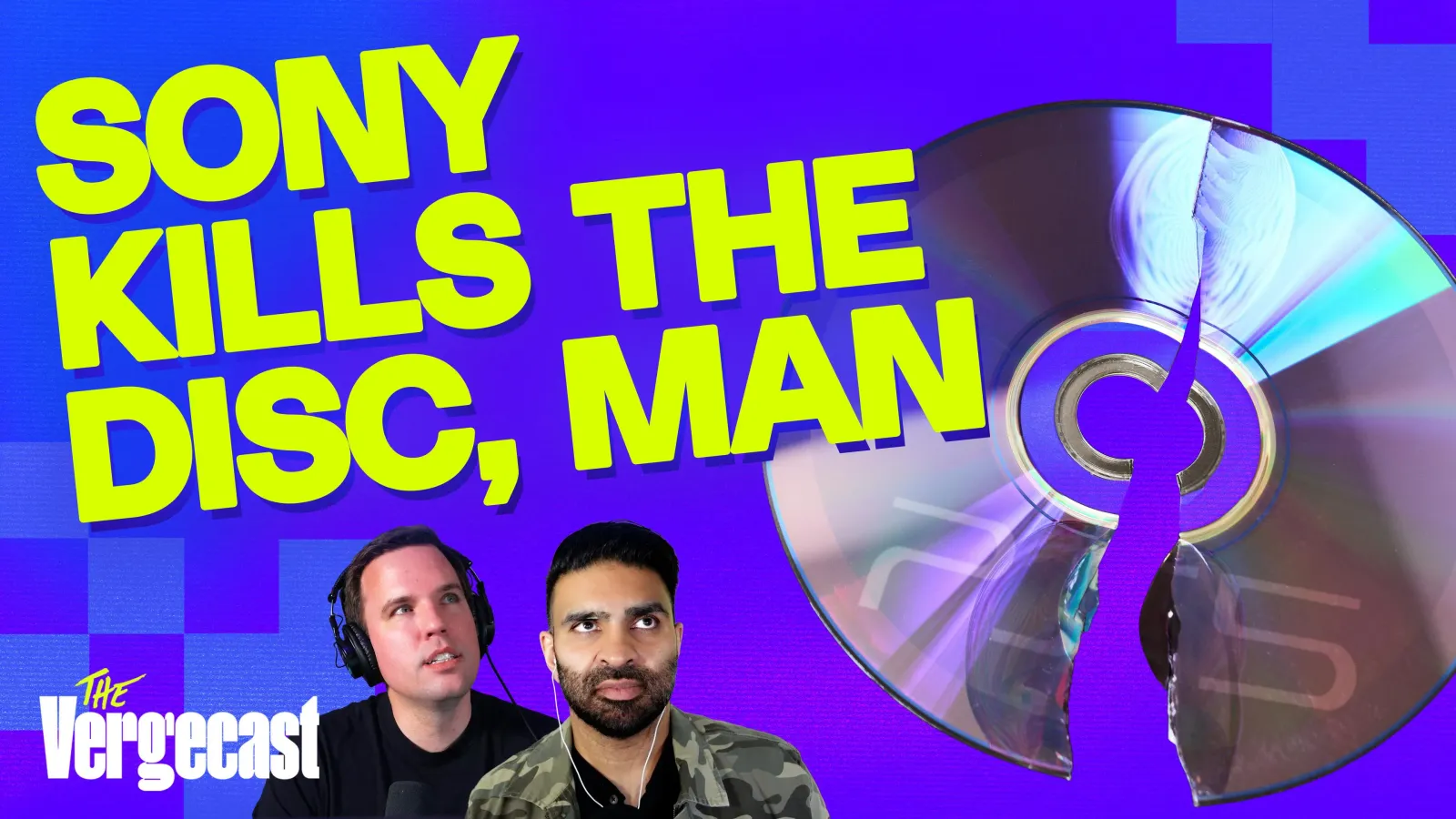
David and Nilay of The Vergecast discuss Sony’s plan to end production of PlayStation discs and Microsoft’s ongoing digitization strategy. The shift away from physical game media changes how game publishers, retailers, and platform owners build revenue and manage risk.
For decades, gaming meant accumulating a lot of stuff. Consoles. Controllers. Accessories. Those weird VR gloves that never really worked properly. But mostly, it meant buying games you could hold in your hands, shelve at home, and lend (or lose) over time.
Now that era appears to be ending. In a new episode of The Vergecast, David and Nilay talk about Sony’s plan to end production of PlayStation discs and Microsoft’s ongoing strategy for digitizing games. Layer that into “the end of physical game media” and you get a real, near-term operational change for the biggest players in interactive entertainment, not just a futuristic trend.
Here’s the blunt business logic the episode points toward. Ending disc production is not some random act of nostalgia-killing. It makes sense because digitization removes a pile of physical baggage. With a disc-based model, you pay for manufacturing, warehousing, shipping, and the logistics of getting physical items into retail channels. Digitizing games replaces those costs with distribution and infrastructure. That’s a different cost structure, and it tends to be more scalable once you’re already set up.
And the episode frames something important about timing: these companies are “desperately searching for anything that makes business sense.” That matters because when platform holders and publishers feel pressure, they look for efficiencies and predictability. Physical media is not just media. It is inventory risk. It is forecasting risk. It is the possibility of unsold stock. It is the slow grind of getting products from factories to shelves and then dealing with what happens after the demand curve shifts.
The flip side is that digitization is also about control. When games are delivered digitally, the platform that hosts the transaction gets leverage. Payment rails, licensing terms, user authentication, and patch delivery are all part of a tighter stack. That changes negotiations with retailers and with partners who used to benefit from physical distribution. It also changes the economics of launching titles, because you can iterate and update without asking consumers to buy a new physical unit.
But this is not only about cost. It is also about the shape of consumer behavior. The industry has already moved toward convenience, and physical media has been slowly losing ground as storage, bandwidth, and device ecosystems improved. The Vergecast’s framing suggests that Sony’s plan to end PlayStation disc production is a signal that the industry has reached a point where the remaining physical audience is not large enough to justify the complexity for the platform holder.
Regulatory and policy context also quietly matters here, even if it is not the main headline. Physical media has historically served as a kind of consumer anchor: you can point to a tangible product and talk about ownership in a simpler way. Digitization complicates that discussion because delivery is mediated through platform services. That creates a different risk profile for executives and boards: more scrutiny over consumer rights, data handling, and the terms of access to purchased content. When the shift accelerates, regulators tend to pay closer attention to the “rules of the road” for digital marketplaces.
Then there are second-order implications for everyone in the chain. Retailers who rely on physical sales face a tougher floor, and secondary markets are impacted when disc production shrinks. Used games and trading ecosystems depend on a steady supply of discs. If that supply ends at the source, the used ecosystem can thin out, which affects pricing power and even consumer habits. Meanwhile, developers and publishers may gain speed in distribution, but they also become more dependent on platform policies and platform-level economics.
For executives at publishers, platform partners, or companies building tools around gaming, the strategic stake is simple: a move away from physical media is also a move away from one set of operational assumptions. If discs stop, the way you plan launches changes. If digitization becomes the default, the way you think about marketing, distribution, and customer retention shifts from “sell units” to “manage ongoing access and engagement.” Board members and investors will increasingly ask the same question across the sector: does your revenue model survive the transition without margin erosion?
David and Nilay’s core takeaway is that the end of physical game media is not just cultural. It has a business rationale and it is already being acted on by major players. Sony’s plan to end production of PlayStation discs, combined with Microsoft’s digitization strategy, points to a world where the game shelf is less important than the download pipeline. The winners will be the companies that treat that as an operational upgrade, not a threat. The losers will be the ones still building around yesterday’s inventory.
This story's Key Insights and Take-aways are locked.
Create a free account to unlock Executive Actions for one credit.
Register to UnlockAlways free for Executives Club members. Join the Club
More in Entertainment

Russell Brand's accuser 'bewildered and confused' as he denies 7 sex charges
The criminal case against the comedian is a live test of how media companies manage talent risk when serious allegations go public.

'It's a Magic Trick': Ballet Experts Say Rosalía's SNL Pose Is Impossible
Three ballet experts tell Rolling Stone Rosalía's gravity-defying SNL stillness shouldn't be possible - and why the debate is now part of the show.

Activision CMO: GTA 6 Will Boost Call of Duty, Not Bury It
Activision's top marketer says Rockstar's blockbuster will drive players back to consoles and into Modern Warfare 4, even as the company admits its recent strategy failed.