
South Korea exports hit monthly high as AI chip demand surges
A booming AI-chip cycle pushed South Korean shipments to their strongest month, tightening the link between geopolitics and factory output.
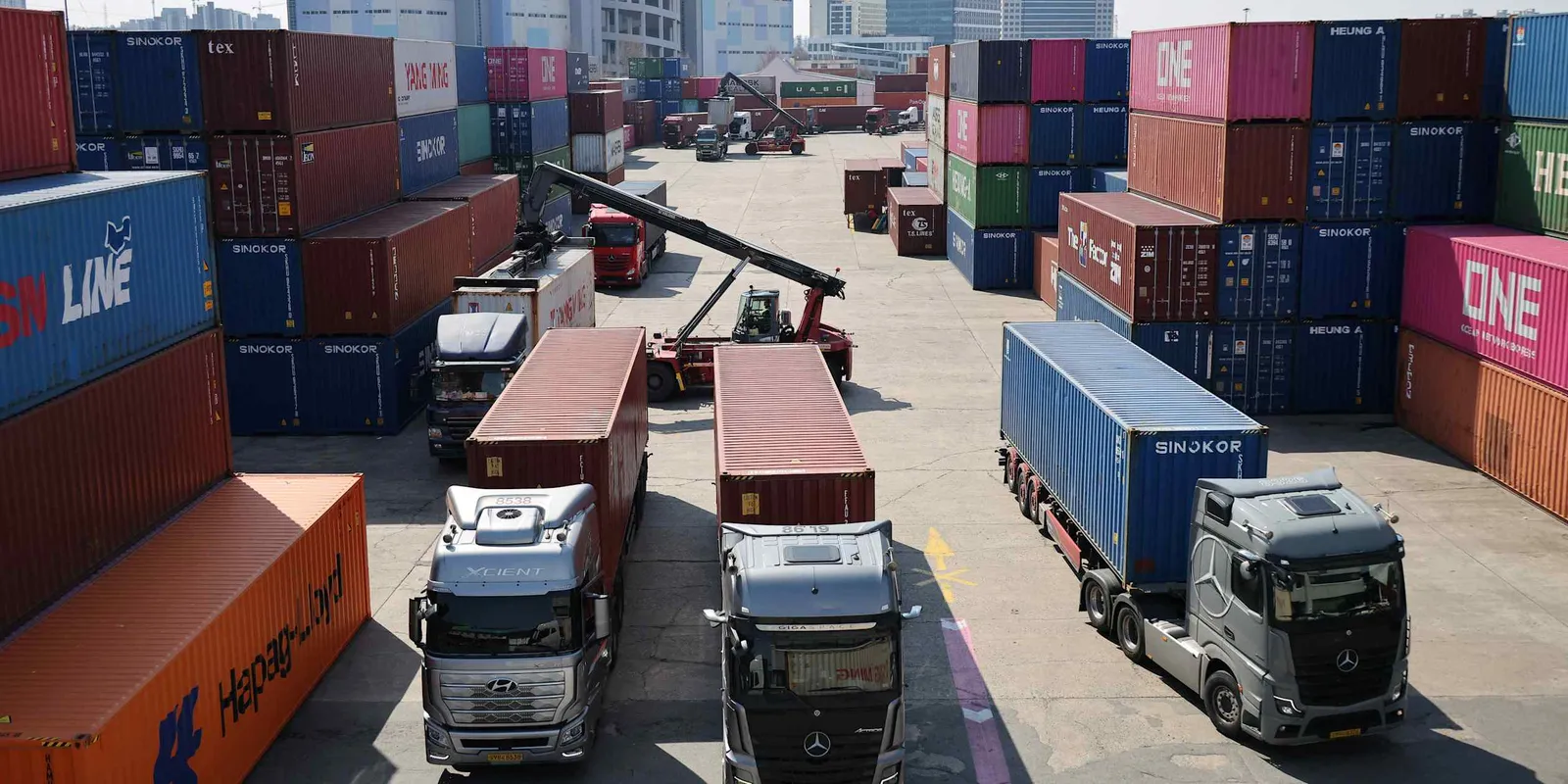
South Korean exports reached a monthly high on booming demand for AI chips, according to Nikkei Asia. For decision-makers, it signals how quickly AI capex and supply chain shifts can translate into national trade momentum and corporate revenue visibility.
South Korean exports hit a monthly high as demand for AI chips kept accelerating, powering a new wave of shipment growth. In practical terms, this is the kind of headline that matters because it turns an abstract theme, "AI investment," into a measurable output indicator: orders move, factories run, and shipments rise.
That monthly-high move is the immediate payoff. But the bigger story for executives is what it implies underneath the number: AI chips are not just a product category, they are a demand engine that pulls through the entire electronics supply chain. When global buyers ramp AI hardware, the ripple tends to show up first in component-heavy economies like South Korea, where manufacturing scale and supplier density can translate demand into export momentum.
To make sense of the magnitude and timing, it helps to remember how AI chip demand behaves. Big buyers typically do not purchase in a smooth, incremental line. They order in waves, driven by product roadmaps, data center build-outs, and the need to secure capacity before bottlenecks bite. That produces peaks and troughs in downstream orders for memory, processors, substrates, packaging, and related electronics manufacturing. If the current AI build cycle is stronger than the prior one, export data will reflect it quickly, especially when the supply chain is already tooled for high-volume electronics production.
For South Korea specifically, this is a familiar dynamic. The country has spent years building export muscle around advanced electronics and semiconductors, and AI has become the storyline that keeps those assets front and center. When AI chip demand rises, it tends to reward the ecosystems that can deliver both performance and volume. Exports are essentially the scoreboard that captures that advantage, in aggregate, across many companies at once.
There is also a policy and risk layer that executives should not ignore. Semiconductor supply chains now sit at the center of industrial strategy, export controls, and national security thinking. Even without naming any specific regulation in this source, the broader reality is that AI hardware flows are increasingly scrutinized, and governments treat chip capacity as strategic infrastructure. That means export strength is not only a sales story. It is also a stress test for resilience: can suppliers keep up with demand, absorb disruptions, and meet complex compliance requirements while shipping at scale?
The second-order implication is capital allocation. When export momentum improves, it often feeds management confidence for spending on equipment, working capital, and capacity expansions. Semiconductor and electronics executives tend to translate market signals into planning decisions quickly, because time-to-capacity is measured in quarters to years. A monthly high is not just a vanity datapoint; it can influence how boards think about budgets, hiring for fabrication and assembly partners, and the shape of future procurement commitments.
There is also a competitive angle for peers. If South Korean shipments are rising on AI chip demand, it suggests that other jurisdictions and suppliers are either also benefiting, or are being forced to react faster. For multinational strategy teams, this is a reminder that "AI" is not evenly distributed. Capacity constraints, yield improvements, packaging capabilities, and access to specific technology nodes can shift competitive position rapidly. Export strength can become a leading indicator for where procurement managers prefer sourcing, and where customers perceive execution risk as lower.
Finally, there is the board-level takeaway: trade momentum can become a strategic asset or a strategic trap. It is an asset when management can convert it into sustained revenue, customer stickiness, and differentiated supply agreements. It is a trap when companies assume one demand wave will last without verifying the next one. With AI chip demand currently strong enough to push South Korean exports to a monthly high, the smartest move for leadership teams is to treat the export data as real-time feedback, not as a promise of permanent tailwinds.
This story's Key Insights and Take-aways are locked.
Create a free account to unlock Executive Actions for one credit.
Register to UnlockAlways free for Executives Club members. Join the Club
More in Technology

Nvidia's $89B data center quarter: the 9 companies cashing in
The AI buildout is minting fortunes beyond GPUs, and memory, cloud, and cooling suppliers are riding the same wave.

Google quietly links your phone number to every Android account on your SIM
Adding a SIM now ties your phone number to all Google accounts - and future accounts inherit it. Here's the security and privacy stakes.

Hijacker AI 'Skynet mode' runs 100,000 attack steps against exposed models
Symantec caught a criminal AI agent that borrows other models, steals data, and mines crypto; the only relief is no confirmed victims yet.