

South Korea jumped to nearly 24% in MSCI Emerging Markets, overtaking China and India
Capital is flowing toward Korea and Taiwan, and boards in emerging markets should plan for the consequences.
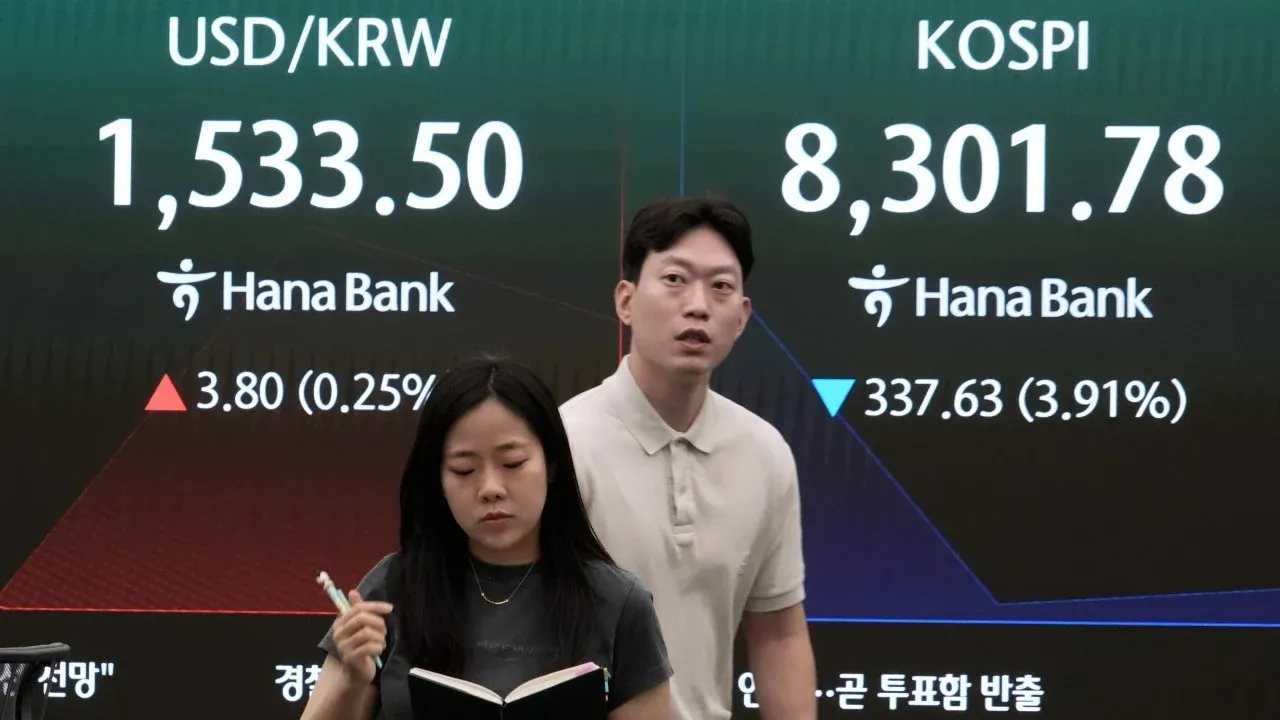
The MSCI Emerging Markets Index has shifted sharply: mainland China and India fell from a combined 50% weight to a market mix now led by South Korea and Taiwan. For decision-makers, that index-level realignment changes who draws investment, liquidity, and attention across developing economies.
A little over a year ago, mainland China and India together made up 50% of the MSCI Emerging Markets Index. Today, that is no longer the story. South Korea and Taiwan now account for over half of the benchmark, a re-tilt so dramatic it has become the most notable change in an emerging benchmark index in financial markets in recent years. At the end of last month, the weight of South Korea in the index stood at nearly 24%, up by four percentage points.
That single move is the headline, but not the full issue. The mechanics of index benchmarks matter because funds, allocators, and many rules-based strategies use them as a map. When the map changes, capital has a habit of following it, sometimes faster than fundamentals catch up. So the practical question for executives is not only “who has grown,” it is also “who may suddenly face outflows as the benchmark pivots.” If you run portfolios tied to emerging benchmarks, you are now managing the risk that index re-weighting becomes a driver of trading, liquidity, and pricing.
To understand why the benchmark can flip so quickly, you have to separate two forces that often get blended together. One force is the underlying performance and market capitalization changes in the countries inside the index. The other force is how investors translate those changes into flows. Over time, growth in market value can push a country’s index weight higher, which in turn can attract more “closet benchmark” demand, because many investment processes are built to track or at least be aware of the MSCI Emerging Markets Index. That can intensify the impact of the original shift. In other words, the index weight change is both an outcome and a catalyst.
The source’s framing highlights the reversal in leadership. “Just over a year ago,” China and India carried half the weight. “Fast forward to today,” South Korea and Taiwan lead enough to be “over half of the gauge.” That is not a subtle rotation. It is a structural repricing of what “emerging markets exposure” means in practice, and it happens inside a widely watched benchmark. When an index concentrates toward fewer markets at the top, correlation can rise across that narrower set. It can also make relative performance comparisons more sensitive to how those top markets move.
The near-24% weight for South Korea, with a four percentage point increase by the end of last month, gives a clear sense of pace. A four percentage point move in a benchmark weight is the kind of change that can force portfolio managers to rebalance, even if they have strong views on long-term value. Executives at funds and listed-company investors should pay attention to the liquidity and trading dynamics around those rebalances. When many managers need to buy or sell the same benchmark constituents at the same time, bid-ask spreads and short-term volatility can change. That can matter for companies that rely on steady foreign investor participation or that manage debt and equity capital planning with assumptions about market depth.
There is also a governance layer here. Boards and CFOs at companies across developing economies typically plan for shareholder base changes, but index-driven demand can introduce a new pattern of pressure. If the benchmark becomes more concentrated in South Korea and Taiwan, investors that track the benchmark may spend more time underwriting exposure to those markets, and less time across China and India. That can shape attention allocation, analyst coverage, and in some cases the cost of capital if investor demand skews.
For executives in similar roles across emerging markets, the strategic stakes are straightforward and uncomfortable. You have less control over how a benchmark shifts than over your own company fundamentals, yet the benchmark can still move your stock price and investor appetite in the short term. The source signals an “AI trade” context in its title, implying that AI-linked themes and market leadership can be one channel through which capital and expectations concentrate. Even without getting into specific claims beyond the index weight changes cited, the takeaway remains: when “emerging markets” exposure tilts, it can amplify winners and stress laggards, not because the entire region changes overnight, but because the index becomes a funnel.
Finally, this is also a reminder for decision-makers that benchmark headlines are not just trivia. The combined weight starting at 50% for mainland China and India “just over a year ago” and ending with South Korea and Taiwan at “over half of the gauge” today is the kind of shift that can outlast the initial trade. It can influence what capital allocators consider the default exposure to growth in developing economies, and it can change how companies compete for inclusion, visibility, and sustained institutional ownership. If you are building an investment thesis, managing an international investor story, or overseeing capital markets strategy, you need to treat index re-weighting as a real variable, not background noise.
This story's Key Insights and Take-aways are locked.
Create a free account to unlock Executive Actions for one credit.
Register to UnlockAlways free for Executives Club members. Join the Club
More in Business

Anthropic’s Levant Alpöge cracks the Jacobian conjecture after 87 years
A Harvard valedictorian used Claude to hit a 1939 breakthrough, but the missing “why” is the real problem.

Uber buys Delivery Hero for nearly $15B, vaulting to top food delivery outside China
The deal doubles Uber's dual-services footprint and pushes a ride-and-eats bundling play into 50 more markets.

Epic and Google drop settlement bid, forcing rival Android app stores by July 22
Google told the court it is ready to carry third-party app stores starting Wednesday, July 22.