
SpaceX adds 24 Starlink satellites from Vandenberg, lifting off July 1, 2026
Falcon 9 deployed Group 17-46 in low Earth orbit, pushing Starlink beyond 10,700 active satellites worldwide.
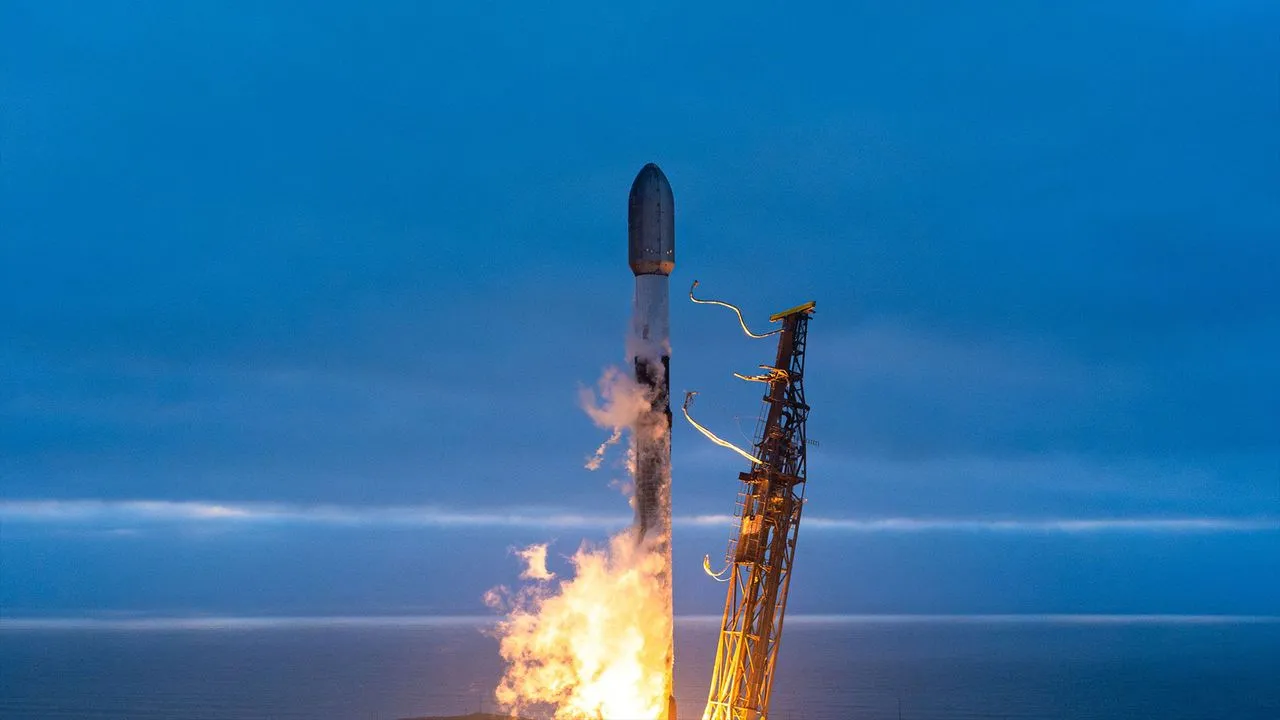
SpaceX launched a Falcon 9 rocket carrying 24 Starlink relay satellites, Group 17-46, from Vandenberg Space Force Base on July 1, 2026. The satellites were deployed about an hour later, adding to Starlink's active total of more than 10,700 satellites.
SpaceX kept the Starlink pipeline moving on Wednesday evening, July 1, 2026, launching 24 more satellites from California. A Falcon 9 rocket lifted off from Space Launch Complex 4 East at Vandenberg Space Force Base at 10:58 p.m. EDT (0258 GMT on July 2, or 7:58 p.m. PDT local time). Roughly an hour later, SpaceX confirmed the satellites were successfully deployed in low Earth orbit. In other words: the mission did exactly what it was supposed to do, and it did it fast enough to matter for a network that depends on continuous replenishment.
If you are tracking Starlink as an infrastructure business rather than a “cool rocket” story, the key detail is what this launch adds to the operating footprint. According to tracker Jonathan McDowell, SpaceX's Starlink megaconstellation now totals more than 10,700 active satellites. That matters because it directly supports the service's global connectivity goals, including coverage for people and systems on the ground, plus “in-flight and direct-to-cell services,” which rely on having enough satellites in the right orbital regime to make routing and link quality work.
There is also a throughput story hiding inside the launch mechanics. The Falcon 9 first stage, Booster 1100, completed its seventh flight to space and back, landing on the drone ship “Of Course I Still Love You” positioned in the Pacific Ocean. Reuse is how SpaceX turns launch into a repeatable supply chain. For decision-makers watching space and telecom infrastructure, reuse is not trivia, it is unit economics in disguise. When a booster can fly again, the company can keep schedules tighter and reduce the cost per mission, which in turn can make expansion plans more resilient.
This particular flight slots into a broader calendar of activity. SpaceX said Wednesday's launch was its 79th Falcon 9 liftoff of the year. That number is a useful signal for how aggressively the company is cycling hardware through the manufacturing and operations loop. For enterprises and investors, high launch cadence can translate into faster constellation growth, but it also raises questions that boards tend to care about: how well the system can maintain performance while adding capacity, and how deployment patterns evolve as the network gets larger.
There is a second-order implication that shows up for anyone exposed to regulation and risk management. Starlink is not just “space stuff.” It is a regulated communications service with public-facing consequences: spectrum coordination, space traffic management, and safety considerations all tend to become more visible as the constellation grows. While the source does not provide regulatory updates for this specific launch, the cadence and the continuing rise to more than 10,700 active satellites increases the operational burden across the entire lifecycle, from launch to deployment to long-term orbit sustainability. That is why these incremental-looking missions often become governance discussions inside airlines, carriers, and governments evaluating connectivity partners.
Finally, this launch reinforces how crowded but still strategically important the low Earth orbit playbook is. Starlink now supports around-the-globe connectivity plus in-flight and direct-to-cell services, and the company is building that capability one mission at a time. The fact that this launch carried 24 satellites, designated Group 17-46, and deployed them successfully in low Earth orbit about an hour later shows an execution rhythm that is hard to ignore. In a world where connectivity is increasingly mission-critical, the organizations most likely to be affected are the ones planning networks, capacity, and resilience now, not later.
For peers in the telecom-in-space ecosystem, the message is simple but consequential: the constellation is still scaling, the launch engine is still running, and the active satellite count keeps climbing. If you are a board member or operator evaluating partnerships, spectrum-linked roadmaps, or capital allocation for network expansion, this is a reminder that “infrastructure growth” here is measurable in active satellites, not just marketing slides.
This story's Key Insights and Take-aways are locked.
Create a free account to unlock Executive Actions for one credit.
Register to UnlockAlways free for Executives Club members. Join the Club
More in Technology

Nvidia's $89B data center quarter: the 9 companies cashing in
The AI buildout is minting fortunes beyond GPUs, and memory, cloud, and cooling suppliers are riding the same wave.

Google quietly links your phone number to every Android account on your SIM
Adding a SIM now ties your phone number to all Google accounts - and future accounts inherit it. Here's the security and privacy stakes.

Hijacker AI 'Skynet mode' runs 100,000 attack steps against exposed models
Symantec caught a criminal AI agent that borrows other models, steals data, and mines crypto; the only relief is no confirmed victims yet.