

SpaceX debuts Friday on Nasdaq at $135, surges to $160.95, valued near $1.8T
A Nasdaq opening pop turns SpaceX into a public company overnight, forcing new money questions fast.

Space Exploration Technologies, known as SpaceX, began trading on Nasdaq in New York City on Friday at $135 a share and closed at $160.95. The nearly $1.8 trillion valuation instantly changes the incentives for investors, employees, and decision-makers who now need real profit paths.
SpaceX is now a public company, and the market made that moment loud. On Friday, the company began trading on the Nasdaq exchange in New York City at $135 a share, valuing SpaceX at nearly $1.8 trillion. It did not just coast through that opening bell. By the end of the trading day, SpaceX shares were selling at $160.95, a gain of more than 19 percent.
That single-day move does more than create headlines. It triggers a cascade of incentive changes because SpaceX was not built for public markets. It was founded decades earlier, and now it has investors who will want to see it make money. On paper, SpaceX founder Elon Musk became the world's first trillionaire, with his personal stake valued at more than $700 billion. And because of SpaceX's stock options plan, thousands of current and former employees became overnight millionaires.
To understand why that matters, look at what happens when a privately held company turns public. The company goes from “mission financed by belief” to “mission financed by capital markets.” Public markets are not just a new logo or a new ticker. They add recurring expectations: results measured on quarterly timelines, scrutiny over capital allocation, and pressure to justify valuation with clearer pathways to profitability. Investors that previously benefited from long-term upside now have to live with ongoing disclosure and market pricing.
That is where board dynamics usually get real. SpaceX is still the same organization with the same operational reality. But the board now has to manage two audiences at once: the long-term believers who bought in earlier, and the broader public market that trades on expectations of earnings power. In practice, that often means tighter attention to cost structure, cash generation timing, and what gets emphasized in public communications. The first day price action does not solve those problems. It just puts a bigger magnifying glass on them.
There is also a regulatory framing angle. The source notes the company began trading on Nasdaq in New York City on Friday. Getting to that point is not just a mechanical listing process. Becoming publicly traded typically requires a legal and reporting infrastructure that is absent in private ownership. That is relevant because it changes the flow of information. Markets can only price what they can see, and public company status increases the amount and regularity of what shareholders must be told.
Second-order effects hit employees, too, and not only emotionally. The source says that because of SpaceX's stock options plan, thousands of current and former employees became overnight millionaires. That can strengthen retention and motivation, but it can also shift internal focus. When employees suddenly hold large equity value, the company can become more sensitive to decisions that influence share performance. That includes how leadership thinks about near-term execution versus longer-term experimentation, and how it balances spending against the market’s impatience.
Then there is the competitive signal. SpaceX is now priced like an AI story as much as an aerospace story, in the sense that the source frames the valuation around AI potential. Whether or not every segment of that narrative becomes measurable quickly, the market has chosen a valuation lens. That matters to peers and adjacent industries because it sets a reference point for how investors may price future bets on frontier tech. If SpaceX’s public debut reads as a valuation endorsement, capital can be pulled toward similar strategies, faster.
For decision-makers watching this unfold, the strategic stakes are clear. A nearly $1.8 trillion valuation is not a blank check, it is a contract with the market. The source is blunt on the incentive: SpaceX is owned by investors who will want to see it make money. The path to getting there will likely be judged through the public-company lens, with investors and employees alike tracking whether the company can convert hype and potential into durable financial performance. SpaceX just crossed the Rubicon into public markets. Now the real work starts, because public valuation has to survive the next print, not just the first trade.
This story's Key Insights and Take-aways are locked.
Create a free account to unlock Executive Actions for one credit.
Register to UnlockAlways free for Executives Club members. Join the Club
More in Business
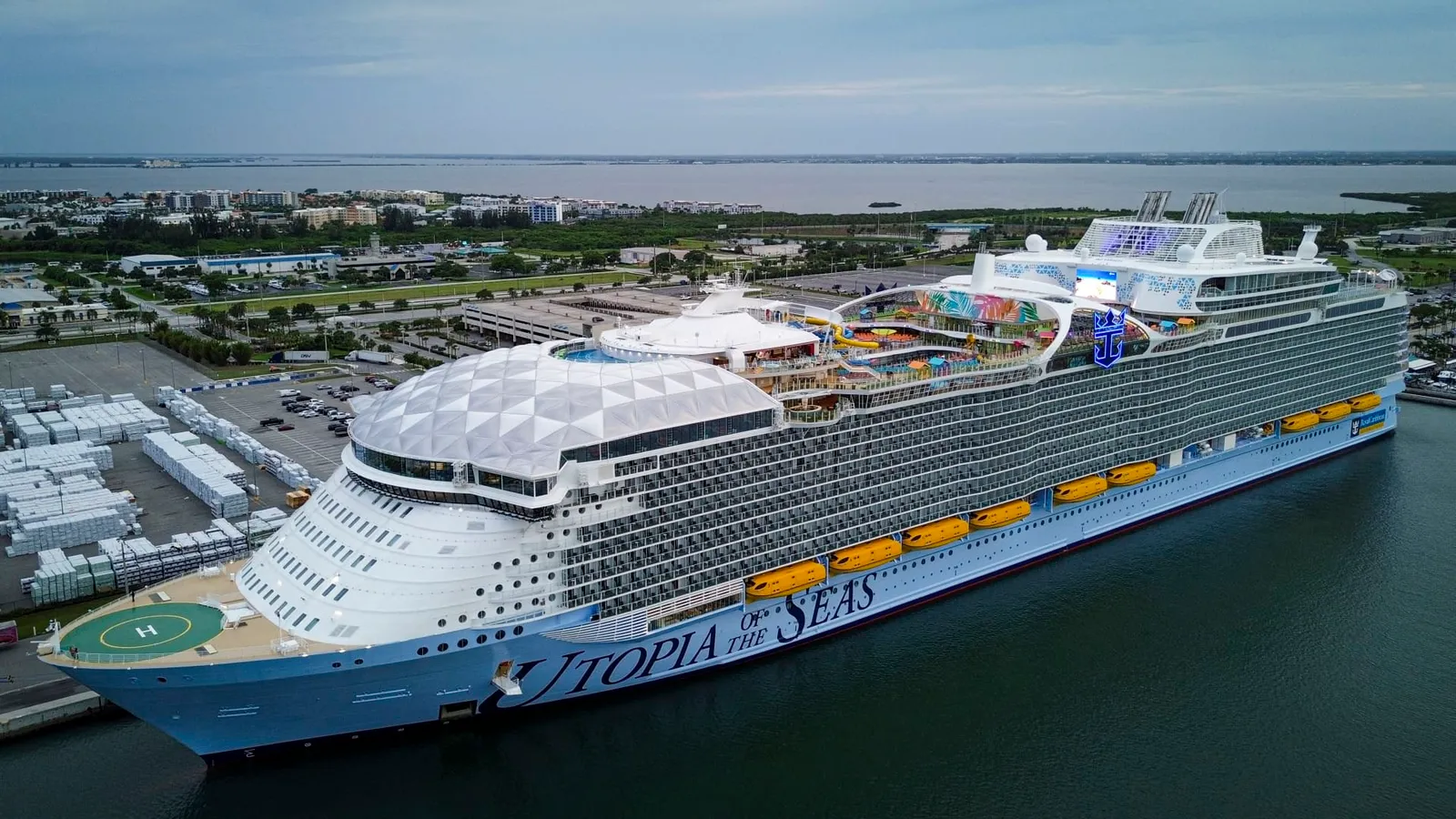
Royal Caribbean just spent $3B to own half of Sandals
The cruise giant is buying a 50% stake in the all-inclusive resort chain for $3 billion, a bet that land-based vacations are the next growth engine.

Paramount's Ellison: Merger Clearance Done, WBD Deal by Oct 1
David Ellison says the Paramount-WBD merger has full clearance after settling with state AGs, clearing the path for an October 1 close.

Paramount settles with 12 states, $110B Warner merger clears final hurdle
David Ellison's studio avoids a March trial and a $7M-a-day ticking fee by settling with state AGs over local job losses.