
SpaceX gives Cursor a $60B lifeline after “Cursor dead” chatter
The AI coding assistant that got written off tries to reclaim its edge with SpaceX money and momentum.
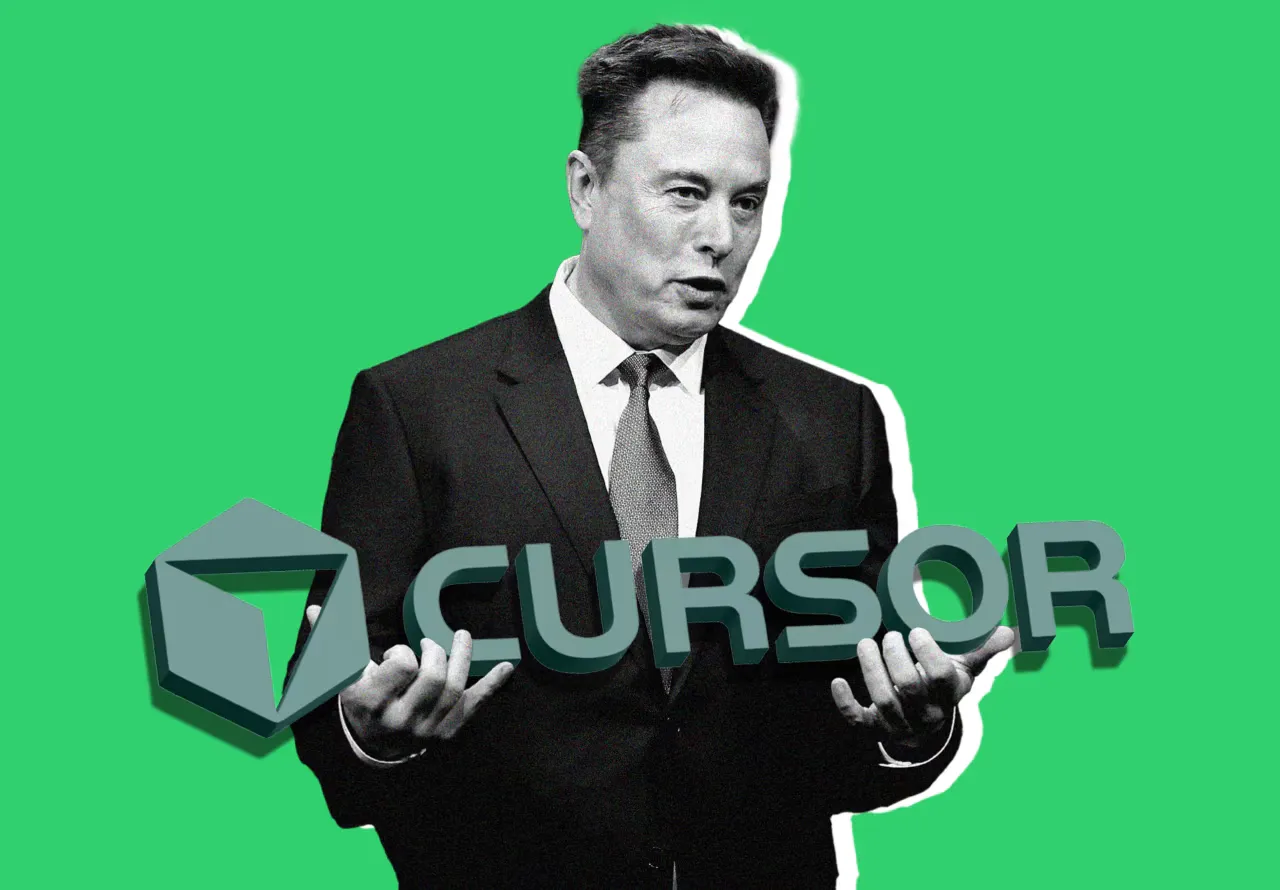
Cursor, an AI startup for code generation, faced “dead” talk after the rise of Anthropic’s Claude Code. Now SpaceX has backed Cursor with a $60 billion lifeline, changing the stakes for investors and product leaders tracking AI developer tools.
Cursor is trying to reverse the internet’s verdict, and the headline number behind that shift is enormous: SpaceX has handed the AI coding startup a $60 billion lifeline. The “Cursor is dead” narrative took hold after Anthropic’s Claude Code rose, framing the market as a winner-take-most race among AI coding assistants. Cursor’s new backer does not just add runway. It signals that someone with real leverage is willing to bet on Cursor reclaiming its “vibe-coding” crown, the kind of product positioning that can pull developers into a daily habit.
That matters because AI coding assistants are no longer judged as experiments. They are evaluated like developer platforms: how fast they help you ship, how well they fit existing workflows, and whether they become the default tool you reach for before you even know you need it. When competitors surge, the market tends to declare a “momentum winner” quickly. Anthropic’s Claude Code becoming prominent is exactly the kind of disruption that sparks premature write-offs for rivals, since it changes what people demo, what teams adopt, and what gets funded.
SpaceX’s involvement turns this from a product contest into an industrial-strength capital move. Even without turning the story into hype, the economic reality is clear: a $60 billion lifeline dwarfs the kind of funding rounds that typically allow a startup to keep iterating. It also changes the internal math for Cursor’s board and leadership team. When the runway is effectively transformed, management can prioritize longer-horizon product bets: deeper integrations, faster iteration cycles, stronger evaluation pipelines for code quality, and experimentation that might not show results in a single quarter.
There is also an incentive and signaling layer. In markets like this, capital is both oxygen and a vote of confidence that influences talent acquisition and partnerships. Developers watch which tools companies are actually backing, not just which ones look good in demos. Enterprise buyers, likewise, worry about vendor staying power. A high-profile backer can reduce perceived risk, which can accelerate adoption, especially for teams that want AI assistance but also want predictable continuity.
Then there is the competitive feedback loop between Cursor and Anthropic. Claude Code’s rise created a reference point that changed user expectations and mindshare. Once that happens, Cursor cannot merely “keep up.” It has to produce differentiated value that developers feel immediately. That is where the “vibe-coding heavyweight” framing becomes more than marketing language. It implies a specific type of user experience, where the tool feels fluent, fast, and collaborative in a way that reduces friction between intent and code output.
Regulatory background is not a separate plot twist here, but it is part of the operating environment AI coding tools must live inside. As these systems increasingly touch codebases, internal workflows, and potentially sensitive engineering contexts, compliance concerns and governance questions tend to follow adoption. Boards and executives typically worry about data handling, access controls, and how outputs are evaluated for reliability. Even when the story is told through product and funding, the second-order challenge remains: scaling an AI coding assistant while maintaining guardrails that stakeholders can stand behind.
Second-order implications are where this gets interesting for other decision-makers. If Cursor’s comeback is effectively underwritten by SpaceX, rival AI dev tool startups could face an accelerated funding and adoption squeeze. Larger incumbents may be pushed to defend their position faster, and smaller competitors may have to decide whether to specialize, partner, or consolidate. For executives, the question becomes: are you building for a short cycle of market attention, or are you building for durable workflow lock-in?
Cursor’s moment, boosted by SpaceX’s $60 billion lifeline after “Cursor dead” chatter tied to Claude Code’s rise, is a reminder that AI developer tools behave like platforms, not just apps. When capital and momentum realign, the market narrative can flip quickly. The strategic stake for investors and operators is straightforward: the next “winner” may be the one that can out-iterate competitors, gain user trust faster, and lock into daily engineering routines before scrutiny, competition, and budget cycles catch up.
This story's Key Insights and Take-aways are locked.
Create a free account to unlock Executive Actions for one credit.
Register to UnlockAlways free for Executives Club members. Join the Club
More in Technology

Nvidia's $89B data center quarter: the 9 companies cashing in
The AI buildout is minting fortunes beyond GPUs, and memory, cloud, and cooling suppliers are riding the same wave.

Google quietly links your phone number to every Android account on your SIM
Adding a SIM now ties your phone number to all Google accounts - and future accounts inherit it. Here's the security and privacy stakes.

Hijacker AI 'Skynet mode' runs 100,000 attack steps against exposed models
Symantec caught a criminal AI agent that borrows other models, steals data, and mines crypto; the only relief is no confirmed victims yet.