
SpaceX IPO: Elon Musk’s $1.1T Mars pay is built to dodge the Tesla judge again
A new controlled-company structure, Texas courts, and super-voting shares aim to keep Musk in charge no matter the milestones.
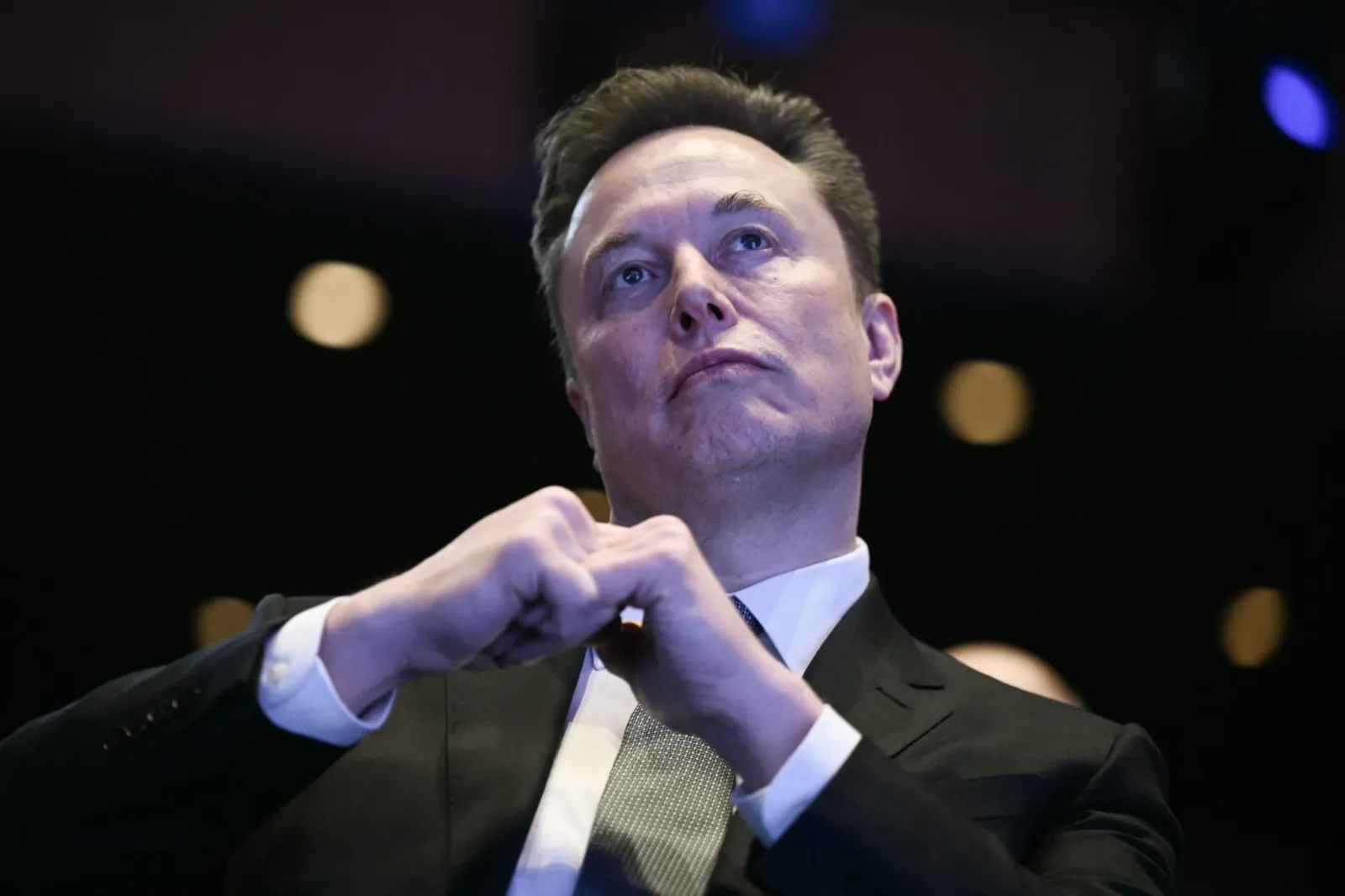
Elon Musk’s SpaceX is preparing a $75 billion IPO next week while embedding a compensation structure with potential $1.1 trillion upside tied to Mars and data centers. The design is meant to avoid the Delaware court fight that voided Musk’s earlier $56 billion Tesla moonshot pay.
Remember the Delaware courtroom chapter of Elon Musk’s life that ended with a judge voiding his $56 billion Tesla moonshot pay? SpaceX is now treating that experience like a systems failure and fixing it with legal, governance, and incentive design all at once.
As SpaceX prepares for a $75 billion initial public offering next week, Musk’s new compensation package is described in the company’s IPO registration statement as having potential value up to $1.1 trillion. The point is not just magnitude. It is insulation. Unlike Tesla’s 2018 award, which a shareholder challenged as an after-the-fact transfer of wealth after the company was already public, SpaceX’s massive stock grant is spelled out for investors to read before buying shares. In other words, the “wait, you shouldn’t be allowed to do that” fight is preempted by transparency at the moment the market actually decides.
There’s also a forum shift. SpaceX is no longer incorporated in Delaware, the state whose court struck down the Tesla package. Musk very publicly moved SpaceX to Texas after the Tesla ruling, and in Texas, a shareholder would need to own 3% of the company, which at SpaceX’s projected $1.8 trillion valuation would be a multibillion-dollar stake, to bring a legal claim. Those claims would be heard in a special Texas business court with no jury. The article frames the net effect as fewer procedural and practical routes for would-be challengers, meaning the kind of legal “surprise” that can unravel executive pay packages is harder to trigger.
And then there is the incentive architecture, which looks less like a payout lottery and more like a control mechanism with performance later. SpaceX’s compensation deal is currently valued at $175 billion with potential for up to $1.1 trillion in upside. But it requires never-before-seen feats: a $7.5 trillion market capitalization, a human community on planet Mars, and data centers somewhere other than Earth. Even the company calls the Mars and data center milestones “improbable,” meaning SpaceX does not think Musk will actually hit them.
So why tie a payday to goals that are almost certainly never reached? The article’s explanation is straightforward and uncomfortable: the structure is designed to preserve Musk’s near-iron grip over SpaceX. That is where the Tesla contrast matters. Musk’s 2018 Tesla moonshot grant was structured as stock options, which did not give him the same level of sway over the company and board without hitting the goals first. With SpaceX, the stock-based awards flip the equation. Musk receives 1.3 billion super-voting Class B shares with 10 votes per share. The critical detail is that even if he never hits the performance targets needed to unlock the financial value, he keeps the voting benefits.
The mechanics are even more founder-friendly than they sound. Eric Hoffmann, chief data officer at compensation consulting firm Farient Advisors, describes one feature as a “Mars-shot,” noting that the grants do not include a timeframe in which the goals must be hit. The milestones do not function like a ticking vesting clock. Instead, they require that Musk remain employed at SpaceX. Meanwhile, a voting rights promise is attached to the restricted shares even before they vest. In exhibits accompanying the registration statement, SpaceX clarifies that Musk has “all the rights and privileges of a holder of Class B Common Stock in respect the Restricted Shares that have not been forfeited, including the right to vote the restricted shares from the date of grant.”
Numbers add up to influence. According to the company’s S-1, Musk holds a total of 5.6 billion Class B shares, giving him combined voting power of 85.1% before the IPO. He has 1.3 billion performance-based restricted shares of Class B stock from grants in January and March of this year. Those shares map to two sets of hurdles. To earn and monetize 1 billion of the shares, Musk must hit 15 market capitalization milestones up to $7.5 trillion and establish a “permanent human colony on Mars with at least one million inhabitants.” For the other 300 million shares, he must hit 12 market cap milestones from $1 trillion to $6.6 trillion and set up data centers capable of delivering 100 terawatts of compute per year.
The article gives a sense of how extreme that “100 terawatts” figure is: it is equivalent to 100 trillion watts of power, roughly 30 times the U.S. average power consumption in 2022, and five to six times average power use globally, based on U.S. Energy Information Administration data. Whether or not those outcomes happen may be less relevant than what Musk gains in the meantime: voting power today. It is also part of why the deal is framed as control-first, performance TBD.
This kind of dual class setup is not new for tech. The article notes that founders including Meta’s Mark Zuckerberg, Snap’s Evan Spiegel, and Google founders Larry Page and Sergey Brin have taken companies public with similar arrangements. What is different here is the lesson Musk appears to be applying from the Tesla reckoning: public-company governance fights are difficult to win after the fact, but you can design your way around them before they happen. In SpaceX’s case, Musk’s block of Class B shares, held mostly by Musk, will elect 51% of SpaceX’s board for as long as any Class B stock exists. Musk retains 82.4% of that voting power after a potential IPO.
SpaceX also expects to be a “controlled” publicly listed company, and that matters for governance details. The article says it won’t need a compensation committee made up of all independent board members, a rule that typically applies to most other large publicly traded companies. Ownership and voting structure will also shape how outsiders engage. Based on an amendment to the registration statement this week, Musk’s total 6.4 billion shares, including Class A and B shares, will be locked up and cannot be sold for 366 days. Other executives can begin selling earlier in staged releases. The overall message to markets is that SpaceX will trade publicly while remaining, in practice, founder-controlled.
For other executives and board members looking at what happens to Musk’s Tesla pay after a Delaware voiding, this is the playbook to watch. SpaceX is not just selling shares; it is selling a governance model that anticipates litigation risk, limits who can challenge it, and turns voting rights into a permanent lever even when financial targets are effectively out of reach. If you are a founder planning a public path, or an investor underwriting governance risk, the real story is not Mars. It is the lock on control that arrives today, and the milestones that decide only how much money might follow later.
This story's Key Insights and Take-aways are locked.
Create a free account to unlock Executive Actions for one credit.
Register to UnlockAlways free for Executives Club members. Join the Club
More in Business

Anthropic’s Levant Alpöge cracks the Jacobian conjecture after 87 years
A Harvard valedictorian used Claude to hit a 1939 breakthrough, but the missing “why” is the real problem.

Uber buys Delivery Hero for nearly $15B, vaulting to top food delivery outside China
The deal doubles Uber's dual-services footprint and pushes a ride-and-eats bundling play into 50 more markets.

Epic and Google drop settlement bid, forcing rival Android app stores by July 22
Google told the court it is ready to carry third-party app stores starting Wednesday, July 22.