

SpaceX lands Google A.I. computing deal at $920M per month, NYT reports
A $30 billion implied arrangement reshapes who supplies AI muscle, and how tech boards think about capacity and concentration.
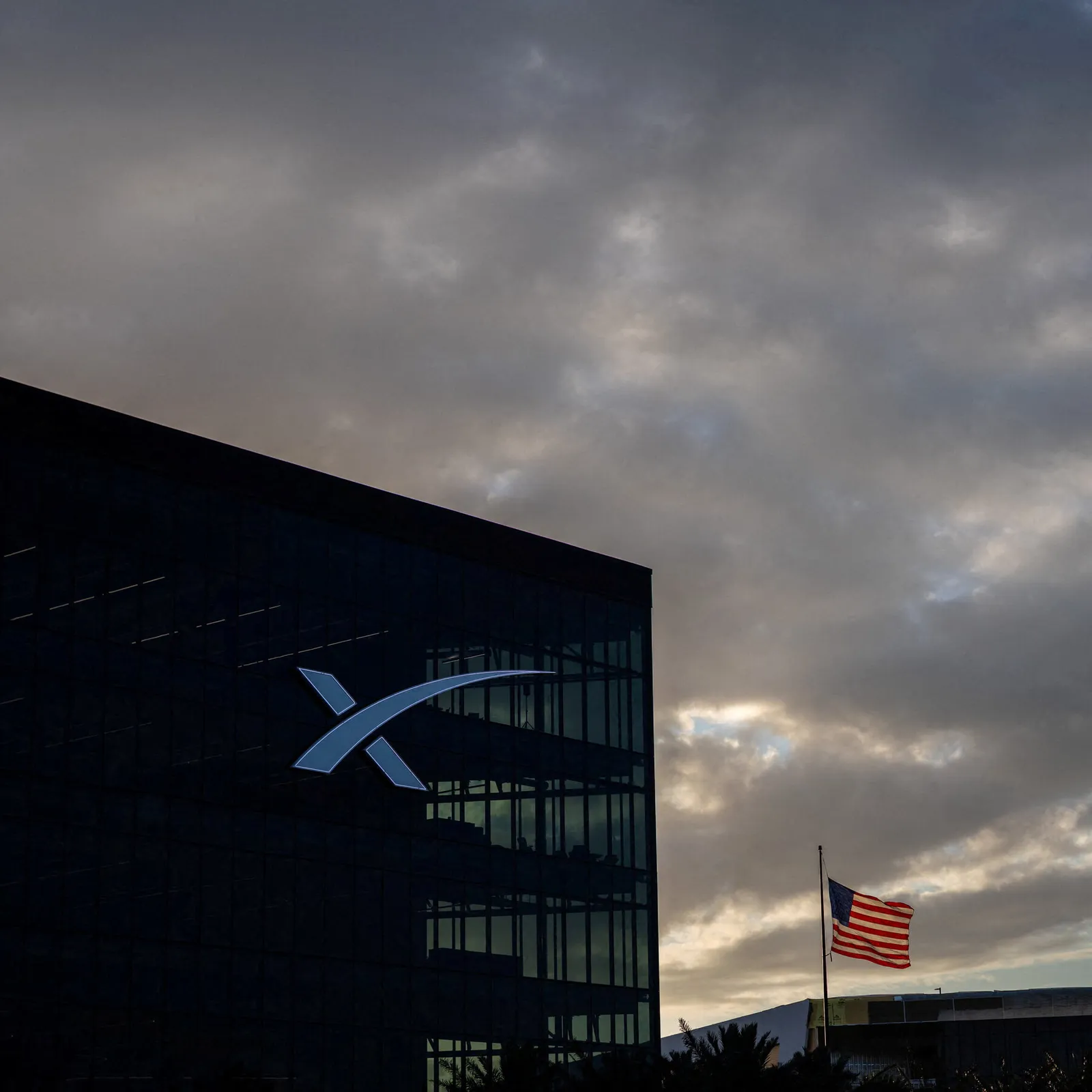
SpaceX, Elon Musk's rocket company, said Google would pay it $920 million a month for AI computing power. For decision-makers, the deal signals how quickly AI infrastructure procurement is turning into mega-contracts with long-term leverage.
SpaceX says Google will pay it $920 million a month for AI computing power, according to The New York Times. The paper frames it as part of preparations around Google's initial public offering, putting both the size of the commitment and the timing into a high-stakes context.
Do the math and you get the headline gravity: a $30 billion scale. That matters because this is not a typical vendor relationship. It is a capacity relationship. AI computing is not just an IT budget line; it is a bottleneck. When a company that wants to build and run large models needs compute, it needs it reliably and at massive throughput. A contract at this magnitude effectively turns the supplier into a gatekeeper for performance, and possibly for timelines.
Why SpaceX and not a traditional cloud provider? The premise in the report is straightforward: Google is paying SpaceX for AI computing power. For executives, that is a reminder that in AI, the critical question is less “who is known?” and more “who can actually deliver capacity when demand spikes?” AI workloads tend to scale aggressively as training and inference requirements grow. When capacity is scarce, large buyers look for certainty. A nine-figure monthly payment can be read as a bid for stability, not just a price.
This is also a procurement story with board-level implications. Deals like this are typically justified as long-duration investments that reduce uncertainty. But they also increase dependency. If one supplier controls a large share of your compute access, then operational constraints, policy constraints, and even contractual renegotiations can become strategic risks. Boards therefore tend to pressure management on diversification plans, service-level guarantees, and what happens if circumstances change. The New York Times report gives the headline numbers, but the corporate question underneath is unavoidable: what is Google’s plan if access changes, and how is that risk disclosed and governed?
The report’s mention of Google's initial public offering preparation matters too, even if the details are not expanded in the provided source text. Public-market transitions tend to intensify scrutiny of major contracts. Investors, regulators, and analysts focus on how key costs will behave, how much of the company’s future is tied to counterparties, and whether the company has sufficient control over critical inputs. In other words, a mega-deal can be both an operational enabler and an explanation burden. The bigger the contract, the more it becomes part of the story public companies tell about their competitive position.
There is also a “how markets price AI” angle that executives can’t ignore. A $920 million monthly rate suggests that the market for AI computing power is not treating compute as fungible. It is treating it as scarce infrastructure, and it is pricing risk and delivery ability into the contract. When you see that kind of money move toward a single counterparty, it signals that buyers believe the alternative would be slower, less predictable, or more costly when measured over time.
Second-order effects follow quickly for peers. If Google can enter into an agreement with SpaceX on this scale, other AI-focused companies and large enterprises will look at the same question: can they lock in compute through long-term arrangements rather than relying only on spot capacity or standard cloud provisioning? That can shift bargaining power across the ecosystem. Vendors that can deliver at scale gain leverage. Buyers that sign huge contracts gain speed but may reduce optionality. Over time, this can influence everything from model training schedules to product roadmaps, because compute access becomes a strategic constraint.
So what should decision-makers take from this? First, AI infrastructure procurement is migrating from “vendor management” to “strategic partnership with financial weight.” Second, board conversations will have to treat compute sourcing as a governance issue, not just an engineering choice. And third, if $30 billion worth of AI computing power is being organized through a deal of $920 million per month, then the competitive race is increasingly about who can secure capacity early. In AI, the winner is often not the one with the best idea. It is the one with the compute lined up when the idea needs to run.
This story's Key Insights and Take-aways are locked.
Create a free account to unlock Executive Actions for one credit.
Register to UnlockAlways free for Executives Club members. Join the Club
More in Business

A flaw in PHP just forced governments to pull their own sites offline
European agencies from Belgium to Germany took websites dark to patch a critical weakness in the language behind almost 70% of the web, and the blast radius extends far beyond government portals.

BioWare shuts down, Mass Effect 5 dead after $55B EA buyout
The legendary RPG studio's closure lands months after a $55 billion investment group buyout of EA, raising tough questions for gaming's biggest acquirers.
Musk weighs Tesla-SpaceX mega-merger as boards form review panels
Special committees at both companies will examine a tie-up that could fuse electric vehicles and space launch, forcing a fresh look at governance and valuation.