

SpaceX must 60x revenue to justify $1.75T valuation by 2035, Fortune analysis finds
A revenue and profit math test tied to discounted cash flows shows the bar for the IPO is unprecedented.
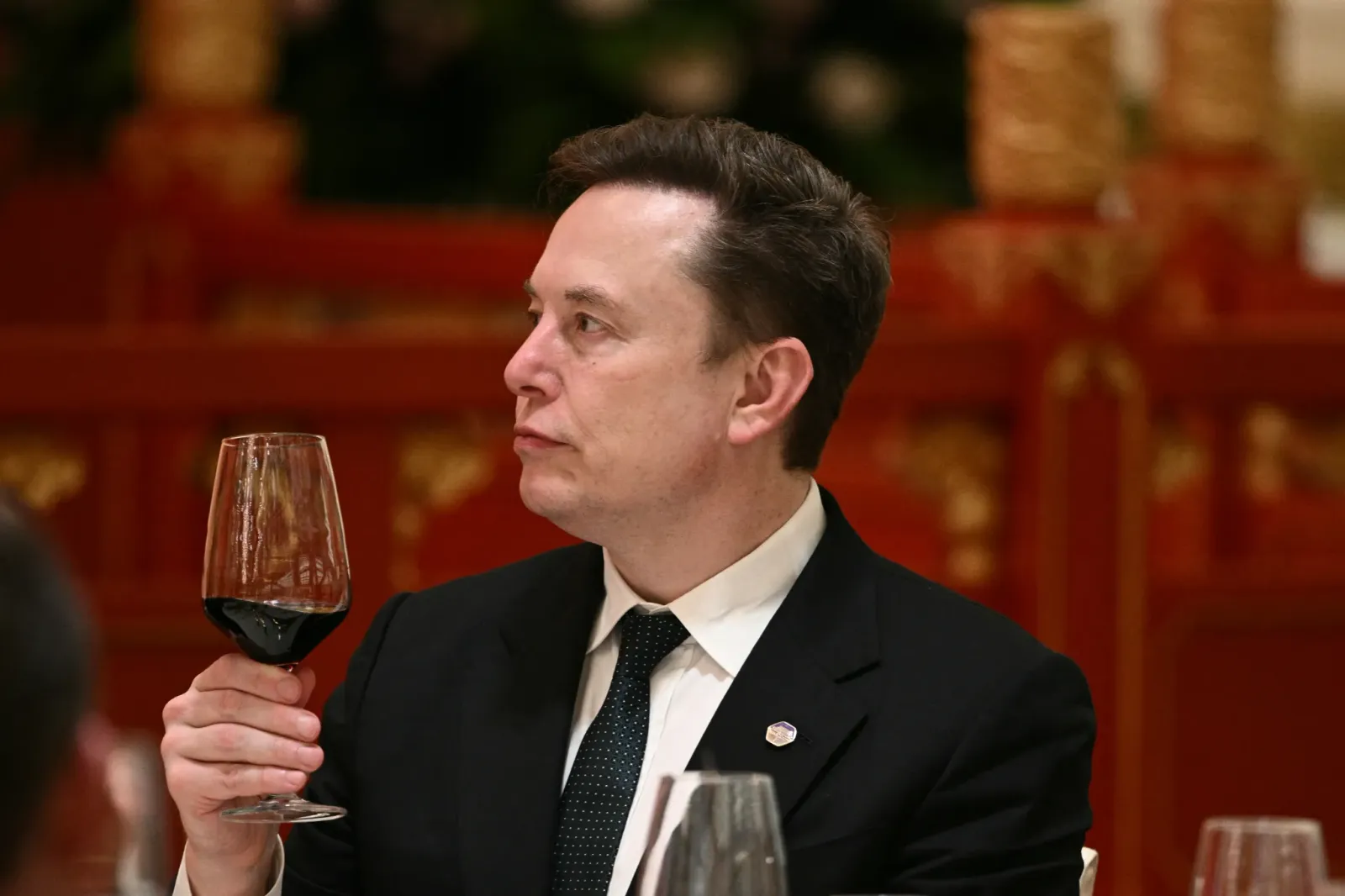
Fortune highlights New Constructs CEO David Trainer's modeling for SpaceX’s $1.75 trillion expected valuation in its upcoming IPO. The implied performance benchmarks suggest SpaceX would need to grow far faster than any historical U.S. company, reshaping what investors will demand from high-flying pre-IPO bets.
SpaceX is heading toward an IPO with an expected market cap of $1.75 trillion, and that price comes with a brutally specific expectation: the kind of growth that would require roughly a 60x increase in revenue over a decade to justify the valuation. According to Fortune’s reporting, New Constructs CEO David Trainer used discounted cash flow projections to calculate what investors would need to earn ten years hence to make the stock feel worth the risk. In that framework, the revenue target by 2035 is $1.1 trillion, with an implied annual performance profile that gets to the $1.75 trillion valuation standard.
The numbers are jarring because they collide with today’s baseline. SpaceX’s S-1 filing shows the company lost $4.9 billion in 2025 on “puny” revenues of $18.7 billion. Trainer’s model then draws a straight line from that starting point to a decade-later finish where sales would reach $1.1 trillion by 2035. Fortune notes that this is the first such revenue figure followed by a “t,” a meaningful detail because it underscores how far this projection departs from anything investors have recently seen in company-scale operations.
So what exactly is the “bar” investors are being asked to clear? Fortune describes Trainer’s approach as a discounted cash flows exercise that pins down the results SpaceX would need to justify a $1.75 trillion valuation, and it frames investor expectations as roughly a 10% total annual return over the next decade. The article stresses that this is “extremely modest” in percentage terms for an investment that the underlying math positions as one of the longest of long shots. In other words, even when the required return assumption looks tame, the business growth needed to earn it is anything but.
The growth math itself is where the story turns from “big bet” to “historical outlier.” Fortune reports that moving from $18.7 billion in revenue to $1.1 trillion implies garnering an almost 600x increase, which would mean hiking sales by about 50% a year on average for a decade. The ramp is quantified in the piece: from year-end 2034 to the close of 2035, revenues would need to jump from $718 billion to $1.1 trillion, maintaining that 50% annual pace. That would represent an increase of $360 billion in a single year.
Fortune then compares that single-year jump to real-world reference points that make the magnitude feel less abstract. It notes that from 2024 to 2025, Nvidia, the fastest grower, added $85 billion in sales, which is one-fourth of the $360 billion jump SpaceX would need in Trainer’s scenario. The article also points to Amazon as a partial parallel: the revenue increase SpaceX would match from 2035 to 2035 in this framing corresponds to Amazon’s total increase over the past six years. And then it drops the key verdict for executives who track competitive dynamics: “What’s the precedent for such a vertiginous ramp in just 12 months? It doesn’t exist.”
Why should anyone outside the space industry care? Because the projected footprint is enormous relative to the whole economy. Fortune says that reaching $1.1 trillion in revenue would make SpaceX a “pillar” equal to over half the size of entire major U.S. industries with dozens of Fortune 500 members. It anchors this to the U.S. government outlook by citing the Congressional Budget Office forecast for 2035 U.S. GDP at $46.7 trillion, implying SpaceX’s $1.1 trillion revenue would account for 2.4% of national income. Fortune adds that this would be 50% bigger than the entire utilities sector, 55% larger than the entertainment industry, and nearly three-quarters of the U.S. transportation complex, spanning airlines, railroads, trucking, car rentals, and freight and logistics, with companies such as Delta Air Lines, CSX, and FedEx included in that broader set.
Executives should also clock the second-order competitive problem embedded in this setup. Fortune points out that the S-1 indicates a moonshot total addressable AI market of nearly $30 trillion. A big TAM can justify big growth narratives, but it also attracts big competition, and the article names the likely heavyweight contenders: Alphabet, Microsoft, Nvidia, and OpenAI, among other rivals for AI profits. The implication is straightforward but consequential for boardrooms: if many companies are targeting slices of the same multi-trillion-dollar opportunity, nobody gets to “secure” a winning share of GDP in sales on day one. Fortune suggests the more realistic scenario is that competitors would battle each other and SpaceX for far smaller pieces of the pie.
This is where the valuation becomes a governance and investor-relations problem, not just a math problem. The piece frames SpaceX’s IPO as not only the largest and most widely-lauded IPO ever, but also the most expensive. That matters for decision-makers because the market will interpret results not in terms of “progress,” but in terms of whether the company can keep pace with a benchmark that Fortune calls never-before-witnessed. If SpaceX lands below the share-of-output bar embedded in $1.75 trillion pricing, the disappointment can reverberate beyond SpaceX, because the valuation sets the template for what investors will expect from other high-velocity, high-capital, long-dated growth stories going forward.
This story's Key Insights and Take-aways are locked.
Create a free account to unlock Executive Actions for one credit.
Register to UnlockAlways free for Executives Club members. Join the Club
More in Business

Anthropic’s Levant Alpöge cracks the Jacobian conjecture after 87 years
A Harvard valedictorian used Claude to hit a 1939 breakthrough, but the missing “why” is the real problem.

Uber buys Delivery Hero for nearly $15B, vaulting to top food delivery outside China
The deal doubles Uber's dual-services footprint and pushes a ride-and-eats bundling play into 50 more markets.

Epic and Google drop settlement bid, forcing rival Android app stores by July 22
Google told the court it is ready to carry third-party app stores starting Wednesday, July 22.