

SpaceX readies an IPO that could reshape markets and amplify Elon Musk's fortune
A stock market debut is coming for SpaceX, and it could be the biggest test of Musk’s risk appetite yet.
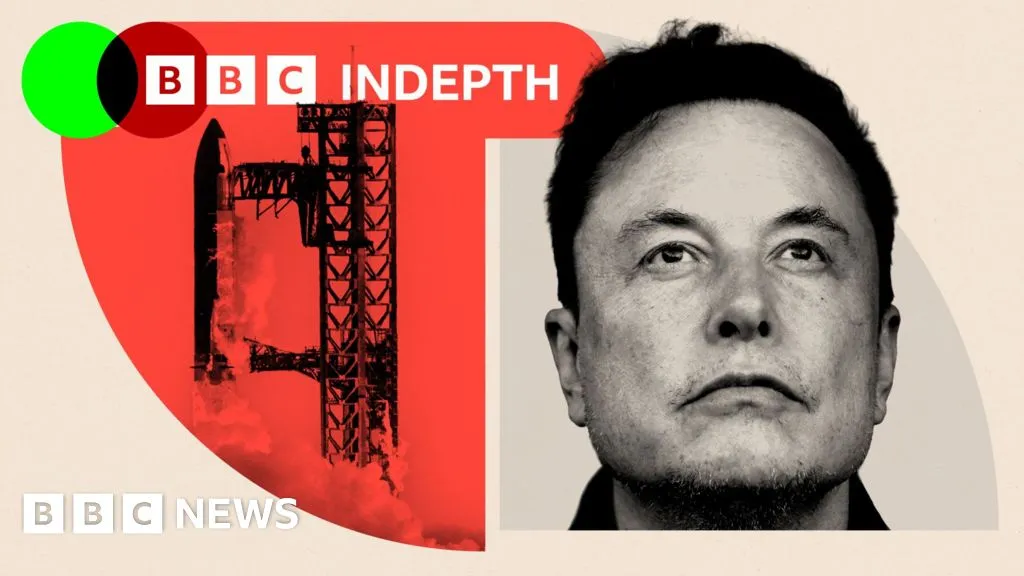
SpaceX is preparing for a stock market debut that could transform the company, the wider market, and Elon Musk's fortune. For decision-makers, the IPO signals a high-stakes inflection point in how investors price space and private tech risk.
SpaceX is preparing for a stock market debut that could transform the company, the wider market, and Elon Musk's fortune. That is the central point of this story, and it matters because an IPO is not just a fundraising event. It is a public spotlight, a valuation reset, and a new set of incentives for everyone from insiders to analysts to the broader industry watching from the sidelines.
For investors and boards, the immediate question is simple: what happens when something that has mostly lived in private markets becomes fully public? SpaceX has spent years building credibility through engineering, launches, and contracts that made it one of the most prominent private space companies. But public-market scrutiny is different. Once the doors open, investors demand transparent performance indicators, clearer risk disclosures, and a more continuous explanation of how the business turns ambitious technology into durable financial returns. A debut at scale can move expectations across the sector, because it gives the market a benchmark price to anchor every competitor, supplier, and adjacent investment narrative.
And for Elon Musk specifically, this is where “big gamble” becomes a real phrase, not just clickbait vocabulary. His fortune is intertwined with SpaceX, so a liquidity event like an IPO can magnify upside if the market values SpaceX at a level that matches its momentum. It can also magnify the consequences if the valuation and the fundamentals do not align the way private-market pricing once did. In other words, this is not simply about whether SpaceX raises capital. It is about whether the public market rewards the company’s story at the same scale insiders have been betting on.
There is also a governance and control angle that decision-makers should care about even if they do not follow rocket science. In private companies, founders and controlling shareholders can make faster decisions and often structure incentives differently. In public companies, the board has to operate within a framework that includes disclosure requirements, investor expectations, and ongoing compliance obligations. Even without quoting any additional details beyond what is in the source, it is fair to say the shift from private to public changes the rhythm of oversight. The company does not just become tradable. It becomes reviewable.
Regulatory and market mechanics are part of the pressure cooker. An IPO is typically preceded by detailed preparations, because regulators and underwriters want the filing and disclosures to withstand scrutiny. That means the company has to translate complex operations and forward plans into the language of public reporting. For executives, this is a structural challenge. The same business can look different depending on how it is presented, and public-market investors often reward clarity and consistency more than raw potential. The gap between what the business can do and what the filings can credibly explain becomes a key variable for how the market prices the debut.
Then comes the second-order impact, the part that reaches beyond SpaceX. When a high-profile private company goes public, it can reset sentiment in the “transformative technology” category. If the debut is strong, it can pull forward capital into the theme, making it easier for other players to raise funds and giving competitors a new reference point. If it is weak, it can tighten conditions and force investors to reprice risk across the same ecosystem. That ripple effect is why the source frames not just SpaceX, but the wider market, as something that could be transformed.
For boards of other growth-stage companies considering the leap, the lesson is not “IPO good” or “IPO bad.” The lesson is that the market will treat the debut as a signal. When SpaceX goes public, other companies in adjacent domains will watch how quickly the market digests the business model and whether enthusiasm turns into measurable performance expectations. Executives in similar roles should think of an IPO as an operational test as much as a financial event, because once trading begins, the market will continuously score the story against reality.
For now, the source is clear on what is happening: SpaceX is preparing for a stock market debut. The stakes are clear too, because the potential outcomes are framed in broad but consequential terms: transformation for the company, transformation for the wider market, and amplification of Elon Musk's fortune. In the public markets, those three things often move together. And when they do, the gamble stops being theoretical and starts showing up in the numbers.
This story's Key Insights and Take-aways are locked.
Create a free account to unlock Executive Actions for one credit.
Register to UnlockAlways free for Executives Club members. Join the Club
More in Business

Anthropic’s Levant Alpöge cracks the Jacobian conjecture after 87 years
A Harvard valedictorian used Claude to hit a 1939 breakthrough, but the missing “why” is the real problem.

Uber buys Delivery Hero for nearly $15B, vaulting to top food delivery outside China
The deal doubles Uber's dual-services footprint and pushes a ride-and-eats bundling play into 50 more markets.

Epic and Google drop settlement bid, forcing rival Android app stores by July 22
Google told the court it is ready to carry third-party app stores starting Wednesday, July 22.